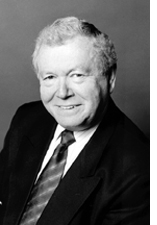
By Rabbi Dow Marmur
JERUSALEM –The full Hebrew name of Holocaust Memorial Day is yom hasho’a v’hagvurah, the day of catastrophe and heroism. The commemorations in Israel tend to put at least as much stress on the heroism as on the catastrophe. Thus the annual state ceremony at Yad Vashem, the Holocaust Memorial complex, in Jerusalem is framed by military presence. Soldiers present arms on several occasions through the proceedings and they’re present in other ways, too. This year two of the songs were sung by a soldier and, as always, the El Male Rachamim, the memorial prayers, was chanted by the chief cantor of the IDF.
But more significantly, the prime minister’s speech this year was as much about Iran and Israel’s strength in the face of the danger it’s facing than about the Holocaust as such. In fact, as almost consistently in Israel, the two are linked. That’s why Netanyahu’s words were no doubt well received not only by those who heard him in the flesh but by the public at large and across political divides.
The message “Never Again!” is translated not as faith in right over might or the commitment of the nations of the world to keep Israel intact, but in terms of Israel’s military power. If we survive – and survive we must – it’s not because our enemies have vanished or because God will protect us this time, but because we’re strong enough to respond to attacks from wherever they come. Neither belief in humanity nor in God seems to be the primary guiding principles but faith in the country’s military prowess.
The very existence of Israel is normally explained, nay justified, in terms of the Holocaust: there’s a Jewish state so that the world cannot do to us again what it did to us a couple of generations ago. Not that it wouldn’t like to do it again but it can’t because of our resourcefulness which in turn prompts some outsiders to support us.
But our friends, so the argument goes, seem to be still greatly outnumbered by our enemies. That’s why so much is being written and said in Israel about anti-Semitism in the world. Often it’s identified with opposition to, even criticism of, the Jewish state and may go under the name of the “new” anti-Semitism.
This is one reason why every official visit by foreign dignitaries starts with a session at Yad Vashem. We still remember Willy Brandt, then Chancellor of West Germany, and Lech Walesa, then President of Poland, kneeling in contrition. In fact, the continued support of Israel by these two countries, where much of the Holocaust took place, is often understood in that context.
As much as some of us may be intellectually uncomfortable with Israeli received wisdom about the Holocaust, the guts and bones of many, perhaps most, tend to concur with the militaristic-nationalist sentiments. Despite my attempt to be critical of the Yad Vashem ceremony, my wife and I were deeply moved by it, this year no less than before.
But nowadays one hears more voices in Israel that question this approach and would like, perhaps, to abolish the Yad Vashem state visit ritual. They argue that Israel’s existence can and must be justified on intrinsic merits, not because of what happened to the Jews in Europe before and during World War II. Our children are more likely to subscribe to that view than to share our gut reaction.
Therefore, things may change when survivors die out and their descendants refuse to accept the current stress on heroism. For all I know, this may be good for Israel.
*
Rabbi Marmur is spiritual leader emeritus of Holy Blossom Temple in Toronto. Now dividing his time between Canada and Israel, he may be contacted at dow.marmur@sdjewishworld.com