By David Amos
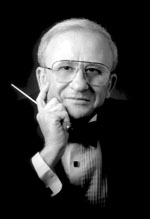
SAN DIEGO–Here are some intriguing things to think about: Mozart lived to the age of 35; Schubert, 32, Beethoven, 57, to name just a few who had relatively short lifetimes. The list is long, but we should add to it here the names of Mendelssohn, Chopin, and Bizet.
Can you think of how many more mature compositions, masterpieces, if you wish, we would have from these composers had they lived a normal lifespan? Say, Beethoven, to his seventies. Mozart and Schubert could have easily lived twice the number of years they actually lived under different conditions of health and lifestyles.
Which direction would their music have taken? New styles, countless additional works which would further enrich our lives today. What would a symphony sound like if composed by Beethoven after his monumental Ninth? As we know, he did not compose conventionally for his time. His art form was constantly evolving, seeking new paths, experimenting, unafraid of breaking with past traditions. His last few opus numbers already showed radical and abstract directions. What could he have created with another 25 years of life? It boggles the imagination.
Bizet, who lived 36 years, was phenomenally gifted. He wrote several works which could safely be labeled masterpieces, and gave us Carmen, which arguably, could be called the most perfect and complete opera ever.
How about the concept that there were other composer-geniuses living and writing during the times of our heroes? Many people reject this, claiming that even if these compositions were very good, they would eventually surface after their lifetimes, and history, sooner or later, would have given them their deserved recognition.
But, I can argue that many of these potential composers who have remained hidden from us were discouraged earlier in their careers and stopped composing. We can visualize lack of family support, being born in the wrong place, inadequate teachers, disease, and the lure of choosing a practical profession, no sponsor from the aristocracy, short lifespan, and so forth.
Of course, the same circumstances would apply to literature, art, medicine, science, statesmanship, philosophy, religion, and all the other disciplines.
Here is my point: There is little or nothing that we can do about the past. What has happened is virtually unchangeable. But, I claim that we have Mozarts, Beethovens, Haydns, and Bachs living amongst us today. Many of them. Certainly, they do not sound like our revered composers of yesteryear. They are living today and influenced by everything around them. Some are well known and successful (we all know their names), but many of today’s composers’ voices are silenced, not from short lives or bad health, but from living in a world and a system which discourages creativity, glorifies money without spiritual content, indifference, and promotes more accessible forms of popular entertainment.
In today’s world, a composer not only has to be good, but also a fierce self-promoter, have connections, use the internet skillfully, and have a bundle of money. Any possible combinations of the above, including a measure of good luck, improve the chances of success and recognition.
I refuse to believe that there are no geniuses living today whose musical gifts are not equal or better than the best we have from the last three centuries. The serious musical art form is not dead, but dormant, waiting, hopefully, for encouragement, sponsorship, support, and our open minds.
Just look at a simple fact: In the days of Bach, Handel, Mozart, Beethoven, Brahms and Tchaikovsky, and others from those times, the public eagerly attended concerts to hear the latest works, not to be fed compositions which were from their past, even the immediate past. In many ways, these concertgoers were far more enlightened than we are.
Sure, we all have a sense of comfort to go to a concert and hear Tchaikovsky’s Fifth Symphony, a work most of us adore. But there is more to an art form than the joy and reverence for past accomplishments. I have said it before, and many others have also said it: Are we the museum keepers of a dying art form? I hope not. It is a frightening thought. As much as we enjoy Copland, Bernstein, Gershwin, Stravinsky, Shostakovich, Prokofiev, Bartok, and so many other stars of Twentieth Century music, I firmly believe that there are hundreds of others of recent past, and many living and composing today, who are not given the opportunity of fully sharing their creations with us.
We are all to blame. The concertgoers, performing organizations, sponsors, and underwriters, music academicians, and surprisingly, many musicians. The latter have easily closed their minds completely to innovation, or they live in a cocoon, wanting to play only the familiar classics because anything new is probably far too complicated, and requires work to practice and prepare. They are labeled as “musical clerks”.
The unhealthy cycle must be broken, or we may be facing in a generation or two an even greater reduction in the arts. Without fresh and dynamic exposure, everything declines. Even in sports, politics, science, education, and everything good in the various sections of your local morning paper. As fewer people are educated about the pleasures of quality, serious music, the concert halls are guaranteed to draw smaller audiences. That, of course, is translated to fewer orchestras, opera companies, music schools, ballet schools, and budgets for the arts. There will be more cuts in music education, and this domino effect is already happening.
Meanwhile, the universities and conservatories are cranking out thousands of very well trained classical musicians every year, who have to face the world with fewer opportunities and increasing apathy.
In classical music, we are sealing our own demise by making the art form we cherish so much to be meaningless to more and more people, who will invariably choose to spend their money and time in more popular, affordable, and accessible forms of entertainment and leisure. We are clearly becoming less and less important to more and more people.
Are there things we can do to reverse these trends, by at least giving the opportunity and a forum for the lesser known, already composed music, and to encourage living composers to fully practice their art, which in turn, will enrich us, and many generations to come? I truly believe so.
I am doing my part, by creating a foundation which has sponsored commercial recordings of over 150 compositions of lesser known American and Jewish music. There is an enormous list of works waiting to be recorded, and an infinite number waiting to be composed, waiting.
If you agree with me and would like to do something about it, let me know.
*
Amos is conductor of the Tifereth Israel Community Orchestra and has guest conducted professional orchestras around the world. He may be contacted at david.amos@sdjewishworld.com