By Danny Bloom
CHIAYI CITY, Taiwan– For years, for over 60 years at least and maybe for as long as 100 years, scholars and graduate students in English-speaking countries have been using a term — “scare quotes” — that has now become embedded in the print pages and online blogs of daily journalism as well. What’s a “scare quote”? Not everyone knows what the term means, and this 60-something reporter had never heard of the word until this year, too.
What’s a scare quote? Let me tell you: it’s a word or a phrase that is put in quotation marks to signify to the reader that the word or phrase might not be what it seems, or that the writer wants to distance himself from it. Why is it called a “scare” quote? The second question does not have an answer yet, and the name of the man who first coined the term somewhere in the mists of time is not known, either. There was a book that used the term in 1946, but even the editor of the Oxford English Dictionary in New York, Jesse Sheidlower, told me in an email earlier this year that he himself had no idea who coined the term or when.
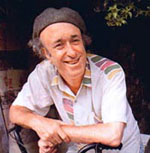
Enter Mark Silk, a Jewish professor and a seasoned editor and journalist as well, who heads the Leonard Greenberg Center for the Study of Religion in Public Life at Trinity College in Hartford, Connecticut.
When I asked Dr. Silk in a recent email if the term “scare quotes” might be replaced by a better, more meaningful word, since nobody really knows why they are called “scare” quotes, he told me that while it’s hard to replace a term that has such a long history in academia and journalism, he’d suggest calling them “caveat quotes” instead, adding: “I’m glad you like ‘caveat quote,’ although I’m not holding my breath that it will catch on.”
One never knows. Calling quoted words or phrases “caveat quotes” makes much better sense than calling them “scare quotes,” since the the word “caveat” would signal to the reader that the word in quote marks is something he or she should “beware” of. I, for one, applaud Dr Silk’s coining the term “caveat quotes” to replace “scare quotes,” and I do hope the new coinage catches on nationwide. Why?
Some observers feel that In the long run-up to the American presidential elections this coming Tuesday, an epidemic of so-called “scare quotes” has turned political punditry and commentary by those on the left and right into a mockery of democracy and liberty. And the epidemic not only threatens to infect and undermine the entire political process of this country, but it is also invading the religious realm as well.
Mollie Ziegler Hemingway, writing in a blog post for GetReligion.Com and headlined “Scare quote epidemic spreads to ‘natural’ family planning,” referred to my earlier discussion here of the scare quotes problem, noting: “It’s been [a while] since a reader sent in a discussion of the use of scare quotes [that appeared in] the San Diego Jewish World.”
How stop the epidemic? A recent “B.C.” comic strip in the daily newspapers on July 18 nationwide said it well. We are living now in a culture where liberals and conservatives drink water at separate water fountains in the park, the cartoonist implied — sarcastically — one labeled “Conservatives Only” and the other labelled “Liberals Only.” This kind of scare quotes ”scaremongering” must be contained somehow, or the contagion will only get worse.
When a simple three-panel comic strip tells Americans to wake up and look at what the ”shouters” are doing to our political and religious culture, it’s time for all of us to wake up. No more separate drinking fountains.
*
Bloom is Taiwan bureau chief for San Diego Jewish World and an inveterate web surfer. He may be contacted at dan.bloom@sdjewishworld.com