Ben Urwand, The Collaboration: Hollywood’s Pact With Hitler, BelknapPress, 2013.
By David Strom
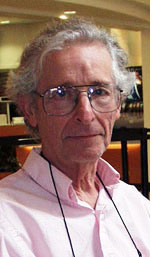
CHULA VISTA, California –I am not a historian of Hollywood and/or the movie industry, and despite this fact, or perhaps because of it, I found Ben Urwand’s book to be interesting and informative. However, I also found the title to be misleading, possibly deliberately chosen to sell more books. The author never demonstrates, to this reader’s satisfaction at least, that the moguls in Hollywood, many of them Jewish, were collaborators with the Nazis. The best he can show is that they accommodated the Nazi regime for their bottom line, profits (not unlike today).
Before Hitler and the Nazis gained total control over the German government in 1933, the Americans made the film, All Quiet on the Western Front, which opened in Berlin on December 5, 1930. The movie theater was packed with Nazis who protested inside and outside the movie house against the showing of this film. A little over a week later, the movie was banned in Germany. One of the main reasons for the banning of this and other films was the possible detrimental effect on the German image. In the mind of those who were promoting and supporting the imperialistic agenda of the Nazis, the film did not show the Germans as strong or nationalistic enough. The German soldiers by showing their fear in the face of enemy bombardment did not promote a willingness among the Germans to die gloriously for the Fatherland. It made nationalism seem irrelevant.
While The Collaboration: Hollywood’s Pact With Hitler contributes to our knowledge about U.S. films in the Nazi era, it did not make a convincing case that Hollywood entered into a pact with the Nazis anything like the Stalin Hitler Pact or other concerted course of action of that nature. The Hollywood movie moguls accommodated their own thoughts to those of the Nazis in order to keep distributing their movies in Germany in the 1930s. The film industry agreed to pacify Nazi officials who sought to shape American movies for all audiences, not just those in Germany. Hitler and other Nazis recognized the entertainment, economic and sometimes propaganda value of certain American films and wanted to keep them in theaters. At best, the “pact” was an agreement to let the German consul in Los Angeles, Dr. Gustav Struve, a devoted Nazi, make suggestions about scenes in films dealing with German themes that he thought were offensive to the German people and “ought to be taken out” or changed.
“Every night before going to bed Adolf Hitler watched a movie.” He picked the title of the film to be watched from a list presented to him at dinner. Along with Hitler “all the members of his household-his adjutants, his servants, even the chauffeurs of his guests-were permitted to join him.” This was the only time when Hitler did not speak during the evening. Hitler an accomplished orator thought very highly of the technological advancement of film:
“The picture in all its forms up to the film has greater possibilities. Here a man needs to use his brains even less; It suffices to look, or at most read extremely brief tests, and thus many will more readily accept a pictorial presentation than read an article of any length. The picture brings them in a much briefer time, I might almost say at one stroke, the enlightenment which they obtain from written matter only after arduous reading.”
Herman J. Mankiewicz wrote a fictionalized play titled The Mad Dog of Europe that chronicled Hitler’s rise to power and the anti-Semitic actions of the Nazi government towards Jews and their businesses. It was soon made into a movie script but was never produced. The main reason it wasn’t produced was because Louis B Mayer of MGM and other leaders in the industry knew that if this film was made all the other American films might be banned from Germany. The bottom line would be in jeopardy. Among the Hollywood moguls, “85 of them engaged in production” in the 1930’s and “53 are Jews.”
The moguls could not plead “ignorance.” By March 27, 1933, a huge rally at Madison Square Garden took place “to protest the treatment of Jews in Germany.” One of the sponsors of the rally, The American Jewish Congress called for a boycott of German goods. Many of the Hollywood studios did not listen. They continued with their bottom line, profits over people and justice. However, the movie The Mad Dog of Europe was never completed, perhaps because of its lack of potential for contributing to the bottom line and no good way of distributing the film even if made.
Prior to the accommodation by Hollywood to the Nazi censorship of its films, Jews appeared as Jews and others, but with the rise of the Nazi regime, Jewish characters all but disappeared from Hollywood film.
By June 1933, Warner Brothers movies were banned from Germany on account of Captured! Only three of eight leading U.S. studios by 1936- MGM, 20th Century-Fox and Paramount, were still willing or able to work with the Nazis. The studios bowed to the wishes of the Nazi government and religiously refrained from making anti-fascist movies, even though fascism was quickly growing in Europe and elsewhere.
The European market for American films dried up with the invasion of Poland in 1939. A breath of freer and more democratic air now moved into the studios. With little money coming into the movie industry from Europe, studios began releasing anti-Nazi movies like Fox’s Four Sons and MGM’s The Mortal Storm (both 1940), prompting Germany to ban all their films. One of my personal favorite anti-Nazi pre-war films was The Great Dictator by Charlie Chaplin. As a comedy it made fun of Hitler. Chaplin played two roles inGreat Dictator, not just the dictator “Hynkel” but also a Jewish barber. Though Chaplin made this film he had second thoughts both before the war and certainly after the war. “He felt the treatment of the Jews in Germany was so horrendous that the subject of dictatorship could no longer be treated humorously.”
By the time the United States entered the war the issue of accommodating to the Nazi regime over American made films was basically over.
Today, like yesterday, to do business just for profit, according to Pope Francis, is reprehensible, but according to conservative commentator, Rush Limbaugh, to speak out against “unfettered capitalism is “Marxist.” Anxious to get their films into German theaters in the 1930s during the depression, doing business with the Nazis as the studios did was deplorable but on a par with how they bowed and responded to the wishes of the Hays Office or the Catholic League of Decency and other similar pressures and attitudes at home.
Ben Urwand’s book was worthwhile reading. It dealt with a different aspect of the Golden Age Of Hollywood. It wasn’t so golden after all.
*
David Strom is professor emeritus of education at San Diego State University. He may be contacted via david.stron@sdjewishworld.com
Hearst sucked down $400,000 from the IIIReich to make fascism more acceptable in the USA. T Mann’s book, ‘Joseph and His Brothers’ was published Berlin, 1933. ‘Patriarch’ book about J Kennedy has quotes about films and WWII. Einstein’s #1 person to meet in his visit to California was Chaplin who had recently then married Oona McNiel to the disappointment of JD Salinger. Einstein also met T Mann at his Montecito home which was used in the film, ‘Scarface’ decades later.