By Rabbi Ben Kamin
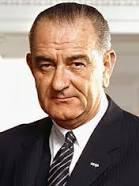
ENCINITAS, California –How was it that a bawdy, bulky, cowboy-caricature of a roughshod politician, a man with a foul mouth and oversized hands, a classic “good ol’ boy,” became the one who truly signed off on the civil rights legislation that Martin Luther King had dreamed about for so long?
And why is Broadway now about to stage a production about him, All The Way, starring Bryan Cranston of Breaking Bad fame? Because Lyndon Baines Johnson, a megalomaniac legislative master, an incomprehensibly wealthy rancher, began his life as schoolteacher whose students were brown-skinned, hungry kids blown in from Mexico like human tumbleweed. Johnson was not from Harvard, he was from the hills.
After the terrible and shocking gunfire in Dallas on Nov. 22, 1963, when President John F. Kennedy was publicly executed, another man quietly and deftly emerged from the smoke. Johnson, the vice president, nine years older than Kennedy but of another generation and temperament altogether, was literally whisked away by Secret Service agents from Parkland Hospital, his head down and his body crouched within a human chain of the fretful officers.
He was fleeing from his home state of Texas, for security reasons, and in order to help assure the continuity of the United States government. Less than two hours after the assassination in Dealey Plaza, Johnson was quickly sworn in as our 36th president in the sweltering heat of Air Force One. Then, giving his first executive order, he announced, “Let’s get airborne.”
Hardly a soul paid attention to the burly, big-eared new president over the next few days of that terrible weekend that culminated in the sorrowful playing of “Taps” as Kennedy was buried in Arlington National Cemetery on Monday, Nov. 25. But he was likely remembering a Mexican custodian named Thomas Coronado.
It was 1928; Johnson was twenty years old and a teacher at the so-called “Mexican school” in the remote and bleak hamlet of Cotulla, Texas. To help the janitor learn English, Johnson bought him a textbook, and before and after classes each day, sat tutoring him on the school steps.
Whether it was because he had had to do ‘Negro work’ as a youth—picking cotton, chopping cedar in the Hill Country—or because as a kind of “country cracker,” he himself had felt the sting of unjust discrimination, there had always existed within Lyndon Johnson genuine empathy and compassion for Americans of color.
It is doubtful that the imperial John F. Kennedy had ever personally met or socialized with a person of color during his entire gilded youth, his Harvard years, or his distinguished service during World War II in the segregated Navy.
Kennedy finally presented the Congress with a Civil Rights Bill just five months before his assassination but the bill languished and then Kennedy was gone. Johnson, the Texan who had run the Senate for years as Majority Leader, made the passage of the Civil Rights Act of 1964 and then the Voting Rights Act of 1965 into the basis of his “Great Society” vision that was then blinded by the cosmic catastrophe of the Vietnam War.
By 1968, the former classroom instructor had declined a second term as president. He and King were not speaking to each other because the preacher had the audacity to criticize the Vietnam debacle. Hardly anyone was thinking about civil rights anymore.
But the simple, dignified ghost of Thomas Coronado still hovers in a land as complex and as at war with itself as a young Lyndon Johnson found something peaceful in his heart.
*
Rabbi Ben Kamin is a freelance writer and author based in Encinitas, California. He may be contacted via ben.kamin@sdjewishworld.com
Comment from Rev. Art Cribbs:
Ben,
Thank you. You nailed it again. Great read. Looking forward to your new book.
Art
Rev. Dr. Art Cribbs
Executive Director
CLUE CA (Clergy and Laity United for Economic Justice, California)
1345 Burlington Avenue, Suite 206
Los Angeles, CA 90006