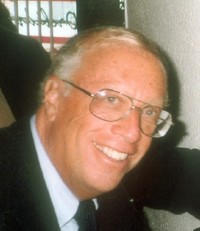
Israel Drazin-Rabbi Dr.

[caption id="attachment_119024" align="alignright" width="100"] Rabbi Israel Drazin[/caption]

Dr. Israel Drazin served for 31 years in the US military and attained the rank of Brigadier General. He has a PhD in Judaic Studies and a Masters Degree in psychology and a Masters Degree in Jewish Literature. He is an attorney and a rabbi.

He developed the legal strategy that saved the military chaplaincies when its constitutionality was attacked in court, and received the Legion of Merit for his service.

[showhide type=”pressrelease” more_text=”Show More” less_text=”Show Less”]

He was the scholar who recognized that the Aramaic translation Targum Onkelos took hundreds of items from the Tannaitic Midrashim, which were edited around 400 CE; therefore, the Targum must have been composed after that date, a period much later than had been widely accepted.

He is the author of more than 50 books, including a series of five volumes on the Aramaic translation of the Hebrew Bible, and a series of books on the twelfth century philosopher Moses Maimonides, a history of the legal case he handled, and dozens of books on the Bible.

His works, available on Amazon, include:
*A Rational Approach to Judaism and Torah Commentary
*Can’t Start Passover Without the Bread (Children’s Literature) ***
*For God and Country: The History of a Constitutional Challenge to the Army Chaplaincy
*Maimonides and the Biblical Prophets
*Maimonides: Reason Above All
*Maimonides: The Exceptional Mind
*Mysteries of Judaism (Maimonides and Rational)
*Mysteries of Judaism II: How the Rabbis and Others Changed Judaism
*Nachmanides: An Unusual Thinker
*Onkelos on the Torah Understanding the Bible Text (5 Volume Set)**
*Onkelos on the Torah (Book 1: Genesis) **
*Onkelos on the Torah (Book 2: Exodus) **
*Onkelos on the Torah (Book 3: Leviticus) **
*Onkelos on the Torah (Book 4: Numbers) **
*Onkelos on the Torah (Book 5: Deuteronomy) **
*Sailing on Moti’s Ark on Sukkoth (Children’s Literature) ***
*Stories that Teach the Truth: Ecclesiastes, Tobit, Susanna, and Other Stories.
*Studies in Onkelos (Hebrew edition)
*Targum Onkelos to Exodus [2]: An English Translation of the Text with Analysis and Commentary
*Targum Onkelos to Leviticus [3]: An English Translation of the Text with Analysis and Commentary
*Targum Onkelos to Numbers [4]: An English Translation of the Text with Analysis and Commentary
Targum Onkelos to Deuteronomy [5]: An English Translation of the Text with Analysis and Commentary
*The Authentic King Solomon
*The Tragedies of King David
*Understanding Onkelos
*Unusual Bible Interpretations: Five Books of Moses (Maimonides and Rational)
*Unusual Bible Interpretations: Hosea
*Unusual Bible Interpretations: Jonah and Amos
*Unusual Bible Interpretations: Joshua
*Unusual Bible Interpretations: Judges
*Unusual Bible Interpretations: Ruth, Esther, Judith
*What’s Beyond the Biblical Text? **
*Who Really Was the Biblical David?
*Who Was the Biblical Prophet Samuel?

** Co-Authored with Stanley Wagner
** Co-Authored with Leba Lieder
[/showhide]

Was Isaac angry that Abraham tried to kill him?

Many people are convinced that Isaac was angry with his father Abraham because he lied to him when he said that the two were going on a trip to offer a sacrifice to God, implying that the sacrifice would be an animal, and that Abraham tied him up on top of a stone altar, planned to kill him, and only stopped when he heard a voice from heaven telling him to desist. [Rabbi Dr. Israel Drazin]

Was Isaac angry that Abraham tried to kill him? Read More »

Israel Drazin-Rabbi Dr., Jewish Religion
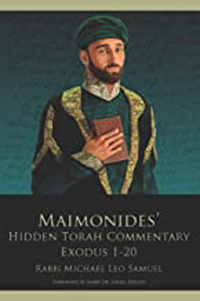
Rabbi Samuel’s many insights into Maimonides

His work is comprehensive, full of information, and eye-opening. The writings on each parasha is divided by chapters; each of which is subdivided by subjects that Rabbi Samuel addresses in clear detail. For example, in Genesis chapter 1, he examines 22 subjects, such as the meaning of Elohim, the purpose of creation, the reason for marriages, God does not decree moral behavior, the nature of biblical metaphors, exempting women from some biblical commands, and more. [Rabbi Dr. Israel Drazin]

Rabbi Samuel’s many insights into Maimonides Read More »

Books, Poetry & Short Stories, Israel Drazin-Rabbi Dr., Jewish Religion, Michael Leo Samuel-Rabbi

Parashat Noach can be a guide to Torah reading

Why were different divine punishments done in very different ways? For example, Cain was banished in Genesis 4:12 for murdering his brother Abel; Noah’s generation was killed with flood in Genesis 6-8; Sodom and Gomorrah were destroyed with brimstone and fire in Genesis 19:24,  the builders of the Tower of Babel were punished by having their languages confused in Genesis 11: 7; Egyptians who enslaved Israelites died during ten plagues beginning in in Exodus 7. [Rabbi Dr. Israel Drazin]

Parashat Noach can be a guide to Torah reading Read More »

Israel Drazin-Rabbi Dr., Jewish Religion

What is the origin of the Oral Torah?

The general scholarly and rabbinical view is that the Oral Torah blossomed during the Second Temple period, when Judeans, as Jews were called at that time, who had returned from the Babylonian exile were faced with new problems that the Torah did not address and others that were addressed but needed updating to fit the situations they found. [Rabbi Dr. Israel Drazin]

What is the origin of the Oral Torah? Read More »

Israel Drazin-Rabbi Dr., Jewish History, Jewish Religion

King Solomon the not so wise

History repeats itself mostly because people fail to learn from the terrible consequences that occurred following the foolish acts of the past. The Bible tells us about the supposed wisdom of King Solomon. In my book The Authentic King Solomon, I show that actually, scripture is demonstrating that the king was not as smart as he and we think he was. In every chapter where Solomon is shown to have performed an act, it also shows, without exception, that he also acted foolishly. [Rabbi Dr. Israel Drazin]

King Solomon the not so wise Read More »

International, Israel Drazin-Rabbi Dr., Jewish History, Middle East

Rosh Chodesh not observed as Torah commands

Like all other biblical holidays, Rosh Chodesh is not observed today as required by biblical law. This is because of changed social circumstances and because the principle element of the biblical worship was animal sacrifices, which was discontinued after the Romans destroyed the Jewish Second Temple in 70 CE. Additionally, the name of the celebration was changed from “Chodesh” to “Rosh Chodesh,” which in the Torah did not mean “New Moon,” but “First Month” and referred to the month now called Nissan when Passover occurs.

Rosh Chodesh not observed as Torah commands Read More »

Israel Drazin-Rabbi Dr., Jewish Religion

Difficulties, explanations regarding Kohelet

Tradition mandates that Jews should read the biblical book Kohelet, also spelt Koheleth and Qohelet, called Ecclesiastes in English, during the holiday of Sukkot. Both the Hebrew and English names mean “collector” or “collection.” We do not know why this mandate was made. Some say that since Sukkot is a very happy holiday, we need the sober thoughts of Kohelet to modify our joy and make it more reasonable. The book was considered heretical by many ancient rabbis who wanted to exclude it from the Bible.

Difficulties, explanations regarding Kohelet Read More »

Israel Drazin-Rabbi Dr., Jewish Religion

Origins of the Sukkot holiday

Leviticus 23:40 states that the Israelites should take four species on the first day and “rejoice before the Lord your God seven days.” While the Hebrew words used for the four species are obscure, the Jewish Publication Society’s 1960 translation defines them as “the fruit of goodly trees, branches of palm trees, and boughs of thick trees, and willows of the brook.” An apparently separate command in verse 42 states, “Ye shall dwell in booths seven days.” The first biblical description of the implementation of this command is in the biblical book Nehemiah. It is entirely different than the way the holiday is celebrated today. (To read more, please click on the headline.)

Origins of the Sukkot holiday Read More »

Israel Drazin-Rabbi Dr., Jewish Religion

Two rabbinic leaders disputed Torah in ancient times

Two Talmudic sages lived around 130 CE and disagreed on how to interpret the Bible. Rabbi Akiva won out, and Rashi, Nachmanides, and most ancient Bible commentators as well as most Midrashim follow his view. Others, such as Rashi’s grandson Rashbam, Abraham ibn Ezra, and Maimonides interpret the Torah as Rabbi Ishmael did. (To read more, please click on the headline.)

Two rabbinic leaders disputed Torah in ancient times Read More »

Israel Drazin-Rabbi Dr., Jewish History, Jewish Religion

Yom Kippur and What the Romans Destroyed

Like Rosh Hashanah, Yom Kippur does not exist in the Bible. It replaces another day known as Yom Hakippurim. Yom Kippur is singular, “day of atonement,” while Yom Hakippurim is plural, “day of atonements.” The biblical Yom Hakippurim is mentioned in Leviticus 16:29–31, 23:27–32, and Numbers 29:7–11. No work was permitted on this day, special sacrifices were offered, and the Israelites were obliged to te’anu et nafshoteikhem. This  is improperly translated as “you must afflict your souls.” (To read more, please click on the headline.)

Yom Kippur and What the Romans Destroyed Read More »

Israel Drazin-Rabbi Dr., Jewish Religion