By Rabbi Leonard Rosenthal
SAN DIEGO — One of my guilty pleasures is reading spy and espionage books. Last week I stopped short after reading a sentence in The Master of Disguise: My Secret Life in the CIA by Antonio J. Mendez. Mendez was describing one-time pads which are used for secure encrypted communications. He wrote, “Pads come in many sizes; some were Torah-like scrolls on specially treated ‘flash’ paper….”
What caught my eye, of course, was his describing the one-time pad as being written on a “Torah-like scroll.” I was amazed the concept of a Torah scroll was not only known by the author, but by his assumption that his readers would readily understand his meaning as well.
While a Torah Scroll is an object of veneration for Jews, for most non-Jews it is a mystery. While they may readily recognize its form, its contents are a curious unknown.
This was brought home to me many years ago when my congregation in Tampa, Florida, welcomed two new Torah scrolls into the synagogue. It was a festive event and the local newspaper sent a reporter and photographer to cover it. The resulting article was accurate and beautifully written. However, after reading it I realized that while the article described the Torah as Judaism’s most sacred book, it did not state that its contents are the first five books of the Old Testament! For all the readers knew, the Torah was a sectarian book of arcane mumbo-jumbo, whose contents would be meaningful to Jews alone!
Although most Jews are more familiar with the Torah’s contents than their non-Jewish neighbors, the Torah still remains a powerful and mysterious symbol for us. Its meaning for Jews goes far beyond the words it contains. As I say during Bar and Bat Mitzvah ceremonies, the Torah stands for Judaism, our Jewish heritage, and the tradition and legacy one generation passes onto the next. Although I have stood before an open Torah Scroll many times, the power of that experience has not diminished.
On Monday, Oct. 8 at 6:00 p.m. Tifereth Israel Synagogue will celebrate Simchat Torah. In addition to dancing with the Torah scrolls, and rolling them back from the last chapter of Deuteronomy to the first chapter of Genesis, we will also unroll an entire Torah Scroll for everyone to see. We will place our children in the middle and the adults will stand in a circle holding the edges of the scroll for all to see. I walk around the open scroll pointing out the Ten Commandments, Song of the Sea, Priestly Blessing, and other familiar “landmarks.” It is a powerful and awesome sacred moment, especially for those who have never seen an entire Torah Scroll before.
I wish you and your family a Chag Sameach and Shabbat Shalom.
*
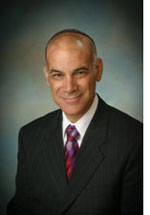
Rabbi Rosenthal is spiritual leader of Tifereth Israel Synagogue in San Diego. He may be contacted at leonard.rosenthal@sdjewishworld.com