By Rabbi Leonard Rosenthal
SAN DIEGO — Whenever we refer to Moses, we call him Moshe Rabeinu, Moses our teacher. It is curious that although we normally add the words: zichrono l’vracha, “May their name be a blessing,” when we speak about someone who has died, when it comes to Moses, we refer to him in the present tense: Moses our teacher.
An ancient tradition explains why. Parashat Va-yeilech opens with the words: “Moses went and spoke these things to all Israel.” (Deut. 31:1) Biblical commentators were quick to note that although the Torah said that “Moses went,” it did not specify the location to which he traveled to address the Israelites.
One sage suggested that it was because Moses did not go to a physical location, rather his words entered into the hearts, minds, and lives of the Israelites. Within every Jew is a “spark” of Moses and it comes out whenever we study Torah or perform one of the Torah’s mitzvot. (Mayana shel Torah)
Another sage added that this is why the Torah says that “No one knows where Moses is buried.” (Deut. 34:6) It is because we do not need to know the physical location. Rather, Moses continues to be found in every one of us. He continues to be our teacher
until this day and in this way, he lives on past his physical years.
As Rabban Simeon ben Gamliel said: “We need not erect monuments for the righteous; their good deeds are their memorials.”
*
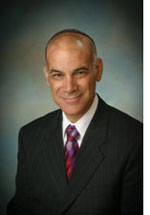
Rabbi Rosenthal is spiritual leader of Tifereth Israel Synagogue. He may be contacted at donald.harrison@sdjewishworld.com