Editor’s Note: The Vatican Information Service provides running coverage of the Pope’s visit to the Holy Land. In the interest of historians, we have strung together the dispatches from the Palestine Authority, and will do likewise, for the dispatches from Israel proper.
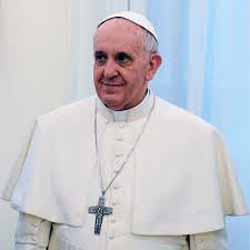
(Photo: Wikimedia)
BETHLEHEM, Palestinian Authority (VIS) — At 7.30 Sunday morning, May 25, the Pope transferred from the apostolic nunciature of Amman to Bethlehem by helicopter, where he arrived at 9.20 a.m. local time; he then undertook by car the journey of two and a half kilometres from the heliport to the presidential palace of Bethlehem, where he was received by the president of the Palestinian State, Mahmoud Abbas.
History of Bethlehem
Bethlehem is first referred to in the Bible in relation to the death of Rachel and is identified with the Euphrates (the fruitful). In the sacred books it is called “Bethlehem of Judea,” the tribe to which it belonged. David was born and consecrated a king by the prophet Samuel there, and with the birth of Jesus, the smallest of Israel’s cities gained worldwide importance and grew due to the influx of pilgrims. In the year 135, the emperor Adrian introduced the cult of Adonis but Christianity was restored in 330 by Constantine.
Following the Islamic conquest in 638, the Caliph Omar initiated a policy of religious tolerance, but with the arrival of the crusading army in 1099, the Muslims devastated the city. In 1100 the crusader king of Jerusalem, Baldwin I, was consecrated. The Arab reconquest in 1187 and the subsequent Ottoman occupation marked the decline of the citadel which by 1600 had been reduced to a small village. At the beginning of the nineteenth century the city, the majority of whose inhabitants were Christians, began a revival. In 1831, the Pasha of Egypt, Mohamed Ali, conquered the city, and the Muslims, allies of the Ottomans, were driven out and their quarters burned. Ten years later, the city fell under Ottoman control once again.
Under British rule from 1918, it became part of the Hashemite Kingdom of Jordan in 1946. In 1967, following the so-called Six Days War, it was occupied by the Israeli army, along with east Jerusalem and most of the West Bank. Since 1995 it has been part of the Autonomous Palestinian Territories following the Oslo Accords (now the State of Palestine). The then-president of the Palestinian Authority, Yasser Arafat, ordered the construction of the presidential Palace which today receives the Pope’s visit.
‘Time has come to put an end to this situation’
The Holy Father, accompanied by President Abbas, was greeted by various representatives of the Palestinian Christian communities from the West Bank and the Gaza Strip, who delivered various messages, and then transferred to the Great Hall where he was awaited by the Palestinian authorities and members of the Diplomatic Corps, whom he addressed.
{Following is the text of Pope Francis’ address to President Abbas}:
Mr President,
Dear Friends, Dear Brothers and Sisters, I thank President Mahmoud Abbas for his kind welcome and I offer cordial greetings to the representatives of the government and the entire Palestinian people. I thank the Lord for the opportunity to be here with you today in the birthplace of Jesus, the Prince of Peace. I thank all of you for your warm reception.
For decades the Middle East has known the tragic consequences of a protracted conflict which has inflicted many wounds so difficult to heal. Even in the absence of violence, the climate of instability and a lack of mutual understanding have produced insecurity, the violation of rights, isolation and the flight of entire communities, conflicts, shortages and sufferings of every sort.
In expressing my closeness to those who suffer most from this conflict, I wish to state my heartfelt conviction that the time has come to put an end to this situation which has become increasingly unacceptable. For the good of all, there is a need to intensify efforts and initiatives aimed at creating the conditions for a stable peace based on justice, on the recognition of the rights of every individual, and on mutual security. The time has come for everyone to find the courage to be generous and creative in the service of the common good, the courage to forge a peace which rests on the acknowledgment by all of the right of two States to exist and to live in peace and security within internationally recognized borders.
To this end, I can only express my profound hope that all will refrain from initiatives and actions which contradict the stated desire to reach a true agreement, and that peace will be pursued with tireless determination and tenacity. Peace will bring countless benefits for the peoples of this region and for the world as a whole. And so it must resolutely be pursued, even if each side has to make certain sacrifices.
I pray that the Palestinian and Israeli peoples and their respective leaders will undertake this promising journey of peace with the same courage and steadfastness needed for every journey. Peace in security and mutual trust will become the stable frame of reference for confronting and resolving every other problem, and thus provide an opportunity for a balanced development, one which can serve as a model for other crisis areas.
Here I would like to say a word about the active Christian community which contributes significantly to the common good of society, sharing in the joys and sufferings of the whole people. Christians desire to continue in this role as full citizens, along with their fellow citizens, whom they regard as their brothers and sisters.
Mr President, you are known as a man of peace and a peacemaker. Our recent meeting in the Vatican and my presence today in Palestine attest to the good relations existing between the Holy See and the State of Palestine. I trust that these relations can further develop for the good of all. In this regard, I express my appreciation for the efforts being made to draft an agreement between the parties regarding various aspects of the life of the Catholic community in this country, with particular attention to religious freedom. Respect for this fundamental human right is, in fact, one of the essential conditions for peace, fraternity and harmony. It tells the world that it is possible and necessary to build harmony and understanding between different cultures and religions. It also testifies to the fact that, since the important things we share are so many, it is possible to find a means of serene, ordered and peaceful coexistence, accepting our differences and rejoicing that, as children of the one God, we are all brothers and sisters.
Mr President, dear brothers and sisters gathered here in Bethlehem: may Almighty God bless you, protect you and grant you the wisdom and strength needed to continue courageously along the path to peace, so that swords will be turned into ploughshares and this land will once more flourish in prosperity and concord. Salaam!
*
Pope proposes Vatican as site for Peace Talks
After proposing the Vatican as the location for a prayer meeting between the presidents of the State of Palestine and the State of Israel, Pope Francis prayed the Regina Coeli, commenting that it was precisely there in Bethlehem that Mary gave birth to her Son Jesus and that the Virgin “is the one who, more than any other person, contemplated God in the human face of Jesus. Assisted by Saint Joseph, she wrapped him in swaddling clothes and laid him in the manger”.
“To Mary we entrust this land and all who dwell here, that they may live in justice, peace and fraternity”, he said. “We entrust also the pilgrims who come here to draw from the sources of the Christian faith – so many of them are also present at this Holy Mass. Mary, watch over our families, our young people and our elderly. Watch over those who have lost faith and hope. Comfort the sick, the imprisoned and all who suffer. Watch over the Church’s Pastors and the entire community of believers; may they may be ‘salt and light’ in this blessed land. Sustain all educational initiatives, particularly Bethlehem University”.
“Contemplating the Holy Family here in Bethlehem, my thoughts turn spontaneously to Nazareth, which I hope to visit, God willing, on another occasion. From this place I embrace with affection the Christian faithful living in Galilee and I express my support for the building of the International Centre for the Family in Nazareth. We entrust the future of our human family to Mary Most Holy, that new horizons may open in our world, with the promise of fraternity, solidarity and peace”.
After the Regina Coeli, the Pope proceeded to the Franciscan “Casa Nova” convent, a reception centre for pilgrims, built in 1908 and extended and blessed in 1986, which is able to host up to 129 people. There, Francis dined with several families of refugees and Palestinian homeless.
*
Pope Celebrates Mass at the Church of the Nativity
Pope Francis celebrated Mass in Bethlehem’s Manger Square on Sunday, beside the Church of the Nativity which is dedicated to the Child Jesus. He focused his homily on the Child Jesus and on children who are “a sign of hope, a sign of life, but also a “diagnostic” sign, a marker indicating the health of families, society and the entire world”.
Please find below the full text of the Pope’s homily:
“This will be a sign for you: you will find a child wrapped in swaddling cloths and lying in a manger” (Lk 2:12).
What a great grace it is to celebrate the Eucharist in the place where Jesus was born! I thank God and I thank all of you who have welcomed me on my pilgrimage: President Mahmoud Abbas and the other civil authorities; Patriarch Fouad Twal and the other bishops and ordinaries of the Holy Land, the priests, the good Franciscans, the consecrated persons and all those who labor to keep faith, hope and love alive in these lands; the faithful who have come from Gaza and Galilee, and the immigrants from Asia and Africa. Thank you for your welcome!
The Child Jesus, born in Bethlehem, is the sign given by God to those who awaited salvation, and he remains forever the sign of God’s tenderness and presence in our world. The angel announces to the shepherds: “This will be a sign for you: you will find a child…”.
Today too, children are a sign. They are a sign of hope, a sign of life, but also a “diagnostic” sign, a marker indicating the health of families, society and the entire world. Wherever children are accepted, loved, cared for and protected, the family is healthy, society is more healthy and the world is more human. Here we can think of the work carried out by the Ephpheta Paul VI institute for hearing and speech impaired Palestinian children: it is a very real sign of God’s goodness. It is a clear sign that society is healthier.
To us, the men and women of the twenty-first century, God today also says: “This will be a sign for you”, look to the child…
The Child of Bethlehem is frail, like all newborn children. He cannot speak and yet he is the Word made flesh who came to transform the hearts and lives of all men and women. This Child, like every other child, is vulnerable; he needs to be accepted and protected. Today too, children need to be welcomed and defended, from the moment of their conception.
Sadly, in this world, with all its highly developed technology, great numbers of children continue to live in inhuman situations, on the fringes of society, in the peripheries of great cities and in the countryside. All too many children continue to be exploited, maltreated, enslaved, prey to violence and illicit trafficking. Still too many children live in exile, as refugees, at times lost at sea, particularly in the waters of the Mediterranean. Today, in acknowledging this, we feel shame before God, before God who became a child.
And we have to ask ourselves: Who are we, as we stand before the Child Jesus? Who are we, standing as we stand before today’s children? Are we like Mary and Joseph, who welcomed Jesus and care for him with the love of a father and a mother? Or are we like Herod, who wanted to eliminate him? Are we like the shepherds, who went in haste to kneel before him in worship and offer him their humble gifts? Or are we indifferent? Are we perhaps people who use fine and pious words, yet exploit pictures of poor children in order to make money? Are we ready to be there for children, to “waste time” with them? Are we ready to listen to them, to care for them, to pray for them and with them? Or do we ignore them because we are too caught up in our own affairs?
“This will be a sign for us: you will find a child…”. Perhaps that little boy or girl is crying. He is crying because he is hungry, because she is cold, because he or she wants to be picked up and held in our arms… Today too, children are crying, they are crying a lot, and their crying challenges us. In a world which daily discards tons of food and medicine there are children, hungry and suffering from easily curable diseases, who cry out in vain. In an age which insists on the protection of minors, there is a flourishing trade in weapons which end up in the hands of child-soldiers, there is a ready market for goods produced by the slave labor of small children. Their cry is stifled: the cry of these children is stifled! They must fight, they must work, they cannot cry! But their mothers cry for them, as modern-day Rachels: they weep for their children, and they refuse to be consoled (cf. Mt 2:18).
“This will be a sign for you”: you will find a child. The Child Jesus, born in Bethlehem, every child who is born and grows up in every part of our world, is a diagnostic sign indicating the state of health of our families, our communities, our nation. Such a frank and honest diagnosis can lead us to a new kind of lifestyle where our relationships are no longer marked by conflict, oppression and consumerism, but fraternity, forgiveness and reconciliation, solidarity and love.
Mary, Mother of Jesus,
you who accepted, teach us how to accept; you who adored, teach us how to adore;
you who followed, teach us how to follow. Amen
*
Preceding provided by the Vatican Information Service