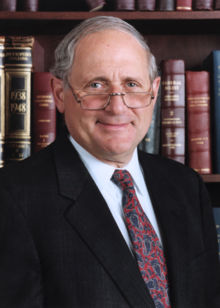
WASHINGTON, D.C. (Press Release) – Sen. Carl Levin, D-Michigan, chairman of the Senate Armed Services Committee, made the following statement on Thursday, June 19, after the committee received a briefing from Department of Defense officials on the security situation in Iraq:
“The plan President Obama outlined today to send up to 300 noncombat advisors to Iraq is a reasonable step to enable us to assess the security situation there. We should be extremely cautious about taking any actions beyond that step, such as air strikes, and three conditions should be met before we consider any such actions. The first is that there should be a strong consensus among top leaders from all the elements of Iraqi
society – Sunnis, Shias, Kurds and religious minorities – to make a formal, public request for such action. Only if Iraq is unified behind such action can it be successful. Second, our senior military leaders need to judge whether such action on our part would be effective. And third, our friends and allies in the region would need to be supportive.”
Senator Ben Cardin (D-Maryland) in a statement issued on Wednesday, June 18, said: “Following more than a decade of training Iraqi military forces, it’s disappointing to see the deteriorating situation in Iraq. It’s time for the Iraqi people to take responsibility for the security and sustainability of their own country. If peace and cooperation are to be achieved, Prime Minister Maliki must move immediately toward a more inclusive power-sharing government. This war has been a long and painful chapter for the people of Iraq and the people of the United States.
_______________________________
Keeping Up With Jewish Public Officials
_______________________________
“I voted against granting President Bush the authority to invade Iraq in 2003 and I strongly oppose additional forces on the ground today. Rather, the U.S. must act together with the international community to achieve our common goals of a stable Iraq and preventing the entrenchment of extremists. Violent groups like ISIL that seek to spread their extremist activity, are primary examples of why legislation such as the Syrian War
Crimes Act of 2014 is critical to U.S. national security and greater stability in the Middle East.” That measure introduced by Cardin and Senator Marco Rubio (R-Florida) would establish a Syria-specific standard of reporting and accountability for crimes against humanity.
In another development, Sen. Bernie Sanders (Independent-Vermont) on Thursday accused oil companies and Wall Street speculators of using unrest in Iraq as a phony excuse to artificially drive up crude oil and gasoline prices.
The price of oil today rose above $115 a barrel – a new nine-month high on the New York Mercantile Exchange – ostensibly because of concerns that sectarian violence in Iraq could cut off the country’s exports. The price of regular gasoline rose to $3.67 a gallon today, up a nickel in the past month. That was despite the fact that today there is more supply and less demand for gasoline than five years ago, when the average
price of a gallon of gas was just $2.67 a gallon.
“I am getting tired of big oil companies telling us that gasoline prices are going up because of the turmoil in Iraq. The truth is that big oil will never miss an opportunity to increase the price of gas. Today, it’s Iraq. Tomorrow, it may be the weather. On and on it goes,” said Sanders, a member of the Senate energy committee. “The fact is that high gasoline prices have less to do with supply and demand and more to do with
Wall Street speculators driving prices up in the energy futures market.”
Sanders said he will introduce legislation to force the Commodity Futures Trading Commission, the federal agency that regulates oil markets, to use its emergency authority to eliminate excessive oil speculation. Sanders’ proposal is virtually identical to bipartisan legislation that overwhelmingly passed the House in 2008 by a vote of 402-19.
“Millions of Americans are hurting as a result of excessive speculation on the oil futures market,” Sanders said. “The time to provide the American people relief at the gas pump is now before this situation gets even worse.”
He cited a growing consensus that excessive speculation on oil is significantly contributing to the high pump prices for gasoline. Exxon Mobil, Goldman Sachs, the International Monetary Fund, the St. Louis Federal Reserve, the American Trucking Association, Delta Airlines, the Petroleum Marketers Association of America, the New England Fuel Institute, the Consumer Federation of America and others have blamed
excessive oil speculation for significantly increasing oil and gas prices. Goldman Sachs, perhaps the largest speculator on Wall Street, has acknowledged that excessive oil speculation costs Americans at least 56 cents a gallon at the pump.
*
Preceding provided by Senators Levin, Cardin and Sanders