By Donald H. Harrison
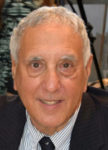

LA JOLLA, California – While the pro-Israel lobby does its work through public testimony, private meetings with members of Congress, and by making reportable contributions to the campaigns of candidates who support Israel, the opposing Arab lobby goes about its business in other, more subtle, ways, says Mitchell Bard, author of The Arab Lobby: The Invisible Alliance That Undermines America’s Interests in the Middle East.
Bard spoke Wednesday night at a dinner meeting of StandWithUs, held in the sukkah of Congregation Beth El. He described the Arab Lobby as having three main components: People in government, particularly in the White House and the Departments of State and Defense, some of whom may have a selfish interest in seeing an Arab point of view prevail; the various Arab States themselves, which have embassies in Washington; and a coalition including Arab-Americans, academicians, and pro-Palestinian activists.
Those in government who have a selfish interest in advocating for the Arab point of view, he said, are aware that there is only one Israel, while there are 21 Arab countries. That means that there are 21 times the opportunity to advance through the ranks if one studies Arabic, and Arab culture, rather than Hebrew and Jewish culture, he said. Some diplomats spend their careers going from postings in one Arab country to another, eventually becoming so sympathetic to the Arab point of view, that they become advocates for the Arab states, rather than for the U.S., he added.
Furthermore, Bard said, people who leave their jobs in Washington often go to private industry, such as energy companies, which have ongoing relationships with Arab countries. A recommendation from the Arab countries to a private company can enhance such a candidate’s job prospects. People in government are aware of this, Bard said.
He did not suggest that all Arabists have a vested interest. Some genuinely believe that oil is the most important part of the U.S. economy, and that it is of utmost importance to keep the Arab suppliers of oil happy. Further, he said, some genuinely believe that the continuing Israeli-Palestinian conflict is the root of all problems in the Middle East. Others contend that the United States, rather than being pro-Israel, should be more “even-handed” in its Middle East policy, a formulation Bard described as “code” for favoring the Palestinian cause.
Such people in the U.S. government believe that the United States should pressure Israel to give in to Arab demands, Bard said. They also argue that the U.S. position on Israel makes the United States more vulnerable to terrorism.
In discussing the work of the embassies of Arab countries in the United States, Bard noted that Prince Bandar of Saudi Arabia had unprecedented access to the top levels of government, whether that be playing golf with then-U.S. Secretary of State Colin Powell or having regular access to the White House.
He said when people leave government “The Saudis take care of people who are pro-Saudi;” hiring some as consultants, finding jobs for others. “If you are good to the Saudis, they’ll be good for you.” He said that if one looks at the contributions made to the foundations and libraries of former Presidents, one will find that the Saudis have been particularly generous. This also is true in the case of favorite non-profit organizations of former Presidents, such as with Bill Clinton and the University of Arkansas, which has received a $20 million contribution from Saudi Arabia.
“People don’t know this is going on,” Bard said. “It is done very quietly.”
Bard stressed that the Saudi Arabia lobby “is more pro Saudi than anti-Israel.” He said that for the monarchy and the large royal family of that country, the prime objective is “keeping the royal necks attached to the royal shoulders.” Whereas once Saudi Arabia may have considered Israel its greatest threat, today, like Israel, it considers Iran its arch-enemy. Bard said Saudi Arabia regulate its oil production in such a way as to provide sufficient quantities for the U.S. economy and to keep prices of oil relatively moderate.
However, he added, Saudi Arabia also has played a troublesome role in other arenas. Its advocacy of Wahhabism, an extreme form of Islam, not only finances construction of mosques and schools around the world, but also propagates anti-Semitic and anti-Christian religious bias.
He said Qatar, a country which supports Hamas and the Muslim Brotherhood, underwrites the Al Jazeera news agency, which he described as anti-Semitic, and collaborates with Iran. Believing that Jewish organizations play a disproportionate role in American decision-making, Bard said, Qatar has hired Orthodox Jews to lobby in its behalf, and has provided junkets for such prominent Jews as Malcolm Hoenlein and Alan Dershowitz to visit Qatar and meet with the emir – trips that Israel’s Prime Minister Benjamin Netanyahu has denounced.
Bard said that Arab countries are trying to influence the next generation of American leaders by financing Middle Eastern Studies programs at various universities, estimating that they have expended $1.4 billion for this purpose. At Georgetown University, he said the Saudis have made a major investment in a Center on Christian-Muslim Relations. Pro-Israel groups, he added, have spent comparatively little, or as he put it “bupkus.”
Asked if any university has an Israel studies program that can be a model for others, Bard recommended the Berkeley Center for Israel Studies at the University of California-Berkeley, and one at Brandeis University. He said that UCLA has a center, but that it lacks a chair. He urged that other centers be funded at other universities, including those in San Diego.
Bard gave relatively brief attention to the third element of the Arab lobby, which includes various Arab-American groups; non-evangelical, mainline Protestant organizations, some pan-Muslim organization, and the pro-Palestinian BDS movement, Bard said that this coalition is relatively small and disjointed. He said that most Arab Americans who have immigrated to the United States are Lebanese Christians who have historic animosity towards Palestinians, “who were killing them.”
*
Harrison is editor of San Diego Jewish World. He may be contacted via donald.harrison@sdjewishworld.com