By Rabbi Sandra Lawson in Durham, North Carolina
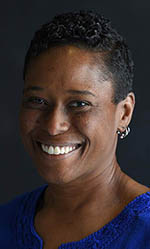
(Photo: Orah Torah via Wikipedia)
In November 2025, Atra published From Calling to Career, the most comprehensive study of the American rabbinate in a generation. It counts 4,144 working rabbis. It maps who is entering the field, who is leaving, and what is driving both. By any measure, this study is needed and important.
It is also, in one important respect, an artifact of the same problem it is trying to describe.
The future rabbinate the study describes is already more queer, more gender-expansive, more racially diverse, more second-career, less institutionally inherited than the congregational imagination many search committees still carry. The field’s crisis may not simply be about numbers. Our institutions are still holding on to an image of the rabbi that does not match the people now entering and graduating from rabbinic programs. The imagination has not evolved as quickly as the people answering the call.
The Atra study gave me the data to anchor what those of us at the margins have known by experience for a long time.
Buried in the study’s discussion of congregational hiring is a single word doing a lot of work. The word is “fit”. The report describes fit as “a sense of alignment between rabbi and community that is difficult to find, and impossible to directly recruit for.” Search committees, the report tells us, know fit when they see it. They cannot explain what it is. They can only declare it present or absent.
The phrase “Impossible to directly recruit for,” is the entire problem.
If you cannot recruit for something, you cannot examine it. If you cannot examine it, no one has to defend it. Fit works because no one ever has to explain what it means. That is not a flaw. That is what it is for.
I have been on the receiving end of fit determinations.
My story is not unique. It is one version of a pattern many of us recognize.
I was a finalist for two congregational positions. In both cases, the process followed the same arc. The interviews went well. Relationships formed. There was excitement, warmth, the sense that something meaningful might actually happen.
And then, eventually, the turn.
In one search, someone finally said the quiet part out loud: “I just don’t think the congregation is ready for a Black rabbi.”
In another, the language was softer, more institutional: “You’re extraordinary, but we’re not sure you’re the right fit.”
Yes, the rejection hurts; rabbis do not get every position. That is normal. What stayed with me is this:
Congregational searches can take months: interviews, site visits, essays, sermons, teaching, and committee after committee. By the time a candidate becomes a finalist, both sides have put in an enormous amount of work. What I have come to understand is that this happens in more than one way. Some of those congregations had no real intention of hiring someone like me. They wanted, perhaps, to be able to say they had considered candidates from the margins. They did not want to appear racist or sexist or homophobic. In other cases, the search committee sincerely wanted to hire. The warmth was real, but they had not done the serious anti-bias work with their broader community to make the hire actually possible. The committee imagined a future the community had not yet been prepared to enter. In either case, the cost falls on the candidate. The interviews are the performance. Our time is the proof.
Another thing that stayed with me was how quickly warmth became hostility. The discomfort that followed made clear there was more happening beneath the surface than questions about leadership style. Fit became the language that let everyone — the search committees, the field, even the people who were sorry to see me go — avoid naming what was actually happening.
After those two searches, I made a decision. I have not applied for a congregational position since, and I do not intend to. I am not the only rabbi whose decision the field never asked about. I am one of many.
This is what fit does: It allows communities to experience themselves as welcoming, thoughtful, even progressive, while still reproducing the same assumptions about who looks like a rabbi, sounds like a rabbi, lives like a rabbi, and feels familiar enough to stand at the bimah.
When a committee says fit, they are weighing many things at once. They are weighing a shared cultural memory: how Hebrew and melodies are “supposed” to sound, the youth groups, the Jewish summer camps, and the kind of childhood synagogue. If you came to the rabbinate later in life, or through learning communities outside the traditional pipeline, fit counts that absence against you. They are weighing lineage — what last name you carry. They are weighing whether you have a spouse who will participate in congregational life the way previous rabbis’ spouses did — hosting, attending, volunteering. And most of all, they are weighing a body, a face, a presentation. They are weighing what the congregation imagines when it pictures its rabbi.
Other rabbis in the study name the image openly. One described the traditional pulpit model as built for “largely straight men with a partner, with a wife at home who managed everything else and was also part of the synagogue.” Congregations have not adjusted the picture. The study reports that 46% of congregational rabbis now feel overwhelmed by the expectations of the role, and many are leaving because of it.
None of this gets said. All of it gets weighed.
The further you are from the default — Black, queer, woman, partnered with another woman, raised outside the institutional pipelines, named in a way that does not read to the committee as a rabbi’s name — the more fit has to do, and the more often fit returns not quite.
The Atra study itself reports that on most deterrent factors, non-binary respondents were more strongly deterred than women, who were more strongly deterred than men. The study shows the finding and walks past it. It does not ask why. It does not connect the finding to the experience of looking at the field and reading, correctly, that the field has not yet imagined you in the role.
The data is there, but the analysis is not.
Fit allows institutions to experience comfort as discernment.
The rabbi at the margins must possess every credential the listing demands, and then, on top of that, perform fit. The rabbi at the unmarked center gets to be a fit by default. Everyone else has to earn it on top of the job. You can be twice as qualified and half a candidate.
I want to name what this costs, because the report does not. It costs candidates the years and the debt they took on for a degree the market then refuses to price for them. It costs them the self-doubt that follows each fit determination, the slow narrowing of where they will apply next. It costs them the labor of imagining themselves into a role no one has yet imagined them for. And it costs some of them their rabbinate altogether. Some never become rabbis. Others enter, serve, and leave when the cost of remaining becomes too high. I know rabbis in both groups. The study counts 450 “would-bes” — people who considered the rabbinate and turned away. It found that the would-bes most strongly called to the rabbinate were also the ones most strongly blocked from it. Every single non-binary would-be fell into that group: the most motivated, the most deterred. What the study does not tell us is how many of these would-bes were Black women, queer women of color, disabled candidates who looked at the field and ran the numbers. That data was not collected. The absence is itself a finding.
The question is not who fits. The question is who the institution has learned not to see.
In the Torah, the Mishkan is built. Every detail is enumerated, every thread accounted for. And yet the Mishkan is not built to fit a single kind of Israelite. It is built so that the entire encampment can dwell around the Presence.
The Mishkan does not ask who fits. The Mishkan asks what does it take to be a place where the people, in all of who they are, can be present.
Fit, as our institutions practice it, is the opposite of the Mishkan. Fit asks whom the institution can recognize. The Mishkan asks what it would take to become a place that can hold them. The burden is reversed.
The question is not who fits. The question is who has the institution made itself fit for.
Most of our congregations have made themselves fit for the rabbi they imagined fifty years ago: white, male, married, with a spouse who hosts and children who attend Hebrew school. Rabbis ordained before 1984 were 87% male. Rabbis ordained before 2014 were 97% white. Today’s rabbinical students are 58% women, 12% non-binary, 51% LGBTQ+, and 12% identify as a race other than white. The institution will point to those numbers, eventually, as evidence that it never had a problem.
Some institutions have expanded their imagination, slowly, usually after the fact, almost always paid for by candidates who did not fit yet and who pushed the imagination forward by existing. I am one of those candidates. So are many of my colleagues.
The Atra study lists nine “areas of leverage” for the field’s future. Fit is not one of them. There is no opportunity called examine what congregational hiring committees mean when they say fit. There is no opportunity called examine whose imagination the institution has been organized around. That absence is not an oversight. It is the field continuing to refuse the question whose answer would cost it the most.
The accounting on fit has always been done from the institution’s side. Did this rabbi work for us? Did we feel the connection? The reverse accounting — what did the community lose by not stretching its imagination enough to receive this rabbi? — is not on any search committee’s worksheet. Every candidate the field called not quite a fit and let walk away is a community the field did not gain. The families that rabbi would have grown. The Torah that rabbi would have taught. The lives that rabbi would have touched.
The field’s quiet emergency is not only burnout. It is also the people the rabbinate taught itself not to recognize.
I will not tell you the field is about to change. I will tell you that the word the field uses to do its most consequential work is, by its own admission, impossible to directly recruit for, and what cannot be recruited for is precisely what must, finally, be named.
We can keep calling it fit. Or we can finally name what it has been hiding all along: racism, sexism, homophobia, and the comfort of institutional familiarity — the bodies our institutions could not picture, the rabbis they were not yet willing to imagine, the bias they have not yet been willing to outgrow.
The Mishkan is built by people who imagined a makom big enough to hold everyone. The question now is whether we are willing to build like that, or only to speak of it.
Rabbi Sandra Lawson is a Reconstructionist rabbi and the executive director of Carolina Jews for Justice.
Thank you for sharing this very interesting and very important piece. It brings forward a perspective that needs to be acknowledged and understood.