AIPAC calls for greater scrutiny and transparency in inspections of Iranian nuclear sites
 The American Israel Public Affairs Committee (AIPAC) on Wednesday issued the following advisory:
“Last week, Israeli Prime Minister Benjamin Netanyahu revealed the existence of a secret nuclear warehouse in Tehran housing documents and equipment from Iran’s nuclear weapons program. The facility is the second secret Iranian nuclear site discovered by Israel this year. These sites provide new evidence of Iran’s continuing nuclear ambitions and potential violations of Iran’s obligations under the Non-Proliferation Treaty (NPT). The International Atomic Energy Agency (IAEA), the official verification agency for the NPT, is duty bound to investigate this new information. The IAEA must demand immediate access to the sites in question and ensure Iran is not hiding material for a nuclear weapons program.
The Iranian facilities provide new insight into Tehran’s nuclear weapons program.
The newly disclosed site allegedly contains as much as 300 tons of nuclear related equipment and material stored in 15 shipping containers. More than 30 pounds of radioactive material was recently removed from the site, according to Israeli intelligence.
While the precise nature of this material is still unknown, its discovery comes after the IAEA failed to investigate another secret Iranian site that Israel revealed in May—the 55,000 pages of documents Israel seized from that site provided detailed information concerning Iran’s long-standing nuclear quest, including:
–A draft contract that gave the Iranian military control over the process of converting uranium into fuel suitable for nuclear weapons.
–Photos of a chamber used for high-explosive tests at the Parchin military base. The IAEA has known of the existence of the chamber but has been unable to determine its location due to Iranian obstructionism. High explosives are a crucial component of nuclear weaponization.
–Records referring to uranium deuteride—a substance whose use is almost exclusively for neutron initiators that start the chemical reaction in nuclear weapons.
–Documents on the challenges of integrating a nuclear weapon into a warhead.
–Explicit mention of plans to build an initial batch of five nuclear weapons.
–British and American intelligence officials validated the authenticity of the information retrieved from the first site. A nuclear engineer and former inspector for the IAEA noted “the papers show these guys were working on nuclear bombs.”
The two sites conclusively demonstrate Iran’s intent to build nuclear weapons.
The recent discovery of a second Iranian facility with undisclosed nuclear equipment, combined with the quantity and specificity of material in the first archive, indicates Iran’s continuing determination to maintain the option to build nuclear weapons.
The seized documents prove that the Iranian regime made a conscious decision in 2003 to maintain a covert weaponization effort, despite an agreement with the E3 (France, Germany and the U.K.) to end such activity. These documents specifically reference conversations among senior Iranian officials discussing the “covert” and “overt” parts of their nuclear program.
No country that has genuinely committed to end nuclear development has maintained such nuclear facilities. For example, South Africa destroyed or turned over to the IAEA all information on its nuclear program including written plans, studies and other documentation. Libya relinquished its nuclear archive to the United States in 2004. Both allowed the U.S. to remove all equipment and technology related to a nuclear weapons effort.
The existence of the nuclear archive and equipment is a likely violation of the NPT as well as the 2015 Iran nuclear deal, both of which prohibit Iran from activities that would assist in the design and development of nuclear weapons. It certainly violates Iran’s treaty obligation to be transparent in all aspects of its nuclear program.
These discoveries highlight the shortcomings of current IAEA inspections.
The discoveries clearly show that current IAEA monitoring is insufficient. In 2017, IAEA inspectors spent 3,000 days in Iran; however, their monitoring did not reveal the warehouse with nuclear equipment nor evidence of the nuclear activity contained in the uncovered documents.
The IAEA has thus far refused to visit either site in Iran—arguing that this new information cannot be taken at “face value” and the agency must conduct an “independent assessment” of the findings.
Yet, because the IAEA is not an intelligence agency and does not have independent intelligence capabilities, it has always relied on third-party intelligence. Iran’s major nuclear sites have all been uncovered by outside intelligence—not the IAEA—including, Natanz, Arak and Fordow.
The IAEA cannot attest to the peaceful nature of Iran’s nuclear program without ascertaining the whereabouts of the nuclear equipment disclosed in the archive—including streak cameras, framing cameras and flash x-ray cameras—which Iran is prohibited from acquiring or using under Section T of the 2015 nuclear agreement.
In 2015, the IAEA closed its investigation into the possible military dimensions of Iran’s nuclear program without resolution of the issue. These newly discovered sites clearly prove that the IAEA has much additional work to do to uncover significant details about Iran’s nuclear quest.
The IAEA must demand access to both these sites, in addition to those mentioned in seized Iranian documents, and it should consider reopening Iran’s nuclear file.
The IAEA must also increase the transparency of its inspections in Iran. The agency has reduced the amount of information it provides both to states and the public. Instead, it treats Iran like a “normal” state adhering to IAEA rules. However, these “abnormal” secret nuclear sites must force the IAEA to reevaluate its treatment of Tehran. — From American Israel Public Affairs Committee
*
President Trump signs bill to protect religious institutions, wins praise

The American Jewish Committee (AJC) praised President Trump for signing the Protecting Religiously Affiliated Institutions Act of 2018.
“This important law, which provides for new and strengthened measures to deter, as well as punish, perpetrators of attacks on religious institutions, will provide a much-needed sense of comfort and security,” said Jason Isaacson, AJC Associate Executive Director for Policy.
AJC, with headquarters in New York and 22 regional offices across the country, has been a strong advocate for the new law, which builds on the Church Arson Prevention Act of 1996, expanding it to include religiously affiliated institutions such as schools and community centers, in addition to houses of worship. It clarifies that threats against, as well as acts that result in damage or destruction of, religious institutions’ property are covered.
“The solid bipartisan support for the Protecting Religiously Affiliated Institutions Act of 2018 is a reaffirmation of our freedom, enshrined in the U.S. Constitution, to exercise religion, to practice one’s faith unhindered and without fear,” Isaacson said. “The increasing attacks and threats against churches, synagogues, and mosques disgrace our nation’s most fundamental values, and demand the firm response offered by the new law.”
AJC thanked Sen. Orrin Hatch (R-UT), former chair of the Judiciary Committee, and Ranking Member Sen. Dianne Feinstein (D-CA), and Reps. David Kustoff (R-TN) and Derek Kilmer (D-WA) for their leadership in securing unanimous Senate adoption and overwhelming support in the House of this measure.
According to the latest FBI report, issued in 2017, hate crimes increased by 4.6 percent in 2016 compared to 2015. Anti-Jewish incidents continue to account for the majority of religious-based hate crimes, while incidents targeting Muslims rose nearly 20 percent over 2015. — From the American Jewish Committee.
Protest planned Thursday against Columbia University’s inaction on anti-Semitism
 Columbia University chapters of Students Supporting Israel, Alumni for Campus Fairness, and other New York community members announced their intentions to protest in response to the Columbia University administration inaction against rampant anti-Semitism on campus. The students are receiving legal counsel and support from The Lawfare Project. The protest will be held outside Columbia University’s main gates at 115th Street and Broadway, on Thursday October 4th from 4–6pm.
“As a leading academic institution, the Columbia administration’s apathy and disregard for our freedom of speech and security is completely unacceptable. It is time to show the University that we will not stand by when our peers are constantly harassed. We’ve had enough,” said Dalia Zahger, President of the Columbia chapter of Students Supporting Israel.
Last semester, The Lawfare Project helped Student Supporting Israel file a detailed complaint documenting the pervasively hostile environment for Jewish and Israeli students at Columbia by anti-Zionist groups and individuals on campus. The complaint specifically outlined numerous incidents that violate the student code of conduct, none of which have been addressed by administrators.
“These students come to this campus to learn but face horrifying hatred and bigotry simply because they are Jews who believe in Jewish self-determination. We commend the bravery of these students for standing up for themselves just as we condemn the cowardice of the Columbia administration for failing to address anti-Semitism on campus,” said Brooke Goldstein, Executive Director of The Lawfare Project.
In the many months since the complaint was filed, Columbia University has taken no action against these groups or individuals or to protect the students seeking help. Students have met with several administrators including Executive Vice President of the Office of University Life, Suzanne Goldberg, who told a student that she could not act unless there was an act of physical violence. — From the Lawfare Project
*
Israeli American Council opens four new U.S. chapters
 The Israeli-American Council (IAC) announced on Wednesday the opening of four new regional offices throughout the country: Orlando, Florida; Austin, Texas; Orange County, California, and IAC Midwest (based in Columbus, Ohio). Through its 20 chapters across the country, the organization is expecting to be operating in more than 60 communities in 2019.
The rapid expansion of the IAC – which has emerged in recent years as one of America’s fastest growing Jewish organizations – comes ahead of the IAC’s Fifth Annual National Conference, to take place from November 29 to December 2, 2018, at the Diplomat Beach Resort in South Florida.
The IAC has become an important convener for Israelis, Israeli-Americans and Americans Jews at a time when many leaders have expressed concerns about the growing rift between the world’s largest Jewish communities. Issues that have contributed to this rift, such as the Nation-State law and the role of the Jewish State in the lives of millennials, will be examined at the Conference. Key decision makers, community leaders, and experts from Israel and the Jewish world will engage in frank, “Israeli-style” dialogue on these crucial issues. – From Israeli American Council
*
U.S. Department of Education names San Diego Jewish Academy a “blue ribbon” school
 U.S. Secretary of Education Betsy DeVos has recognized 349 schools as National Blue Ribbon Schools for 2018. The recognition is based on a school’s overall academic performance or progress in closing achievement gaps among student subgroups.
“I’m pleased to celebrate with you as your school is named a National Blue Ribbon School,” said U.S. Secretary of Education Betsy DeVos in a video message to the honorees which included Golda Meir Lower School of the San Diego Jewish Academy. “We recognize and honor your important work in preparing students for successful careers and meaningful lives. Congratulations on your students’ accomplishments and for your extraordinary commitment to meeting their unique needs.”
The coveted National Blue Ribbon Schools award affirms the hard work of educators, families and communities in creating safe and welcoming schools where students master challenging and engaging content.
Now in its 36th year, the National Blue Ribbon Schools Program has bestowed recognition on more than 8,800 schools. On November 7-8, the Secretary and the Department of Education will celebrate with 300 public and 49 private school honorees at an awards ceremony in Washington, D.C.
The Golda Meir Lower School of San Diego Jewish Academy was honored as an Exemplary High Performing School among highest performing schools as measured by California state assessments or nationally normed tests.
“The Golda Meir Lower School (GMLS) at San Diego Jewish Academy is blessed with teachers who pour their hearts and souls into making GMLS the best it can be, every day for every child,” commented Kelley King, Head of Lower School at San Diego Jewish Academy. “That makes it all the more gratifying to see their efforts recognized on a national stage. We are very proud of the caliber of our educational program and the academic accomplishments of our students. A huge mazal tov goes out to everyone who is critical to the success of GMLS – the faculty, staff, parents and, of course, our wonderful students!” — From the U.S. Department of Education and San Diego Jewish Academy.
*
Shari Schenk is new president of Jewish National Fund in San Diego
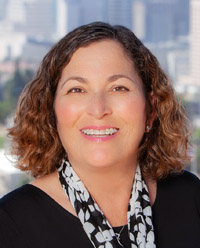
Shari Friedman Schenk, director of business development at San Diego plaintiff’s law firm CaseyGerry, has been named president of the Jewish National Fund (JNF) San Diego Board of Directors for a two-year term.
In this position, her goals are to increase the visibility of JNF in the community as well as expand the “Plant Your Way to Israel” program (which encourages anyone under 30 to save for a trip to Israel) and to develop the “JNFuture” program for young San Diego professionals.
Active in the community, she is past board chair at the San Diego Jewish Academy (SDJA) and a former president of the Agency for Jewish Education. She was a board member of the United Jewish Federation’s Women’s Division for nearly ten years and also served on the boards of the Lawrence Family Jewish Community Center, the Center for Jewish Culture and Hillel of San Diego.
Schenk is a graduate of the Wexner Heritage Foundation program for leadership development and was appointed by former Governor Gray Davis to serve on the California Commission for Economic Development.
“Shari joins our group of extraordinary lay leaders around the country, as she takes over as president of the JNF San Diego board of directors,” said Dr. Sol Lizerbram, national president, Jewish National Fund-USA. “She is passionate about the work we do and active in the San Diego community. Her expertise and hard work will be invaluable as we continue our efforts to connect to San Diego and Israel.” — From CaseyGerry law firm
*
Preceding items culled from news releases. Send yours to editor@sdjewishworld.com