Mattis, Lieberman confer on defense
The U.S. Defense Department issued the following statement Friday:
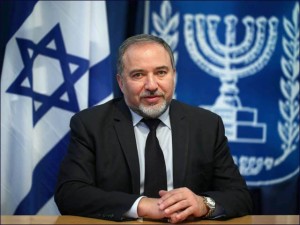
Secretary of Defense James N. Mattis spoke on the phone with Israeli Minister of Defense (MOD) Avigdor Lieberman on Oct. 24 to reaffirm the longstanding defense relationship between the United States and Israel.
The leaders discussed a broad range of defense issues, including the threats Israel faces on its borders. The secretary reiterated support for Israel’s inherent right to self-defense and a strong U.S. commitment to ensure Israel’s qualitative military edge. — From U.S. Defense Department
*
U.S. State Department marks 20th anniversary of International Religious Freedom Act
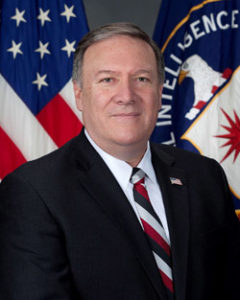
U.S. Secretary of State Mike Pompeo issued the following statement Friday:
Today we commemorate the 20th anniversary of the signing of the 1998 International Religious Freedom Act (IRF Act) into law. The IRF Act expanded U.S. foreign policy capabilities to promote and defend religious freedom around the world. It builds on our founding fathers’ firm conviction that the freedom of individuals to believe as they see fit is a God-given right that is central to the success of a nation.
The protection of religious freedom is central to the Trump administration’s foreign policy, and protecting this human right is an essential part of who we are as Americans. Religious freedom appears first among the rights enumerated in our Constitution. Where religious freedom flourishes, there is greater stability and more economic opportunity.
In the twenty years since the IRF Act was signed, we have made significant progress. I am proud of the team we have at the State Department, led by Ambassador Brownback, who work tirelessly to advance religious freedom every day. But on this day, we are also mindful of those places around the world where so many are not free to worship or live out their faith as they choose. Today, we reaffirm the inherent worth and dignity found in every person, who are endowed by our Creator with inalienable rights to life, liberty, and the pursuit of happiness. Though the challenges to religious freedom are daunting, they are not insurmountable, and we will continue to work tirelessly to ensure that all may enjoy this universal freedom. — From U.S. State Department
*
75th Anniversary of Holocaust mass murder in Minsk marked

The World Jewish Congress joined the Union of Belarusian Jewish Organizations and Communities on Monday, Oct. 22, to commemorate the 75th anniversary of the liquidation of the Minsk Ghetto. Maram Stern, WJC Deputy CEO for Diplomatic Affairs, and Igor Ujhazi, Head of WJC Counter-Antisemitism Unit, and members of the WJC Jewish Diplomatic Corps stood along with the community to honor the heroes of the ghetto and memorialize the tens of thousands of lives lost.
Foreign Minister of Belarus Vladimir Makei told those gathered that “remembering the Minsk ghetto means remembering all who perished and what would they have become if they survived. Remembering them means fighting against antisemitism and xenophobia.”
Peter Uettmar, German ambassador to Belarus, spoke of his nation’s responsibility for the tragedy, adding that it is “the duty of German is to remind everyone what happened during World War II, so it would not happen again.”
In a speech at a memorial evening in honor the ghetto survivors and righteous among nations at the Belarussian State Philharmonic, WJC representative Ujhazi said: “We are here today in Minsk to pay our respect to the dead and to proclaim loudly an clearly that we will not allow tragedies like the Holocaust to happen ever again, and that we will fight against anyone and everyone who denies, distorts, or trivializes this dark chapter of human history.”
The Minsk Ghetto was established in 1941 after German invaded the Soviet Union and captured the city. Within a few days of their arrival, the Nazis murdered 2,000 Jews, and within just a few months, 20,000 had been killed. At its maximum, 80,000-100,000 people lived in the cramped quarters of the ghetto. By August 1943, there were fewer than 9,000 Jews remaining. The ghetto was liquidated later in October, and most of Minsk’s surviving Jews were sent to perish in Sobibor extermination camp. The ghetto is remembered for its strong resistance movement. Nearly 10,000 Jews were able to escape and join nearby Partisan groups. — From World Jewish Congress
*
Preceding items culled from news releases. Send yours to editor@sdjewishworld.com