U.S. Senate adopts pro-Israel, anti-BDS bill
 The American Israel Public Affairs Committee said Tuesday that it “applauds the U.S. Senate for adopting the Strengthening America’s Security in the Middle East Act (S.1), which contains critical pro-Israel provisions. These provisions—contained in one of the first major bipartisan bills adopted by the Senate this year—pledge security assistance to Israel and clarify that state and local governments have the right to counter boycotts of Israel.
“Importantly, this measure includes the United States-Israel Security Authorization Assistance Act of 2019, which authorizes agreed-upon increases in Israel’s security assistance as called for in the 2016 U.S.-Israel Memorandum of Understanding,” the AIPAC statement said. “It further encourages expanding U.S. weapons stockpiles in Israel and advancing U.S.-Israel cooperation in anti-drone technologies and space.”
The statement continued:
Another provision, the Combating BDS Act of 2019, clearly establishes that efforts by state and local governments to divest from, or bar contracting with, entities engaged in commercial- or investment-related boycotts of Israel do not conflict with federal law. This legislation mirrors a provision in current federal law that protects states directing divestment from companies invested in Iran’s energy sector. The legislation has no impact on the right of Americans to personally boycott Israel or oppose Israeli policies. The bill’s scope is limited to commercial activities between companies and state and local governments.
“The legislation also contains the Caesar Syria Civilian Protection Act of 2019, which directs sanctions against human rights violations by the Assad regime in Syria. The House of Representatives has previously adopted this provision as separate legislation. The legislation also reauthorizes the United States-Jordan Defense Cooperation Act of 2015.
AIPAC appreciates the leadership of these senators in adopting this legislation—Sens. Mitch McConnell (R-KY), Charles Schumer (D-NY), Marco Rubio (R-FL), Chris Coons (D-DE), James Risch (R-ID), Robert Menendez (D-NJ), Joe Manchin (D-WV), Roy Blunt (R-MO) and Cory Gardner (R-CO). We urge the House of Representatives to adopt all elements of this important legislation.
In a statement, Jack Rosen, chairman of the American Jewish Congress, expressed regret that numerous Democratic senators–including several who have announced their candidacy for U.S. President — voted against the measure. He said:
This afternoon, the U.S. Senate passed the Strengthening America’s Security in the Middle East Act of 2019 (S.1). This critical includes several measures – among them, the much-needed Combating BDS Act of 2019, which protects state and local governments that wish to “adopt measures to divest its assets from entities using boycotts, divestments, or sanctions to influence Israel’s policies.” Though we are pleased with the overwhelming support shown in the vote to advance this important legislation, it is deeply concerning that 22 Democratic Senators – almost half of the Senate Democratic Caucus – voted against.
The list of Senators that voted against includes elected officials that have professed support for the Jewish state, but the concerns that they have raised about the provisions dealing with the efforts to counter the Boycott, Divestment and Sanctions (BDS) movement against Israel do not reflect that support. It is also deeply disturbing to see that officials such as Senator Kamala Harris, Senator Cory Booker, Senator Kirsten Gillibrand, and Senator Elizabeth Warren, who have announced their ambitions for the U.S. Presidency, voted against these efforts to fight a movement that threatens the very existence of the State of Israel.
The passage of this legislation is an important victory against the BDS movement, which seeks to inflict economic harm on the State of Israel and its people. BDS not only hurts Israelis of all religions, ethnicities, and political beliefs, but also hurts countless Palestinians employed by Israeli businesses.
The American Jewish applauds all the Senators from both sides of the aisle who came together to make this possible. This vote should remind us all that no matter how divided our politics can feel, the protection of the United States and its allies is a bipartisan mission and should stay as such.
Americans for Peace Now urged the House of Representatives to reject the Senate-passed measure, explaining its reasoning in the following statement:
APN strongly urges the House not to follow in the footsteps of the Senate. By blocking this legislation, the House will reject attempts to turn Israel into a partisan wedge issue, protect free speech, and highlight the distinction between sovereign Israel and West Bank settlements.
APN rejects BDS against Israel. APN believes that as a tactic to challenge Israeli policies that are inconsistent with Israeli-Palestinian peace, BDS is the wrong approach. We view it as misguided, ineffective, and counterproductive. APN advocates boycotting settlement products and recognizes the legitimacy and potential value of other activism directly and narrowly targeted at settlements and the occupation. APN’s policy on BDS is here.
Despite our opposition to BDS, APN has opposed S.1 since it was introduced, and called on our activists to ask their senators to reject it.
As we have stated previously, this legislation was designed to be a political trap. By bundling security aid for Israel with controversial legislation that violates civil liberties, the bill sets up senators to be labeled as “insufficiently pro-Israel” if they refuse to endorse the latter. In order to score political points, this bill will further erode the historic bipartisan consensus around a strong US-Israel relationship.
APN’s opposition to the Combating BDS Act is two-fold. First, this legislation erases the distinction between sovereign Israel and its settlements in the occupied West Bank by treating boycotts of the two as if these entities were one and the same. Second, it tramples on First Amendment rights by encouraging states to punish Americans who engage in boycotts.
Federal district courts have issued injunctions in cases brought by the ACLU, ruling that laws in Kansas and Arizona violate the constitutionally protected right to boycott.
APN calls on Speaker Nancy Pelosi to advance legislation authorizing security assistance for Israel, without tethering it to legislation that is both anti-peace and anti-democratic.
–From AIPAC, American Jewish Congress, and Americans for Peace Now
*
Pompeo confirms Carr appointment to position combating anti-Semitism
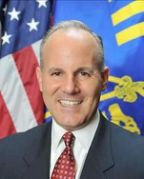
U.S. Secretary of State Mike Pompeo formally announced on Tuesday the appointment of Elian S. Carr as the U.S. Envoy to Monitor and Combat Anti-Semitism. News of the appointment was made public on Monday. In his statement, Pompeo said:
I am proud to announce the appointment of Elan S. Carr as the United States Envoy to Monitor and Combat Anti-Semitism.
Special Envoy Carr is a former criminal prosecutor, and currently serves as a military officer. He has also served as an anti-terrorism expert, and a Jewish community leader who has played a prominent role in defending the safety of the Jewish people at home and abroad.
Promoting human rights and religious freedom, including by combating anti-Semitism everywhere it exists is a U.S. foreign policy priority that furthers our national interests of stability and democracy. We will not stand by in the face of oppression. We will work to stamp out prejudice and condemn hatred in all of its forms.
The State Department also announced that Carr would immediately head to Eastern Europe. According to the announcement:
Special Envoy to Monitor and Combat Anti-Semitism Elan Carr will travel to Slovakia and Belgium February 5–7.
In Slovakia, Special Envoy Carr will attend a conference on Combating Anti-Semitism in the OSCE Region February 5–6. This high-level conference in Bratislava will gather government representatives, political leaders, and relevant stakeholders from academic, civil society, and the media to participate in a dialogue about challenges and good practices in addressing anti-Semitism.
Special Envoy Carr will then travel to Brussels, Belgium February 7 to participate in a conference on Combating Anti-Semitism and Better Protecting Jewish Communities Across the European Union. This conference will gather European Union member states to discuss efforts to continue addressing the needs of European Jewish communities.
—From U.S. State Department
*
Laurence Bolotin is the American Jewish Committee’s new director in Chicago

AJC has named Laurence Bolotin as director of the global Jewish advocacy organization’s Chicago Regional Office.
In a press release, the AJC said.
“AJC’s mission is more important now than ever and I am eager to collaborate with the staff, lay leaders, and global team to elevate our efforts to meet the challenges of today, locally and globally, in diplomatic engagement, interfaith relations, legislative advocacy and promoting global Jewish leadership,” said Bolotin.
Bolotin joins AJC after nearly 14 years at Zeta Beta Tau Fraternity where he served as Chief Executive Officer.
Bolotin is currently the Programming Chair of JUF’s JPRO Network for Jewish professionals and recently completed the prestigious 18-month Schusterman Foundation fellowship for Jewish professionals. His volunteer involvement spans organizations including the United States Junior Chamber of Commerce, Hillel, JPRO Indiana chapter, and the Jewish Student Connection.
Bolotin received a B.A. in Public Relations from the University of Florida, a M.Ed. in Higher Education Administration from the University of Texas at Austin, and is a graduate of the Spertus Institute for Jewish Leadership.
–-From the American Jewish Committee
*
Preceding items were culled from news releases. Please send yours to editor@sdjewishworld.com