JERUSALEM — The result of the second general election this year in Israel isn’t very different from the first: Binyamin Netanyahu is still not able to form a government without Avigdor Liberman’s Yisrael Beiteinu party, but the latter refuses to serve under or with the current prime minister. As the acknowledged king maker without whom there can be no majority government in Israel, Liberman says that he wants a secular government consisting of Likud without Netanyahu; the Blue and White party led by Benny Gantz and the other generals (plus Yair Lapid); and – of course, above all – himself. Though this is by no means a perfect solution, it seems vastly preferable to the alternatives.
But will it happen? Netanyahu is a much more skilled politician than any of his rivals or allies and it’s difficult to predict what he may do. Judging by the manifestations of his addiction to power, laced with paranoia, that characterized his electioneering, anything is possible – much of it ugly, alas.
People in the know say that there’re senior members of Netanyahu’s party keen to replace him as party leader, even if they can’t be prime minister, and to serve in a unity government. Some party members, no longer active, announced before the elections that they weren’t going to vote for Likud, but things may change in the prime minister’s favour.
Of course, Netanyahu is fighting not only for power but also for his freedom. Without the immunity protection that the Knesset would give him he’d be on his way to jail. His tantrums against the police and the media suggest that he’s painfully aware of it.
One of Netanyahu’s arguments is that he, and only he, has a place in the international arena that guarantees the security and prosperity of the State of Israel. His visit to Boris Johnson may have turned out to be futile, but his trip to Vladimir Putin was not, even though the Russian is said to have kept him waiting for several hours. Putin plans to visit Israel in January, but will he come if Netanyahu is no longer the prime minister?
And then there’s Trump. Although there have been signs that the US president is prepared to talk to the Iranians and thus leave Israel out in the cold, there’re other signs that point to a continued close relationship, even a questionable mutual defense pact.
But to say it again: nothing is certain. On the day after the Israeli elections all one can do is to speculate and the media do it in spades. That’s why these comments are so inconclusive. I hope, however, that they reflect the current discourse in Israel.
The shape of the next government of Israel is also very relevant for the Diaspora. Netanyahu and his government have largely abandoned the liberal principles on which Israel was built and which most of Diaspora Jews, particularly in North America, espouse. An administration without Netanyahu may revive at least some of the traditional liberal spirit so important to contemporary Jewry.
*
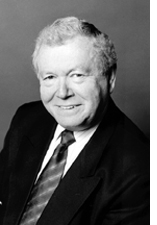
Rabbi Marmur is spiritual leader emeritus of Holy Blossom Temple in Toronto, Canada. Now a resident of Israel, he may be contacted via dow.marmur@sdjewishworld.com