By Alex Gordon
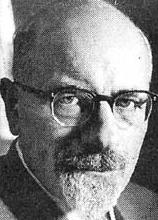
HAIFA, Israel — The oxymoron “non-Jewish Jew” appeared 70 years ago, in 1954, in The Message of a Non-Jewish Jew, by the Polish-born English historian, essayist and sociologist, Trotskyist Isaac Deutscher, biographer of Trotsky and Stalin.
Deutscher’s heroes were people who were born Jews and did not convert to another religion, but these two facts were limited to their belonging to the Jewish people, to whom they showed hostility or indifference. The term denotes a type of Jew who has borrowed the universal image of a person who rises above the “insignificance” of Jewish problems and discards Jewish identification in order to achieve global, often revolutionary goals.
Only by becoming revolutionaries, destroyers of the existing order and founders of a new one, do “non-Jewish Jews” overcome their Jewish complex. Deutscher noted the existence of the archetype of the “non-Jewish Jew,” to which he attributed Baruch Spinoza, Heinrich Heine, Karl Marx, Leo Trotsky, Rosa Luxemburg, Kurt Eisner, Grigory Zinoviev, Belo Kuhn, and many others.
Deutscher was born in Chrzanów, a town in the Galicia region of the Austro-Hungarian Empire (now in southern Poland), into a family of religiously observant Jews. He studied with a Hasidic rebbe and was acclaimed as a prodigy in the study of the Torah and the Talmud. He lived through three pogroms in 1918 that followed the collapse of the Austro-Hungarian empire. By the time of his bar mitzvah, however, he had lost his faith. He later became an atheist and a Marxist.
He wrote about “non-Jewish Jews” with knowledge, for he wrote about himself as well. “All of them have gone beyond Jewishness. All of them – Spinoza, Heine, Marx, Rosa Luxemburg, Trotsky and Freud – found Jewishness too narrow, too archaic and too limiting.” – Deutscher wrote.
The author of the classification of “non-Jewish Jews” considered these people the best representatives of the Jewish people, for the correct attitude of a Jew to the national tradition, according to Deutscher, is to break all connection with it. He regarded Judaism as a ghetto that limited the development of the Jewish people and prevented them from belonging to the advanced humanity. Deutscher did not recognize that Jews already belonged to humanity, even while preserving their traditions.
He praised the worldview of Jewish revolutionaries: “Marx, Rosa Luxemburg and Trotsky, together with their non-Jewish comrades, fought for universal versus private, for internationalist versus nationalist solutions to the problems of their time.”
He saw Jews who broke away from Judaism as the highest “universal” and progressive category of society. Having received a Jewish religious upbringing, Deutscher found secular values to be the most important and the ones that would ensure progress, that is, the victory of the workers. He believed that the Jewish people should disappear, for Marx was right to identify Jews with capitalism. He, like his many heroes, was a radical and revolutionary Jew. Dutch-born American sociologist Ernest van den Haag noted: “Although very few Jews are radicals, very many radicals are Jews: out of one hundred Jews five may be radicals, but out of ten radicals five are likely to be Jewish. Thus, it is incorrect to say that a very great number of Jews are radicals but quite correct to say that a disproportionate number of radicals are Jews. This was so in the past, and it has not changed.”
In the Weimar Republic, “non-Jewish Jews” constituted a prominent and vivid part of the radical left. Their prominent representative in Germany at that time was the publicist and writer Kurt Tucholsky. He wrote: “This country which I am allegedly betraying is not my country; this state is not my state; this legal system is not my legal system. Its different banners are to me as meaningless are its provincial ideals… We are traitors. But we betray a state that we disavow in favor of a land that we love, for peace and for our true fatherland: Europe.”
Lev Trotsky and Grigory Zinoviev were haters of all things Jewish, as well as Russian.
Tucholsky fled the Nazis to Sweden, which did not grant him citizenship. Rejected by Germany and Sweden and unable to find a place in Europe, which he considered his “true fatherland,” Tucholsky committed suicide. Other Jewish internationalist writers Ernst Toller and Stefan Zweig did the same. Tucholsky’s American heirs criticize the United States as sharply as he criticized Germany. There are innumerable examples of radical “non-Jewish Jews” in USA, particularly among journalists, writers, artists, and professors whose attitude towards American society is hostile.
One of the most striking examples of this attitude toward the United States was the philosopher Herbert Marcuse, one of the leading scholars of the Frankfurt School, who fled the Nazis and took refuge and work in the United States: he declared the United States a fascist state.
“What they all have in common is that the conditions in which they lived and worked did not allow them to reconcile themselves to ideas that were nationally and religiously limited and forced them to strive for a universal Weltanschauung (world view), Deutscher wrote about “non-Jewish Jews.” About himself, as one of them, he wrote: “Religion? I am an atheist. Jewish nationalism? I am an internationalist. In no respect am I a Jew. I am, however, a Jew by virtue of unconditional solidarity with the persecuted and the annihilated. I am a Jew because I feel the pulse of Jewish history, because I would like to do everything so that the real, not fake, security and self-respect of Jews can be ensured.”
Before World War II, Deutscher rejected Zionism as an economically backward path and harmful to the cause of international socialism, but after the Holocaust he regretted his prewar views and argued that the creation of the state of Israel was a “historical necessity” to provide a home for surviving European Jews. Deutscher, however, welcomed the assimilation of Jews. Despite recognizing the “despotic gesture” of an emperor who wanted to force every third Jew to marry a Christian, Deutscher admired Napoleon’s assimilationist policy toward French Jews, putting aside the pro-Jewish statements he had made during the Egyptian campaign and planning to promote the dissolution of Jews into French society. The Marxist solidarized with the tyrant emperor because of his stance on the Jewish question.
The archetype of the non-Jewish Jew introduced by Deutscher is not new. It has been well known to Jews since ancient times and has long been stored in the national consciousness and in the national subconscious. Its description can be found in an ancient story that Jews recite on the holiday of Passover, the holiday of the Exodus from Egypt, the exodus from slavery to freedom. The story (Haggadah) mentions four sons, one of whom, the second, “impudent” one, ironically asks: “What are all these funny customs and memories of yours? All this silly old nonsense should have been forgotten long ago!” This Jewish boy excludes himself from Jewishness, pushes away Jewish concerns, is ashamed of his origins, and strives for matters of general importance. The stronger the inferiority complex due to Jewishness, the more important non-Jewish problems this Jew tries to solve. He is indifferent not only to Jews, but also to the other nations among which he lives. He is devoted only to the abstract “humanity” or “proletariat.” He feels no responsibility for the destructive consequences of his “universal” activism, which harms this or that country and the Jews in that country.
“Blunt his teeth” says the ritual of the Passover concerning this son. But he is so detached from Jewry, so indifferent to the Jewish people, that he is indifferent to Jewish criticism of him. He is a severed scrap, ready to cut the Jews off from humanity and sacrifice them to “universal” goals, often to throw them on the altar of revolution.
*
Alex Gordon is professor emeritus of physics at the University of Haifa and at Oranim, the academic college of education, and the author of 10 books