By Mark D. Zimmerman

MELVILLE, New York — South African President Cyril Ramaphosa met with Donald Trump last week to discuss Trump’s cutting of all U.S. aid to South Africa. At the meeting Trump confronted Ramaphosa with false claims and videos accusing the South African government of white genocide.
South Africa currently has a Jewish population of approximately 50,000, the majority of whom live in Johannesburg and Cape Town. Most of the population is Orthodox, and there are many kosher restaurants in the country, as well as three kashrut-certifying organizations. There are more than 50 synagogues in the country as well as a number of Jewish Day Schools.
The first Jews to arrive in South Africa likely came with Portuguese explorers in the 16th or 17th century. The first record of a religious service was Yom Kippur in 1841. As the population grew, Jews became active in shipbuilding, the mohair industry, whaling, and the diamond trade.
There was both Jewish support for, and Jewish opposition to, the apartheid policy of the Afrikaner-dominated National Party which came to power in 1948. When Nelson Mandela was arrested and sent to jail for life, there were a number of Jews among his codefendants.
Israel and South Africa developed a close relationship, including arms sales and collaboration on nuclear weapons research. Relations between the two countries worsened after the fall of apartheid and the election of Nelson Mandela as president. More recently, South Africa has been very critical of Israel’s policies toward the Palestinians, though the two countries still maintain diplomatic relations.
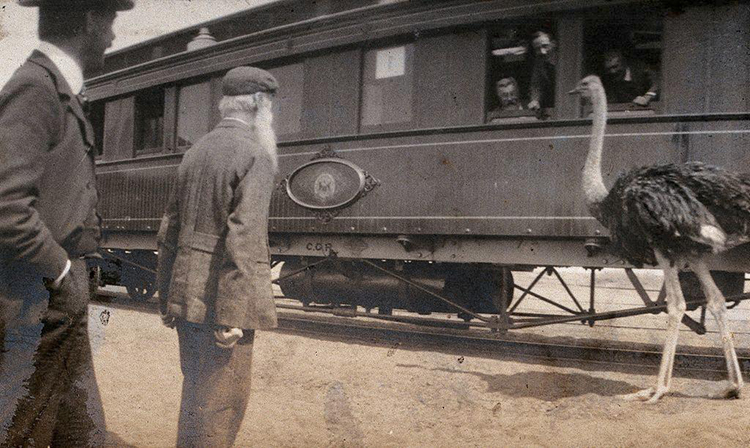
One group of Jews in South Africa were distinguished by their housing arrangements, known as “ostrich palaces.” What does that refer to?
A. Many Jews who lived in Oudtshoorn, a town in the Western Cape province of South Africa, were leaders in the ostrich industry, at first trading in ostrich feathers, and eventually in ostrich meat, eggs, leather, and ostrich rides for tourists. These wealthy merchants built private villas on large estates, reflecting the financial success of their work.
B. Ostriches have been important to South African culture for centuries, for clothing, meat, and religious ceremonies. They are considered to be symbols of strength and courage. In an effort to be accepted by the majority Afrikaans population, many Jewish immigrants placed a stuffed ostrich at their front door as a sign of their respect and support of the Afrikaans traditions.
C. There was a large immigration to South Africa of Austrian Jews prior to the start of World War II. Many members of this community settled together in a neighborhood in Cape Town. They built houses in the style of their homeland, with steeply sloped roofs, though this feature was not necessary in South Africa, which rarely had snowfalls. The Jews called these structures Austria houses, in German known as Österreich houses. The local population derisively referred to these houses as ostrich palaces.
D. In the early 1900’s, the majority of Jews in South Africa were poor immigrants who settled in Hillbrow, an inner city area of Johannesburg. The simple huts which these Jews built typically had roofs covered in ostrich feathers, which were plentiful and much cheaper than clay tiles, shingles, or other products used by those with more money.
E. Eastern European Jewish immigrants in the early 20th century were very afraid in their new surroundings, where they didn’t speak the language or know the local customs. Many of these immigrants built small underground rooms at their homes where they could hide in fear, leading these homes to be called ostrich palaces, reflecting the idea that the Jews were burying their heads in the ground like an ostrich.
*
Link to answer: https://rrrjewishtrivia.com/south-africa-answer.html