By Rabbi Dr. Israel Drazin
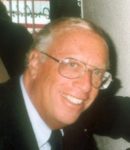
PIKESVILLE, Maryland — My favorite Bible commentary is by Arnold Bogumil Ehrlich (15 January 1848 in Volodovka, Brest-Litovsk, to November 1919 in New Rochelle, New York).
He was a brilliant scholar of the Bible and rabbinic literature. He perfectly recalled what he read and heard and could speak 39 languages. He is best known for his book Mikra Kiphshuto, “The Bible according to its Literal Meaning.”
It is three Hebrew volumes published between 1899 and 1901. Being always careful when viewing the Torah wording, he informs readers of what he can discern in the biblical words, which is fascinating information we generally miss. Tragically, this Hebrew commentary has not been translated into English so that more people can learn what this genius saw
Ehrlich shows his brilliance in Shelach (13:1-15:41), the fourth of the ten biblical portions in Numbers.
Erlich considers the usual understanding wrong. There is no reason why the Torah would want to inform us that the city of Hebron was built seven years before Zoan. If all it wants to inform us, as other commentators claim, is that Hebron was built before Zoan, there is no need to add seven.
Moses sent spies to Canaan to report on what they saw in the land toward which the Israelites were heading. Ten of the twelve spies brought back reports that frightened the Israelites. Only two, Joshua and Caleb, brought positive accounts. When Caleb saw the people being scared, he stepped forward and gave a glowing description of what he saw. Why didn’t Joshua speak?
Ehlich explains that Joshua realized that if he were the spokesman, the people would not believe him. They knew he was Moses’s assistant, and Joshua realized they would think he was lying to protect his position with Moses.
*
Rabbi Dr. Israel Drazin is a retired brigadier general in the U.S. Army Chaplain Corps and the author of more than 50 books.