By Alex Gordon
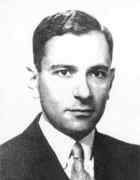
HAIFA, Israel — Myron Mathisson (1897‒1940), a Polish physicist, was born in Warsaw on December 12, 1897, into a merchant family. Myron graduated from the Russian philological gymnasium in Warsaw with a gold medal in 1915. Later that same year, he was admitted to the Faculty of Civil Engineering at the Warsaw University of Technology, successfully completing his studies there in six semesters. In 1917, he began three mandatory semesters of experimental physics and was accepted into the Physics Laboratory of the University of Warsaw as an external research associate.
In a letter to Einstein, Mathisson emphasized that during this period, Wacław Michał Dziewulski highly valued his work, primarily due to his contributions in the physics laboratory. At that time, Mathisson was unable to support himself financially without receiving a salary, so in addition to his other duties, he was forced to work as a Hebrew translator, a draftsman making technical drawings, and to perform engineering calculations for reinforced concrete structures.
The collapse of the Russian Empire and the drastic turns in the political fate of the young Polish Republic radically changed Mathisson’s destiny. In 1918, a war broke out between Poland and Russia. Mathisson was mobilized into the Polish army (1918–1919) and experienced its ups and downs: the victorious march on Kyiv, the rapid retreat to the walls of Warsaw, and the “Miracle on the Vistula,” when the Bolshevik cavalry armies failed to capture what seemed to be a doomed and newly “partitioned” Polish state.
After being demobilized from the army, Mathisson enrolled in the physics and mathematics department of the University of Warsaw. At the end of 1925, his supervisor, Professor Czeslan Bialobrzeski, approved his article Sur le movement d’un corps tournant dans un champ de gravitation (On the movement of a rotating body in a gravitational field) as his Ph.D. Thesis. Theoretical physics becomes his passion.
During his trips to Germany and France, he attended lectures by prominent physicists and mathematicians, establishing scientific contacts with leading scholars. He established particularly close relationships with the mathematician Jacques Hadamard, the physicists Paul Langevin and Louis de Broglie, a Nobel Prize winner in physics and one of the creators of quantum mechanics. There is his brilliant rise, the recognition of his talent by prominent figures against the background of momentous events that complicated the political atmosphere in the world. The rising Nazi regime in Germany, initially enjoying sympathy in several European countries and even in the USA, posed difficult challenges for many scientists. In Poland, which in the early 1930s was aligned with pro-German policies, anti-Jewish sentiments also began to increasingly manifest, including within the scientific community.
Immediately after Mathisson defended his dissertation, his academic advisor began to arrange for the young doctor to receive a Rockefeller fellowship, which would provide three years of comfortable living and travel to scientific centers in Europe and the USA. Einstein even promised to personally discuss this matter with Rockefeller. At first, everything seemed to be going well, but the political situation forced adjustments, and Mathisson never received the scholarship.
On May 1, 1936, Mathisson was appointed head of the Department of Theoretical Physics at Kazan State University in Soviet Tatarstan. On July 7, 1936, Einstein wrote to Mathisson: “I am extremely pleased that you have found such a wonderful sphere of activity in Soviet Russia.” He ended up in Kazan on the recommendations of Albert Einstein, Paul Langevin, and Jacques Hadamard. All three were honorary members of the USSR Academy of Sciences and vouched for Mathisson’s loyalty. Langevin was also a member of the Communist Party of France. In his autobiography, Mathisson wrote: “My fate was determined by my correspondence with Einstein regarding the study of the electron and equations for electron trajectories.” Einstein was the reviewer of my doctoral thesis.” Mathisson became known for his work on the general theory of relativity, the development of a new method for analyzing the properties of fundamental solutions of linear hyperbolic partial differential equations, as well as for proving, in a particular case, the Hadamard conjecture for a class of equations that satisfy Huygens’ principle.
The new head of the Department of Theoretical Physics, Professor Mathisson, was quite democratic. Although he was a modest person and did not advertise his scientific contacts with the great figures of the world of physics and mathematics, the University of Kazan knew that Einstein, Hadamard, Langevin, and de Broglie highly valued the intellectual potential of the new head of the department.
Mathisson felt uncomfortable. For some reason, a young physics teacher often came to his home, quite annoyingly, and one of the graduate students confessed that he had been summoned by the NKVD and questioned about the political views of the head of the department. Outwardly, Mathisson’s adaptation process at Kazan University was going smoothly. His lectures were popular, and active scientific work was underway.
At the end of May 1937, Mathisson traveled to Moscow and Paris, where he was supposed to present his works to prominent scientists. He did not live up to Langevin’s and Hadamard’s assurances about his loyalty: in May 1937, he went to an international conference in Paris and did not return to Kazan. A letter from Mathisson to Einstein has been preserved, in which he wrote: “I will not return to Kazan. By the end of May, the situation for a foreigner there was unbearable.”
In 1937, Mathisson returned to Warsaw. In 1937, he went to Krakow, where he collaborated with Professor Weissenhoff, who held the chair of theoretical physics at Jagiellonian University (1937–1939). But after the outbreak of World War II, he fled to Paris, from where, after the Nazi occupation of France, he fled to England.
By the end of 1937, almost everyone involved in Mathisson’s arrival in the USSR had been shot. Mathisson’s graduate student was arrested in 1938 and in 1940 sentenced by the NKVD Special Council to five years in the camps.
In Cambridge, Mathisson worked with Paul Dirac, a Nobel Prize-winning physicist, on the problem of equations of motion in general relativity. On September 13, 1940, he died of tuberculosis at the age of 42. Dirac published Mathisson’s article, which he had not managed to send for printing, with a footnote: “This work was found in an unfinished state among the papers left by Dr. Myron Mathisson, who died on September 13, 1940.” I edited it and added a note.
Einstein, Langevin, de Broglie, and Hadamard highly appreciated the talent of Myron Mathisson. Dirac published an article in the journal Nature (1940) volume 146, p. 613, November 9, highly praising the scientific achievements of the late physicist. Having lived a difficult life in Poland, where he served in the army, participated in battles, suffered from unemployment, hard labor, and antisemitism, and tried to escape these hardships in the USSR, fleeing from communists in the USSR, fleeing from Nazis from Poland to France, fleeing from Nazis from France to the United Kingdom, having exhausted his health, suffering from tuberculosis, the major scientist Myron Mathisson died at the age of 42 in Albion. The beacon of his immense talent was dimmed.
*
Alex Gordon is professor emeritus of physics at the University of Haifa and at Oranim, the Academic College of Education, and the author of 11 books.