By Alex Gordon
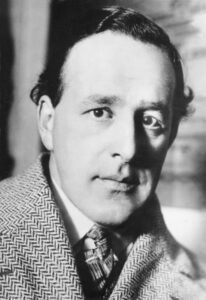
HAIFA, Israel –The German writer Emil Ludwig (real name Emil Cohn) was born on January 25, 1881, in Breslau, Prussia, into an assimilated Jewish family of the renowned ophthalmologist Hermann Ludwig Cohn, who changed his surname to Ludwig in 1883.
Emil was the fourth child in a family whose children were given a liberal and humanistic upbringing by their parents. The change of his father’s Jewish surname Cohn to the German surname Ludwig was, in his father’s opinion, to protect his children from antisemitism. Later, nationalist opponents blamed Ludwig for the very fact of changing his surname. Ludwig recalled that his parents did not observe the commandments of the Jewish religion. Their “religion” was the cult of education. For the Cohn family, moral education served as a “practical” substitute for religion, while music was a “mystical” substitute for religion. Ludwig first visited a synagogue (Istanbul) only when he was already an adult.
In 1902, Ludwig converted from Judaism to Protestantism. He studied law at the universities of Heidelberg, Lausanne, Breslau, and Berlin, and in 1904 he received a doctorate in jurisprudence. In 1904–1905, he served as the personal secretary to his uncle, the coal magnate Friedrich von Friedländer-Fuld. In 1906, he emigrated to Switzerland (he obtained citizenship in 1932).
In the 1910s, Ludwig turned to writing. His first works were neoromantic dramas Napoleon (1906), Die Borgia (1907), Tristan und Isolde (1909).
Since 1910, through the mediation of Walter Rathenau, he began collaborating with the newspaper Berliner Tageblatt. As a war correspondent for the newspaper, he traveled to the Balkans, Istanbul, and Vienna. In 1922, following the assassination of Rathenau by antisemites, Ludwig publicly renounced Christianity and returned to Judaism. He said, “Many people became Jews after Hitler. I became a Jew after the assassination of Walter Rathenau, from the date of which I am a Jew.”
Ludwig gained significant fame from his biographical novels Goethe (1920), Bismarck (1921–1926), Napoleon (1924), about Jesus Christ, Der Menschensohn History of a Prophet (1928), Lincoln (1930), Michelangelo (1930), Schliemann (1932), Roosevelt (1938), Beethoven (1943).
In 1930, in the article Ludwig on Hitler, published in The Financial Times and Sunday Times newspapers, he criticized National Socialism. In 1933, Ludwig’s books, deemed to tarnish the past of Germany and its great figures, were publicly burned in Berlin.
In 1934, Ludwig published the book Leaders of Europe. Sketches from Life – a series of essays about Fridtjof Nansen, Tomáš Masaryk, David Lloyd George, Benito Mussolini, and Joseph Stalin, whom he met during his travels in the late 1920s and early 1930s. The conversation between Ludwig and Stalin on December 13, 1931, published in the eighth issue of the Bolshevik magazine for 1932, is considered the first full-fledged interview that he gave to a foreign journalist.
Since 1940, Ludwig lived in New York and Los Angeles. With government support, he published anti-fascist articles and gave lectures in Havana. He was personally acquainted with American statesmen, including U.S. Presidents Roosevelt and Truman.
In 1944, Ludwig wrote a letter to The New York Times, in which he argued that “Hitler’s fanaticism against the Jews can be used by the Allies. The three powers should send an appeal to the German people through leaflets and to the German government through neutral countries, threatening that further killing of Jews will result in a terrible response after victory. This would drive a wedge between the already existing disagreements between the generals and the Nazis, as well as between the ultra-Nazis and other Germans.” At the end of World War II, Ludwig worked in Germany as a journalist, and it was thanks to him that the coffins with the remains of Schiller and Goethe, which had disappeared from Weimar in 1943/44, were found.
Ludwig’s last work is the essay The De-Mystification of Freud (Der entzauberte Freud, 1946), dedicated to the life and professional activities of Sigmund Freud. In it, Ludwig criticizes Freud’s ideas, emphasizing that he transformed from a scientist into a prophet, becoming a sort of cult leader, and as a result, millions of his followers formed a distorted image of him.
After World War II, Ludwig returned to Switzerland.
Ludwig’s biographical novels, created based on historical sources, are distinguished by their attention to the psychology of the characters, vivid descriptions of the setting, and simplicity of language. Without claiming scientific accuracy, the writer sought to engagingly narrate both the personal motives of the characters and the political and social conditions of the eras in which they lived. Ludwig created a fictionalized biography in German literature—a genre that uses literary techniques in creating a biography based on real historical facts, allowing for intuition and imagination in the interpretation of documents. This genre of biography is also referred to as “biographical fiction.” Its creators are considered to be Giles Lytton Strachey in the United Kingdom, André Maurois in France, and Emil Ludwig in Germany. The last two are Jews.
Ludwig’s attitude towards Judaism was evidently complex. Once he joked about it: “Although I don’t consider Jews to be the salt of the earth, they are certainly the pepper of Europe.” More seriously, he took Zionism and summarized the sad results of the Holocaust: “So many of our German Jews dangled between two shores; so many of them floated on the treacherous current between the Scylla of assimilation and the Charybdis of nodding familiarity with Jewish things. Thousands who seemed to have been completely lost to Judaism were brought back into the fold by Hitler.”
Ludwig died on September 17, 1948, in Moscia, near Ascona, Switzerland.
*
Alex Gordon is professor emeritus of physics at the University of Haifa and at Oranim, the Academic College of Education, and the author of 11 books