Parsha Vayeilech – Returning to Wholeness
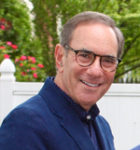
By Michael R. Mantell, Ph.D.
El CAJON, California — Do you remember how you felt at the conclusion of last Yom Kippur? As the sun dipped below the horizon and the gates of Neilah closed, we stood together, yes hungry, exhausted, hopefully transformed. The gravity of the moment moved us. Our hearts were full of promises: to grow, to love more deeply, to act with integrity. We left services with conviction.
And yet, many of those promises dissolved quickly, some perhaps even before the first bite of food touched our lips. It’s a familiar pattern. Much like New Year’s resolutions in January, our spiritual intentions often fade by the time reality sets in. This doesn’t mean we’re hypocrites. It means we’re fallible humans. Change is often difficult. Our neural pathways, shaped over years of habit, resist redirection. And despite the sacredness of our High Holidays, we often return to autopilot until next year brings the cycle around again.
But that is exactly why we are given this time, these Ten Days of Teshuvah. I see these days as a sacred opportunity to shift our inner narrative, not to chase perfection, but to foster our own authentic growth.
This week’s Torah portion, Vayeilech, though the shortest in the Torah, is packed with emotional and existential weight. Three times, we hear the phrase: “Chazak v’ematz – Be strong and courageous.” (Devarim 31:6, 7, 23)
Moses, nearing the end of his life, prepares to hand over leadership to Joshua. He knows he will not cross into the Promised Land. And yet, rather than collapse into bitterness, Moses chooses to bless, to guide, to empower the next generation. His legacy becomes not one of completion, but of preparation.
From a psychological perspective, this is a model of generative leadership. He accepts what he cannot control and redirects his energy toward planting seeds he will not see bloom. This is one of the most profound acts of human maturity: to let go and still give.
The Torah reassures us: “Do not fear, for Hashem walks with you. He will not abandon you.”
Still, many of us feel abandoned at times. We pray, and we wonder if anyone is listening. We struggle, and it seems like we’re alone. But perhaps the issue is not Hashem’s absence, but our inattention. In trauma therapy, we speak of dissociation when pain becomes too much to process, we numb out. Spiritually, we do the same. We stop seeking, not because He isn’t there, but because we’ve stopped looking.
Rabbi Dov Ber of Mezeritch once told a story that still echoes through time. He saw a child crying behind a wall and asked why. She replied, “I was playing hide-and-seek, and no one came to find me.” The Rebbe sighed, “This is the voice of the Shechinah. ‘I hid, and no one came looking.’”
This story is not just poetic; it is psychologically rich. The divine cry is also the soul’s cry. We feel hidden, unseen, neglected, even by ourselves. The Shechinah is not only Hashem’s presence; it’s our capacity to feel Him, to connect. When we stop seeking, that divine connection begins to dim in our awareness.
The parsha warns: “And I will surely hide My face… because they turned to other powers.” (Devarim 31:18)
Spiritually, “other powers” may not mean idols. They may be distractions, addictions, ego, or the voice of self-judgment. They are the forces that pull us away from what is whole and true.
Teshuvah, often translated as “repentance,” is better understood as return, return to alignment, to presence, to integrity.
The Rambam describes teshuvah not just as regret, but as a shift in identity. True teshuvah involves releasing behaviors that no longer serve us and embodying a self we have perhaps long forgotten or buried. And that process requires vidui, confession. Naming our shortcomings is not shameful; it is psychologically liberating. Naming brings clarity. Naming makes healing possible.
And this process has a deadline. Yom Kippur is not just a spiritual climax; it is the final chapter of a journey that began on Rosh Hashanah. By the time we reach Neilah, we are meant to have moved, internally, authentically, from where we began.
I often hear clients say, “I just want peace. I just want to feel whole.” And during Yom Kippur, we echo this in our prayers. We ask for health, for sustenance, for comfort. These are all valid needs. We are embodied beings. Our mental and emotional wellness often depends on these practical blessings.
But here’s the deeper question: Why do we want these things?
There’s a Chassidic story about a man who came to a Rebbe asking for wealth. The Rebbe turned him away. Another man came, first asking how to raise his children with Yirat Shamayim, how to deepen his avodat Hashem, and only then requested help with livelihood. This man received a heartfelt blessing.
The Rebbe explained: imagine someone walks into a diamond shop and, after purchasing precious gems, asks for a bit of axle grease for his wagon. Of course, the shopkeeper gives it. But if someone walks in only asking for grease, the owner sends him elsewhere. This is a house of diamonds, not a garage.
The message is clear: Ask for the diamonds, spiritual depth, character growth, holiness. And then ask for what you need to carry your mission forward. We don’t diminish our physical needs. We contextualize them within a larger, sacred goal.
At the conclusion of Vayeilech, Moses is instructed: “Now, write this song and teach it to the children of Israel.” (Devarim 31:19)
This mitzvah, to write a Sefer Torah, is traditionally understood as the final of the 613 commandments. But most of us are not scribes. So how can we fulfill it?
We become the Torah.
We inscribe its teachings not on parchment, but in our speech, our decisions, our compassion. When we embody the values of Torah when we walk into a room and bring presence, integrity, and humility, we become living verses.
As Yom Kippur draws near, let us not fall into the trap of performative repentance. Let us aim higher than obligation. Let us engage with intentionality, with inner honesty, and with faith in our capacity to grow.
Real teshuvah is not about becoming someone else, it’s about returning to the person we were always meant to be.
*
Michael R. Mantell, Ph.D., prepares a weekly D’var Torah for Young Israel of San Diego, where he and his family are members. They are also active members of Congregation Adat Yeshurun.