By Alex Gordon
HAIFA, Israel — Why do Jews have the passion to label as their nation those who have broken with it decisively and ideologically?
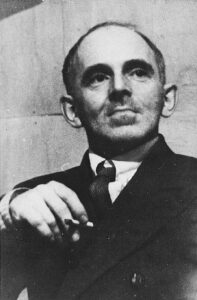
The famous Russian Soviet poet Osip Mandelstam was baptized into Lutheranism in 1911, at the age of twenty. He renounced his Jewishness in one of his most famous poems, “For the Rattling Valor of the Future Centuries” (1931):
For the rattling valor of future centuries,
For the highborn tribe of people,
I am deprived of the cups on the pyres of my fathers,
Of their pleasures, of their marks of esteem.
In this verse, he gives up his Jewishness for his chosen values: “for the highborn tribe of people” and “for the rattling valor of future centuries.” He recognizes that this sacrifice deprives him of the “cup on the pyres of the fathers” and thus it deprives him the “honor” as a Jew. He accepts this sacrifice, this deprivation, perhaps bitterly, but with an inescapable conviction that his choice was right.
In the chapter Jewish Chaos from his memoir The Noise of Time (1925), Mandelstam expresses his alienation from Jewishness: “Jewish chaos, the unfamiliar womb world from which I came, which I feared, about which I vaguely guessed, and fled, always fled.” He feels “threatened” in the Jewish world: “The Jewish chaos penetrated all the crevices of the stone St. Petersburg apartment, the threat of destruction, […] the hooks of the font of the unreadable books of Genesis […] and shreds of black-and-yellow ritual.” The poet has felt this “threat” since childhood: “When I was taken to the city of Riga, to my grandparents in Riga, I resisted and almost cried. It seemed to me that I was being taken to the homeland of my father’s incomprehensible philosophy.” “Philosophy,” the poet writes about, was the philosophy of life of the Jewish world.
In 1933 Mandelstam composed one of his best poems Tell me, Desert Draftsman,
Geometer of the quicksands , in which he presents the activity of the Jewish God as merely the creator of the barren desert and in which he mentions, perhaps for the last time in his work, his attitude toward Jewry:
I don’t care about the trembling
Of his Judaic troubles.
Preparing for the rite of baptism, in 1910 the poet wrote:
From the dark and viscous whirlpool,
I grew, rustling like a reed,
And passionately, languidly, and gently,
Breathed forbidden life.
“From the dark and viscous whirlpool” of Jewishness, Mandelstam wants to “breathe forbidden life.” What “forbidden life” does he write about? About Christianity? About Russian poetry?
In 1920, the poet attacks the Jews, calling them “deaf feeders of darkness”:
Deaf feeders of darkness, …
Have you fallen from the tree of life?
Bethlehem is strange and alien to you, …
You will go down childless,
To your coffins that are cooked (painted on the outside. – A. G.).
The poet is disappointed in the Jews who have “fallen from the tree of life” and did not recognize Jesus as the Messiah: “Bethlehem is foreign and strange to you, and you have not seen a manger.” He predicts that there is no future for the Jews: “there is no offspring for you,” “you will go down childless into your coffins.” Mandelstam takes away the title of “eternal people” from the Jews. The “eternal” people is God’s people, chosen forever. Since the poet declares the Jews “childless.” they can no longer be the people chosen by God.
In his essay Scriabin and Christianity (1915), Mandelstam defined art as “a free and joyful imitation of Christ.” In the poem In the crystal pool what steepness! (1919), the poet writes: “I drink the cold mountain air of Christianity.” In an addendum to the essay, the poet attacks the Jews: “Rome has surrounded Golgotha with an iron ring […] If Rome wins, it is not even he who wins, but Judaism – Judaism has always stood behind his back and is just waiting for its hour and the terrible unnatural course will triumph: history will reverse the course of time – the black sun of Phaedra.”
The triumph of Judaism is perceived by the poet as an unnatural course, as a reversal of the course of time, and as the “black sun” of the famous slanderer Phaedra in the tragedy of Euripides and Racine. “Black sun” ̶ symbolism used by the poet in the context of the description of Judea and the Jews. “Black sun” refers to Phaedra’s “black” passion for her stepson Hippolytus. In the poem Phaedra the poet writes:
With a black torch in the midst of the white day
Phaedra’s love for Hippolytus was kindled…
With black love I have stained the sun….
He uses the image of the “black sun” to gloomily depict Jewish Jerusalem:
This night is irreparable,
And it is still light for you.
At the gates of Jerusalem
A black sun has risen.
Mandelstam associates Jerusalem with the black paint with which he seeks to obscure his belonging to the Jewish people.
Only after he was harassed by Soviet writers did Mandelstam write about his Jewishness in a positive tone: “I insist that writing as it has developed in Europe, and especially in Russia, is incompatible with the honorable title of Jew, of which I am proud. My blood, weighed down by the heritage of sheep breeders, patriarchs and tsars, revolts against the thieving gypsyism of the writing tribe.”
Mandelstam recalls that he was persecuted by Soviet writers, critics and officials from literature, “wolfhounds.” He was a lonely, outcast man, an outsider, and to escape isolation, to take a break from persecution and to gain strength, he decided, like Antaeus, to touch for a moment the people he had left behind. The renunciation of Jewishness in creativity is much more important to the poet than the rite of baptism, which Mandelstam underwent in 1911 at the age of 20.
What did the Jewish literary critics do to attach Mandelstam’s genius to the Jewish people from whom he had departed? Ascribing Jewish motifs in Mandelstam’s work is similar to the creation of idols and paganism rejected by Judaism. Attempts continue to prove that Mandelstam is a Jewish poet by interpreting the subtext of the poet’s poems, comparisons, allusions, analogies and complex constructions. However, Osip Mandelstam is a great Russian poet. There are no “Jewish motifs” in his work. He, as best he could, repelled from Jewishness and avoided it.
From this he lost nothing as a Russian poet. Russian poetry has lost nothing from this. Mandelstam was not helped by his baptism: for Russian nationalists, he will never be a truly Russian poet. Mandelstam did not need the Jewish people for his work. The Jewish people did not need the Russian poet Osip Mandelstam for his work, artificially attached to it as a national poet whose work did not contribute to the culture of the Jewish people.
*
Alex Gordon is professor emeritus of physics at the University of Haifa and at Oranim, the Academic College of Education, and the author of 11 books.