By Alex Gordon
HAIFA, Israel — The manuscript of the book Homelandless Patriots is dedicated to the history of individuals who made history. They made history in their professional fields: science, music, literature, art, philosophy, politics. As Jews, they also tried to change the history of the Jewish people, succeeded in contributing a lot to it, but they were more like the anti-heroes of this history.
The title of this manuscript sounds paradoxical, but in Jewish history the phenomenon of “homelandless patriots” is well known. The ambivalent attitude toward their own and foreign nations, dominant nations in the diaspora, the theme of Jews’ undivided love for the countries of Europe in which they were born, became a heavy burden on their national existence. The psychological duality created by the desire to become “normal” like everyone else, but to remain Jewish, formed the spiritual fabric of life for some European Jews.
The motto of the Jewish Enlightenment movement, expressed in poetic form by Yehuda Leib Gordon in the words “Be a man in the streets [outdoors] and a Jew at home [in your tent],” was a difficult challenge for Jews who experienced new forms of life in Europe. The temptation to “normalization” led to a decline in the nation’s antibody levels. It led to assimilation or a complete break from Jewishness for the sake of “lofty ideals.” The immune system of the people weakened. The desire to “find” a homeland in places where Jews were a national and religious minority gave rise to the phenomenon of “homelandless patriots.”
“Homelandless patriots” try to live wishful thinking instead of actual life. They have dreams in which a foreign country is presented as their homeland, the situation of the stepson is painted as that of a legitimate son, and the mindset of a guest looks like the worldview of a representative of an indigenous nation.
These biographical essays reflect on the consequences of Jews leaving the ghettos and settlements of the Russian Empire and their attempts to find their place in the Christian world or in the world of socialism. These essays describe desires to preserve Jewish tradition, accompanied by attempts to leave Jewishness for the sake of equality in rights. When the Jewish community ceased to exist under “developed socialism” in the USSR, Jewish dreams were directed toward equalization in rights and disenfranchisement with Soviet citizens.
On the way out of the Jewish stalemate, a new anthropological type of Jews emerged: Jews for the common good, Jews for society and universal justice, Jews above nations and religions, critiquing the unjust world from a “bird’s eye view,” seeking to improve it and sometimes damaging it and seeing the Jewish problem as secondary. They are the driving forces behind revolutions and the creation of new social devices. They, like the “homelandless patriots,” have no state and do not seek to acquire one. They consider Europe or the whole world or the proletariat or the third world as their “homeland”.
This work is devoted to describing the doubts, experiences, hopes, victories and defeats of its characters in the question posed consciously, subconsciously and unconsciously by the Jewish question. The struggle for a place in European civilization created and exposed the psychological complexes of Jews rising from the bottom of European society.
In the Old World, a new type of Jew was being created who, for the sake of enlightenment and emancipation, was ready to subordinate his national identity to another’s, under the aegis of ideals of universality. To show the selected problems, I have chosen not the form of scientific work, but rather the writing of essays, each of which, in my opinion, is a literary-historical essay, more like a work of fiction than a research paper. I proceed from the assumption that history can be shown in relief through the thoughts and deeds of a prominent figure.
The characters of this work are famous writers (23), philosophers and thinkers (18), poets (9), artists (2), scientists (21), composers (9), chess players (2), statesmen and revolutionaries (33) of Jewish origin from eleven countries – Austria, Britain, Czech Republic, Denmark, France, Germany, Hungary, Netherlands, Poland, Russia, USSR. In these essays, I do not moralize, do not teach my characters how to behave, do not condemn them for “wrong” thoughts and actions. I show how my characters tried to solve the Jewish problem or refrain from solving it. Each biographical essay is written in “dialogue” with the main character. And I can’t help but feel grateful to each of these people for the exhilarating hours of “interaction” with them. I could have been in each of these people’s shoes during difficult moments in their lives, and I don’t know how I would have behaved.
All of the essays present tragic stories. Only one essay has no protagonist and no tragedy. It is called Laughter Through Tears and is about Jewish humor. Along with the main theme of “rootless patriots,” the work includes an essay on physicists who fought against Nazism and as if they formed a “Jewish conspiracy” against the creation of the Nazi atomic bomb, The Jewish Nucleus of the Atomic Drama: Niels Bohr, and a semi-autobiographical piece entitled One Handshake away from Albert Einstein: Nathan Rosen.
In the essays The Jewish Saga of Napoleon Bonaparte; Bloody Forgery: The Protocols of the Elders of Zion; Prejudice about Jews in Somerset Maugham’s Espionage; War Madness and Centrifugal Forces of Emancipation I examine the anti-Jewish prejudice that played an important role in the behavior of these characters. The manuscript concludes with an autobiographical essay, The Burden of Great Expectations, or Kleptopatria, which explains to the reader what family tragedy caused the author’s interest in the subject of “homelandless patriots.”
This work presents a panorama of the rich spiritual lives of its characters. I have gathered here outstanding people who lived different lives, had different views and had different attitudes towards the Jewish question. They touched it, tried to solve it, or ignored it. They did it all with talent. They were very different people, but they had one trait in common: they were outstanding creators and outstanding destroyers. The Jewish question was not always their leitmotif, but it was the conscious, subconscious or unconscious stimulus of their lives, their creation or destruction. They made history, world history, and also, willingly or unwillingly, they made Jewish history. They touched the Jewish question in one way or another, and willingly or unwillingly became part of it.
This work remains a manuscript in English for now. Seventy of the 120 essays cited here have appeared in my writings in Hebrew: in the published book Stateless Patriots (Carmel Publishing House in Jerusalem, 2023), in the journals Hayadan (Connoisseur), Cosmos of Culture and Iton 77, and in the accepted book Intellectual Jews, Creators and Destroyers, in the Face of the ‘Jewish Question‘ (Carmel Publishing House in Jerusalem). Sixty-six of these and other biographical essays were published in Russian in eight of my books, which also covered other topics.
*
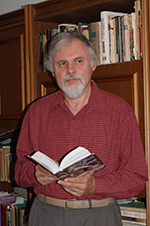
Alex Gordon is professor emeritus of physics at the University of Haifa and at Oranim, the Academic College of Education, and the author of 12 books.