By Betzy Lynch
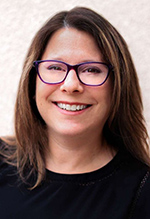
LA JOLLA, California —When I was three years old, I attended JCC preschool in Youngstown, Ohio. After a few weeks, my parents noticed I didn’t seem to be enjoying school. They asked my teacher how I was adjusting. She smiled gently and explained, “Betzy is so much smaller than the other children. They think she’s a baby, so they try to pick her up and carry her. She doesn’t like it. I’ve asked them to stop, but they think they’re being sweet.”
Not much changed as I moved into grade school. I was still noticeably smaller than my peers, and the teasing followed, endless nicknames about my height. I think that’s when I decided that being small would not define me. If anything, I would reclaim my size by taking up space in other ways.
When I grew past the “shrimp” jokes, I ran straight into the “girl” comments. In high school softball, my coach admired my hitting and base-running, but he often remarked, “Betzy, it’s pretty surprising how you throw like a girl!” I was the lead-off hitter and played right field because my arm wasn’t strong, yet somehow my gender was the punchline.
Years later, when I interviewed for one of the most prestigious graduate programs in the country, I was told afterward that although my academics and internship experience were excellent, I had been “a bit too aggressive for a woman.” They would not be moving my candidacy forward. I promise, I am not making this up.
Over time, the name-calling evolved from overt to subtle, but the underlying pattern remained: people using neutral parts of my identity, things I neither controlled nor viewed negatively, as tools to diminish me. Maybe words associated with groups perceived as having less power (women, children, marginalized communities) easily become insults. Maybe labeling is a way to assert dominance, signal exclusion, or provoke a reaction. Whatever the reason, the mechanism felt painfully familiar.
I hadn’t given this pattern much thought until this past year, when “Zionist” became a term hurled at me and others in the Jewish community. To me, “Zionist” was never an insult. It was a neutral descriptor, much like being small or being a girl: simply a label for someone who supports Jewish self-determination and the existence of a Jewish state in the land of Israel. It wasn’t inherently positive or negative.
But over the last several years, the meaning of “Zionist” has been reshaped by political conflict. Rather than an ideology, the term became a shorthand for “oppressor,” “colonizer,” or “aggressor.” Some used it as a coded reference to Jews, allowing antisemitic ideas to be expressed under the guise of political critique. Social media accelerated this shift. Nuanced geopolitical conversations are reduced to single words used as moral judgments. “Zionist” entered the “euphemism treadmill,” a once-neutral word transformed into a taboo insult, loaded with emotional weight.
I am tired of the name-calling, and I believe it’s time to reclaim Zionism, just as I once reclaimed being small and being a girl. We cannot allow others to define it for us. Zionism has evolved over time, and we must wrestle with what it means today, embracing both its roots and its contemporary complexity. It is time for Zionism 3.0.
Zionism 1.0 was the pre-1948 era of theory and pioneers, Herzl, Ahad Ha’am, Rav Kook, who dreamed of a sovereign Jewish state where Jews could live without fear of pogroms or persecution.
In 1948, Zionism entered its second phase. Zionism 2.0 focused on building and survival. Leaders like Ben-Gurion and A.D. Gordon shaped the young state, and Diaspora communities were seen primarily as supporters. It was the era of the “rich American uncle” and of Diaspora negation, the assumption that the Jewish future existed only in Israel.
Today, for the first time in Jewish history, we have two strong, thriving centers of Jewish life: Israel and the Diaspora, especially North America. We enrich and depend on each other in new ways. Our relationship must evolve accordingly.
That evolution, Zionism 3.0, recognizes that Jews in both places contribute not only to each other’s security but to our spiritual, cultural, and communal vitality. It rejects political frameworks as the sole lens of connection and instead embraces shared peoplehood and common destiny.
We are grateful to our partners at the Oshman Family JCC in Palo Alto for pioneering this work a decade ago. Now, Z3 @ SAN will launch December 6–7, 2025.
I invite you to join us as we explore what it means to reclaim the label “Zionist” and shape Zionism 3.0 for today and the years ahead. This work values unity, not uniformity. It asks us to listen to diverse voices that can affirm and challenge our beliefs, biases, and fears.
Instead of calling each other names, let’s call one another into community. The Talmud teaches that publicly embarrassing someone drains the color from their face and is akin to taking a life. Name-calling must be treated with that level of seriousness. Kabbalistic thought reminds us that an insult is energy, we feel it only when we accept it. We can refuse that energy and set spiritual boundaries.
May the pause of Shabbat carry into your week, giving you strength to pause and redirect yourself before diminishing others and the added fortitude to deflect and find new energy when someone attempts to diminish you.
*
Betzy Lynch is the chief executive officer of the Lawrence Family JCC in La Jolla, California.