Doubles by Nora Gold; Guernica Editions; (c) 2026; ISBN 9781778-480361; 86 pages; $18.95
By Donald H. Harrison in San Diego

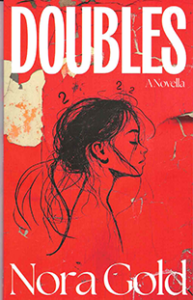 This unsolicited slim volume was awaiting me at my desk. Knowing I hadn’t ordered it, I tossed it aside. Then curiosity overtook me. Doubles? Was it about tennis? I leafed through it, started to read it just to see what it was about. Then I was hooked.
It turned out that the novella’s Jewish author, Nora Gold, imagined the thoughts of a 12-year-old girl whose father beat her so badly that neighbors had called the authorities. They removed her from her home and transported her to the Valleyview Children’s Farm. An attendant said their job would be to protect her, but it felt more like punishment than protection.
Our protagonist was a math nerd because unlike people, numbers don’t lie about who they are. A 3 is a 3, a 5 is a 5. And a 2? That’s where doubles come in. Lonely at the children’s farm, she felt like 1/2 a person — half at Valleyview, the other half back in her rightful home, living with her father, older sister Vicki, younger brother Hank, and grandma. That was 4 other people. It had been 5 before her mother died from breast cancer.
The half of her whom she imagined was living routinely at home — before her father beat her for talking back to him — was her double. No longer 1/2; the double was transposed into a 2/1 ratio. Meanwhile, the 12-year-old was told by attendants that providing her with another math exercise book would be too expensive. Maybe it wasn’t cause and effect, but she withdrew more and more from counseling sessions at Valleyview. Her longing thoughts increasingly dwelt on the activities of her double.
Vicki came to visit her. Not to take her home, but to say goodbye. Vicki was suddenly pregnant and couldn’t stay with her abuser anymore. But she didn’t identify her father as “the father.” For a 12-year-old, pregnancy always meant a baby conceived in love, not brutally in incest. Vicki left Valleyview, leaving her sister puzzled, and that much more lonely … and bitter.
Besides exploring the inner mindscape of a brilliant pre-teenager, this novella points out the damage a neglectful and indifferent staff can do to a child’s psyche.
*
Donald H. Harrison is publisher and editor of San Diego Jewish World.