Unlocking the Language of Torah: A Review of Essential Torah Words, Names, and Phrases by Michael J. Weinstein; independently published, 2024; ISBN 9798879-759877, 556 pages.
By Rabbi Michael Leo Samuel in Chula Vista, California
In a world flooded with digital distractions and instant translations, the timeless words of the Torah often remain locked behind barriers of Hebrew script, rabbinic shorthand, and centuries of layered interpretation.
For beginners dipping their toes into Jewish study, or even seasoned learners encountering unfamiliar sages and phrases during a weekly parsha reading, the frustration is real: What does mitzvah goreret mitzvah actually mean? Who was the Rambam, and why does his name pop up everywhere? How do you keep track of the difference between a tzaddik and a navi without flipping through half a dozen reference books? Enter Michael J. Weinstein’s Essential Torah Words, Names, and Phrases, a remarkable A-to-Z glossary that feels like a personal tutor, a family heirloom, and a roadmap all in one.
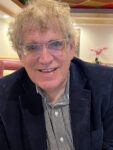
Weinstein, a 60-year-old baal teshuva (returnee to observant Judaism) from Long Island and director of investments at Oppenheimer & Co., brings an outsider-turned-insider perspective that makes this book uniquely approachable. His previous work, Ten Times Chai: 180 Orthodox Synagogues of New York City, was a visual labor of love—613 meticulously photographed synagogue interiors dedicated to 23 Holocaust survivors he met while volunteering at the JCC of Greater Coney Island.
That same spirit of quiet dedication and personal discovery animates this new volume. The spark came serendipitously: a friend’s note bearing the Hebrew phrase mitzvah goreret mitzvah (“one mitzvah leads to another”). Weinstein had to Google it. What began as a private handwritten list for his own Torah study ballooned into a 556-page compendium compiled exclusively from Torah-related sources.
As he delved deeper, family genealogy revealed his great-great-grandfather Mordechai Weiss had been a melamed—a traditional Hebrew teacher—in a shtetl cheder in Pidvolochys’k, Galicia. In the introduction, Weinstein humbly admits his selections are “subjective” and “incomplete,” yet his hope is simple: “if it can help one or more Jews connect to Torah, then G-d willing, I will have completed my task.”
The book’s structure is its greatest strength: everything is listed alphabetically in English first, followed by the Hebrew original and a concise definition or biographical sketch. No hunting through Hebrew-letter indexes or wrestling with transliteration charts. Thousands of words and phrases are covered—core concepts like Torah, mitzvah, tzedakah, shalom, and more specialized terms drawn from the weekly readings, Talmudic discourse, and Jewish lifecycle events. Hundreds of names follow: prophets (Moshe, Avraham), sages (Rashi, Rambam, Ramban), tzaddikim, and modern luminaries, each with brief notes on when and where they lived and their major writings. This is not a dry lexicon; it’s a “glossary of glossaries,” as one article aptly described it, designed for real people living real lives.
What sets Weinstein’s work apart from standard references (ArtScroll’s dictionaries, the Jastrow Talmud lexicon, or even free online tools like Sefaria’s glossaries) is its deliberate accessibility and Orthodox integrity. Every entry was vetted through Torah-centric sources only—no secular etymology or Reform reinterpretations. Rabbi Eytan Feiner of the White Shul in Far Rockaway praised the author’s “admirable diligence and incessant dedication.”
The book is explicitly for “people of all faiths” and Jews “of all backgrounds—Reform, Conservative, Orthodox, or unaffiliated.” Non-Jews curious about Judaism will find it equally welcoming; the English-first format removes the intimidation factor that plagues many Hebrew-English resources.
Visually, the book is a quiet delight. Between each alphabetical section, Weinstein inserts his own full-color photographs of Jerusalem taken during a 2022 family trip to Israel. These images—sunlit Western Wall stones, ancient alleyways, golden sunsets over the Old City—serve as gentle breathers, reminding readers that these words are not abstract but rooted in a living, breathing land and people. The layout is clean, spacious, and easy on the eyes, perfect for desk reference or bedside study.
That said, a few minor criticisms and potential limitations can be inferred or noted from available feedback, product descriptions, and the book’s own framing:
·– Subjectivity and incompleteness acknowledged by the author — Weinstein openly states in the introduction that his selections are “subjective” and “incomplete,” as the book grew from his personal study notes. While this humility is endearing to many readers, it could frustrate users expecting exhaustive coverage. For instance, advanced scholars or those seeking highly specialized terms (e.g., obscure Kabbalistic concepts, modern Hebrew slang, or detailed etymologies) might find certain entries too concise or absent altogether. The focus remains on “essential” Torah-related vocabulary from traditional sources, so it prioritizes core rabbinic, prophetic, and lifecycle terms over comprehensive lexicography.
–Lack of pronunciation guides — A small but recurring quibble in similar glossary-style books is the absence of phonetic transliterations or audio aids for Hebrew terms. While the book provides Hebrew originals alongside English definitions, beginners (especially non-Hebrew readers) may still need supplemental tools like apps or online dictionaries to pronounce words correctly. This isn’t a flaw unique to Weinstein’s work—many traditional glossaries omit it—but it can limit standalone usability for absolute novices.
–Strict Orthodox perspective — The book’s definitions and inclusions are vetted exclusively through Torah-centric (Orthodox) sources, which earns high marks for authenticity among its target audience but could feel limiting for readers from Reform, Conservative, Reconstructionist, or secular backgrounds. Progressive users might note the lack of contextual notes on historical debates, evolving interpretations, or gender-inclusive language in certain terms.
The author makes no claim to represent all streams of Judaism, and the book explicitly welcomes “Jews of all backgrounds,” yet its alignment with traditional transmission means it doesn’t engage with critical scholarship or non-Orthodox lenses.
Overall, criticisms tend to be practical or scope-related rather than fundamental attacks on content, accuracy, or intent. The book’s strengths—its warmth, personal origin story (tied to the author’s baal teshuva journey and family heritage), and genuine aim to help “one or more Jews connect to Torah”—seem to outweigh these points for most users. If you’re considering it for study, teaching, or gifting, the consensus from available feedback is that it’s a solid, heartfelt resource with few serious detractors.
*
Rabbi Michael Leo Samuel is spiritual leader of Temple Beth Shalom in Chula Vista, California.