By Rabbi Dr. Michael Leo Samuel in Chula Vista, California
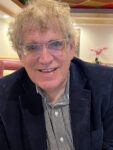

On Sunday, April 12, at 1 p.m., the Lawrence Family Jewish Community Center will host its annual Yom HaShoah service, a solemn afternoon of remembrance for the six million Jews murdered in the Holocaust. This year’s program, titled “Heroes Beyond Borders: Stories of Diplomatic Courage,” features two extraordinary speakers whose family histories are living testaments to the power of one individual’s moral defiance.
Jason Abranches, great-grandson of Portuguese Consul Aristides de Sousa Mendes, and Arturo Levin, whose mother and grandmother were saved by Japanese Consul Chiune Sugihara, will share how ordinary diplomats risked everything to become extraordinary rescuers. Their stories are not distant history—they are urgent reminders that courage in the face of evil can ripple across generations, continents, and decades.
Jason Abranches carries the legacy of one of the Holocaust’s most remarkable unsung heroes. His great-grandfather, Aristides de Sousa Mendes, served as Portugal’s consul-general in Bordeaux, France, in 1940 when Nazi forces swept across Europe. As refugees—Jews and non-Jews alike—poured into the city desperate for escape, Sousa Mendes faced a direct order from dictator António de Oliveira Salazar: remain neutral and issue no visas to those fleeing the Nazis. Circular 14 explicitly barred Portuguese diplomats from helping Jewish refugees or anyone deemed “undesirable.” For most officials, the choice was simple—obey and survive. Sousa Mendes chose differently.
In a frenzied 12-day period in June 1940, he defied his government and issued visas to tens of thousands of people, stamping passports around the clock, often without sleep, while crowds pressed against the consulate gates. He worked until his hand trembled and his health collapsed. Entire families received papers that allowed them safe passage through Portugal and onward to freedom.
Thousands of Jews who would otherwise have been trapped and deported to certain death found a lifeline. Sousa Mendes paid an unimaginable price. Stripped of his rank, pension, and diplomatic career, he was blacklisted by the Salazar regime. His 15 children were barred from universities and meaningful employment. The once-prosperous family lost everything. Sousa Mendes died destitute in 1954, largely forgotten in his own country.
Yet the seeds of redemption were already planted. One of those who benefited was Jason’s grandfather, John Paul Abranches. Forced to flee abroad in search of dignity and opportunity, John Paul eventually settled in the San Francisco Bay Area. Generations later, the Sousa Mendes family has worked tirelessly to restore Aristides’ honor. Once branded a traitor, he is now internationally recognized as “Righteous Among the Nations” by Yad Vashem and celebrated as one of the largest individual rescuers of the Holocaust.
Jason Abranches has become a passionate steward of that legacy. Living in the San Francisco Bay Area, he recently opened a small restaurant while remaining deeply engaged in his community. His path has been eclectic and adventurous: years in healthcare, time as an international sailor, and work as a sound engineer for renowned artists. He has traveled the world, including a memorable summer in Portugal where he attended the inaugural opening of the Museu Aristides de Sousa Mendes.
Housed in the family’s restored ancestral home, Casa do Passal, in Cabanas de Viriato, the museum—opened in July 2024—stands as a permanent tribute not only to Aristides but to the entire family’s sacrifices. For Jason, walking through the rooms where his great-grandfather was born and raised was profoundly moving. It transformed abstract history into something visceral.
At the Lawrence Family JCC, he will speak candidly about the harrowing days of 1940—the desperate crowds, the moral agony of defying orders, the immediate aftermath of ruin, and the long, quiet decades of family shame that finally gave way to global recognition. More importantly, he will explore the lessons that echo as loudly today as they did then: the duty to choose conscience over career, humanity over obedience, and action over indifference when refugees stand at our gates.
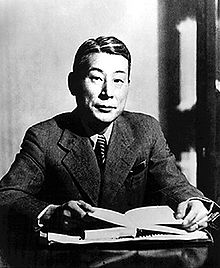
(Photo: Wikipedia)
Arturo Levin’s story comes from a different corner of the same moral universe. Born in Mexico City, he has called San Diego home since 1988, where he works as a successful real estate broker and investor. For most of his life, the full drama of his family’s survival remained hidden in plain sight. His mother, born in Mexico, had traveled with her own mother—Arturo’s grandmother—to their ancestral hometown in Lithuania on the eve of war. What began as a visit to reconnect with roots became a nightmare when the Nazi invasion trapped them. With borders closing and danger mounting, they turned in desperation to the Japanese Consul General in Kaunas, Chiune Sugihara.
Sugihara, like Sousa Mendes, faced an impossible choice. His government in Tokyo had strict instructions: issue transit visas only to those with confirmed onward destinations and proper documentation. Most Jewish refugees had neither. Crowds gathered outside the consulate, pleading for help. For weeks in July and August 1940, Sugihara ignored repeated orders to stop. He wrote visas by hand—more than 2,000 of them—often working late into the night, even as Soviet authorities prepared to close the consulate. Each visa allowed passage through Japan, buying precious time for escape. Historians estimate these “Sempo visas” ultimately enabled more than 6,000 people to reach safety, as many visas covered entire families.
Arturo’s mother and grandmother were among the “Sugihara Survivors.” They reached safety, eventually returning to Mexico before the family later settled in San Diego. The magnitude of their deliverance only became clear years later. While cataloging his grandmother’s estate, Arturo discovered her expired passports and original documents. Paired with a documentary on Sugihara, the artifacts confirmed what had been a family mystery: they owed their lives to one man’s handwritten defiance. The realization was staggering. What had felt like ordinary family history was, in truth, a miracle forged in ink and courage.
At the Yom HaShoah service, Arturo will share this deeply personal discovery—not as abstract heroism, but as the lived reality of his own mother and grandmother. He will reflect on the terror of being trapped in Lithuania as the Nazis advanced, the frantic search for any route to freedom, and the quiet gratitude that now defines his family’s story. His presence in San Diego, building a life of stability and community, stands as living proof of Sugihara’s gamble: one act of compassion can rewrite the future for generations.
Together, Jason Abranches and Arturo Levin embody the central truth of Yom HaShoah: while we remember the six million lost, we also honor the righteous few who refused to let darkness prevail. Their ancestors—Sousa Mendes and Sugihara—never met, yet they acted from the same inner compass. Both men understood that neutrality in the face of genocide is complicity. Both chose conscience and humanity over government orders. Both paid dearly for their stand. And both left legacies that continue to save and inspire.
In an era when refugees still flee war and persecution, when antisemitism once again rises, and when moral clarity can feel in short supply, their stories demand attention. Jason and Arturo are not professional lecturers or distant historians. They are sons and grandsons of survivors and rescuers—ordinary men who have chosen to keep these flames of memory alive. By opening their family albums and sharing the raw details—the terror, defiance, and the long road to restoration—they invite every listener to ask: What would I have done? And more urgently: What will I do today?
This Sunday at the Lawrence Family JCC in La Jolla, as candles are lit and names are read, two voices from the Bay Area and San Diego will remind us that heroism is not superhuman—it is the decision, repeated under pressure, to see the image of God in the stranger at the door. Their families’ survival is the proof that such decisions matter. Their presence on stage is the promise that the lessons of 1940 still burn bright in 2026.
The community is invited to gather, remember, and draw strength from these living bridges to the past. In hearing Jason Abranches and Arturo Levin, we do more than commemorate—we commit to carrying forward the courage that once turned the tide, one visa, one life, one generation at a time.
Rabbi Dr. Michael Leo Samuel is the spiritual leader of Temple Beth Shalom in Chula Vista, California.