By Rabbi Dr. Israel Drazin in Pikesville, Maryland
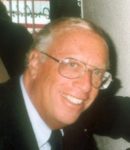
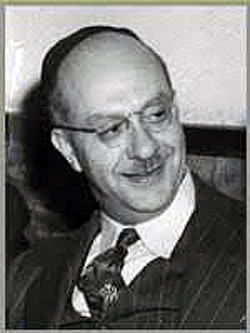
My dad, Rabbi Dr. Nathan Drazin (1906-1976), was a brilliant man. Unlike virtually all other rabbis, he not only earned rabbinical ordination at Yeshivah University in New York but also a Yadin Yadin degree, thereby qualifying him to serve as a judge. Because he wanted to be as helpful as possible to fellow Jews, he also studied all the laws of slaughtering animals. He secured a degree as a ritual slaughterer, although he never killed animals.
He studied psychology and mastered it, earned a PhD in Jewish History from Johns Hopkins University in Baltimore, Maryland, and wrote a history of Jewish education as his PhD thesis. He earned membership in Phi Beta Kappa, the oldest and most prestigious undergraduate academic honor society in the United States, founded in 1776 to recognize excellence in the liberal arts and sciences. Only about 10% of U.S. colleges have chapters, and they invite only the top 10% of arts and sciences graduates to join.
He was able to remember and quote the entire Hebrew Bible in its original Hebrew. He taught the 37 books of the Babylonian Talmud to his congregants as a youngster in Canada and later, as a rabbi in Baltimore, Maryland, three times, sometimes translating the Talmud’s Aramaic and Hebrew into Yiddish and, in later years, into English.
Dad married Mom in 1933 and accepted the position of rabbi of Shaarei Tfiloh that year. He served as its rabbi for 31 years until 1964. He was Shaarei Tfiloh’s only full-time rabbi, as I will explain. I succeeded him as part-time rabbi until 1970, while working for the Social Security Administration and the Army reserves.
In the early days, Shaarei Tfiloh was a very popular congregation. It was packed every Shabbat, and during the High Holidays, all 1,500 seats were occupied. I had no seat during the High Holidays and had to sit with the choir.
This began to change in the early 1950s. In those days, white people did not want to live in a neighborhood with people who were Black. In the early 1950s, Black people moved into the neighborhood, and people from miles around ran to the Baltimore suburbs.
The board of Shaarei Tfiloh begged Dad to allow the synagogue to move uptown, but Dad said it was wrong; it was immoral and disrespectful. By the early 1960s, after many Jews fled to the suburbs, there were only about 500 congregants on the High Holidays, down from 1500. Dad’s salary was severely reduced, but he still refused to move.
He retired from Shaarei Tfiloh in 1964, and I served as part-time rabbi for seven years on a meager salary. He and Mom went to Israel, where he became the Director in Jerusalem of an institution that dealt with medicine and Judaism. He died in 1976 at the early age of seventy.
There were rabbis in the early 1960s who joined the Civil Rights marches, and they should be praised for their courage. However, what they did took only a few days and cost them airfare and a little time.
What Dad did cost him a fortune. He also gave up being one of the most successful rabbis in Baltimore, with a huge congregation. He was a hero.
I am proud of my dad.
When there were riots in Baltimore and many buildings in the neighborhood were destroyed, what he did was remembered by the Black citizens in the area. No one touched the synagogue.
The synagogues that fled from the Blacks to the suburbs no longer exist in Baltimore as Jewish institutions. They have become something else; some even became churches. Shaarei Tfiloh still stands where it stood in Dad’s day. It is still used for Jewish affairs.
Today, April 15, 2026, is Dad’s yahrzeit, the anniversary of the day he died 50 years ago.
We miss him.
*
Rabbi Dr. Israel Drazin is a retired brigadier general in the US Army Chaplain Corps. He is the author of 67 books.