By Alex Gordon in Haifa, Israel
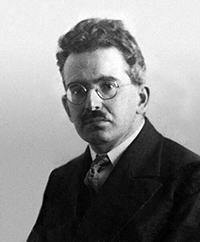
Walter Benjamin, a German philosopher, cultural and literary critic, was born on July 15, 1892, in Berlin, into a wealthy, secular, Jewish family of an antiquarian. On his mother’s side, he was related to Heinrich Heine. Walter graduated from a classical gymnasium in Berlin, then studied philosophy and literature at the universities of Freiburg (Switzerland), Berlin (from 1912), Munich (1916), and Bern (1917–1918), where in 1919 he defended his dissertation “The Concept of Art Criticism in German Romanticism.”
Until 1914, Walter was a leader of the Jewish radical youth movement. He did not go to the front in World War I, as he was deemed unfit for service. However, this war left a heavy mark on his soul from the loss of loved ones, from the rupture with dear people who succumbed to the militaristic euphoria at the beginning of the war, which had always been foreign to him. The post-war devastation and inflation in Germany devalued the family’s financial resources and forced Benjamin to leave the dear and prosperous Switzerland, where he had been offered to continue his academic work. He returned to Germany.
In the late 1920s, under the influence of Bertolt Brecht, Benjamin became seriously interested in Marxism. In 1926–1927, he came to Moscow thanks to an order from the editorial board of the Great Soviet Encyclopedia to write an article about Goethe. He did not rule out the possibility of moving to this city, but Moscow turned out to be a “city of slogans.” As a result, he wrote “Moscow Diary,” in which the author’s disappointment with a country that claimed to intend to build a new world is palpable. In Studies on Brecht, including the article “The Author as Producer,” his views on the essence of art, based on the Marxist theory of classes, the concept of base and superstructure, are reflected (but at the same time, Benjamin rejected the Marxist concept of art as a reflection of reality, which was accepted in the Soviet Union at the time; in 1939, after the Molotov-Ribbentrop Pact, Benjamin became disillusioned with communism, stating he had “finished with Russia.”)
A significant role in Benjamin’s creative development was played by his collaboration with the founders of the Institute for Social Research at Frankfurt University, including the Jewish philosopher and sociologist Max Horkheimer and the sociologist, psychologist, and musicologist Theodor Adorno (real surname Wiesengrund). The thinkers of this institute, named the Frankfurt School, adhered to a humane version of Marxism, in which culture played a more important role than practical politics. They criticized all elements of Western culture—Christianity, capitalism, the authority of the family, loyalty to traditions, patriarchy, sexual restrictions, and patriotism.
In collaboration with the Frankfurt School, Benjamin concluded that in the past, the ruling class manipulated history to suit their needs, delusions, and deceptions. He formulated the concept of “Marxist time,” or the Marxist millennium, as an alternative to the prolonged but unsatisfactory historical process. It is very important, he insisted, to “displace” the “past charged with the present” from the continuum of history and, in the name of enlightenment and social democracy, to substitute revolution there; when a revolutionary (also messianic) event occurs, time stops. In his Theses on the Philosophy of History, Benjamin argued that many forms of knowledge are created on a bourgeois principle, and new formulations will be required to ensure proletarian, or class, truth. He insisted that “even the dead will not be safe from the [fascist] enemy if he wins.”
The course of events forced Benjamin to shift to the left side of the political spectrum. The philosopher Hannah Arendt claimed that he was “the strangest Marxist in this movement rich in strangeness.” The concepts of “illumination” or “aura” he proposed were strange. This latter concept, important for the esthetics of late Benjamin, caused great irritation among his leftist allies (like mysticism!), yet it appears as early as the very beginning of his work: in an article on Dostoevsky’s The Idiot, one of his first publications, he speaks of the “aura of the Russian spirit.”
Even in Benjamin’s early works dedicated to the relationship between spirit and language (commentary on two poems by Friedrich Hölderlin, “Philosophy of Violence,” and “Program of Future Philosophy”), the influence of Judaism is palpable alongside the German Romantic tradition. Having been introduced to Zionist ideas early on, Benjamin contemplated the question of moving to Eretz-Israel and studied Hebrew.
In 1915, Benjamin became close to the Jewish philosopher and historian Gershom Scholem, to whom he owed much of his fascination with the works of Agnon and Bialik, as well as Kabbalah and Jewish messianism. The connection with the Jewish Talmudic tradition is also evident in Benjamin’s characteristic method, which is based on quoting and commenting. The Jewish tradition became a reality for him quite late; he did not so much grow up in it as come to it later, as one comes to phenomena of cultural history. He applied one of the main principles of Kabbalah to literature: words are sacred because the words of the Torah are physically connected to God.
As a result of the connection between the divine and human language, it is the duty of man to complete creation, for which man should primarily name everything with appropriate words and formulate ideas. He based his work on the phrase “the creative omnipotence of language” and argued that texts must be studied in such a way as to uncover not only their surface meaning but also to reveal their structure and inner significance. In the end, Benjamin found himself in line with the irrational and Gnostic Jewish tradition.
Interest in the contribution of Jews to the intellectual history of Europe was expressed in Benjamin’s article “The Role of Jews in German Culture.” He combined Marxism with Jewish messianic thought, representing a type of “heretical” thinker who critically reinterpreted the German heritage. Benjamin was one of the most “Jewish” modern German thinkers, although he did not identify with any religion. He wrote: “My life experience has led me to the following conclusion: Jews represent an elite among spiritually active people. […] For me, Judaism is by no means an end, but the most outstanding bearer and representative of spirituality.”
Walter Benjamin viewed the role of Jews in German culture thru the lens of complex assimilation, intellectual marginality, and “heretical” Judaism. His works analyze the attempts of German Jews to dissolve into the culture, facing rejection. Benjamin saw them as a “community of loners,” combining German intellectualism with Jewish self-awareness. Unlike complete dissolution, Benjamin emphasized the tragic situation of the Jews, who, despite a high degree of integration by 1933, remained vulnerable in the face of antisemitism. He demonstrated that the role of Jews in German culture was inextricably linked to the constant search for a balance between their own identity and the demands of the German environment.
After the Nazis came to power, Benjamin moved to Paris. At the end of 1939, he tried to make his way to Spain but got stuck at the French Spanish border. By this time, one of his best friends had already committed suicide, like the German writer Kurt Tucholsky and other Jewish intellectuals, gripped by the horror of the Nazis’ victories. Walter Benjamin committed suicide on September 26, 1940, in the Spanish town of Portbou.
Theodor Adorno, who did much for the posthumous publication of Benjamin’s works, noted the uniqueness of his thinking, calling him “the main critic of the era.” Hannah Arendt wrote about him: “He was a man of immense erudition, but he did not belong to the scholars; he dealt with texts and their interpretation, but he was not a philologist. He was not attracted to religion, but to theology and the theological way of interpretation, for which the text is sacred. However, he was not a theologian and was not particularly interested in the Bible. He was born a writer, but the limit of his dreams was a book entirely composed of quotes. He wrote a book on German Baroque and left an unfinished massive work on 19th-century France, but he was not a historian.”
*
Alex Gordon is a professor emeritus of physics at the University of Haifa and at Oranim, the Academic College of Education, and the author of 12 books