By Alex Gordon in Haifa, Israel
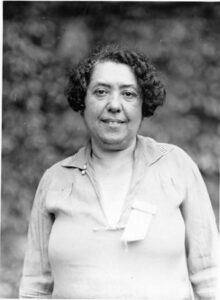
Lina Stern, an outstanding biochemist and physiologist, was born on August 26, 1878, in the city of Liepāja in the Russian Empire, now Latvia, into a wealthy Jewish family. After graduating from high school in 1895, Lina made unsuccessful attempts to obtain higher education in Russia for two years. She was not admitted to Moscow University due to numerus clausus.
In 1898, Lina Stern moved to Switzerland, where she enrolled in the Faculty of Medicine at the University of Geneva. In 1903, she graduated with honors from the University of Geneva, having published several works on respiratory physiology by that time, which made her name known in the scientific world.
Soon, she became the first woman to receive a chair at her alma mater and began studying the physiology of the brain and central nervous system; her work in this field became pioneering. In 1917, at the age of 29, Lina Stern was appointed professor and headed the Department of Physiological Chemistry at the University of Geneva.
In 1925, Stern made an unexpected decision that bewildered all her colleagues: she moved to the USSR, where she took the position of director and scientific supervisor of the Institute of Physiology in Moscow, into which she invested all her capital earned in the West. The main scientific achievement of Lina Stern was the discovery and detailed study of the blood-brain barrier, the hemato-encephalic barrier—a protective mechanism that regulates the exchange of substances between the blood and the brain. She developed a method for administering streptomycin directly into the brain, reducing the mortality rate from tuberculous meningitis from 100% to 30%. Lina Stern’s method for combating traumatic shock involved the direct injection of a potassium phosphoric acid solution into the cisterna magna of the brain. This method, based on her teachings about the barrier functions of the brain, stimulated the nervous system, normalized metabolism, and effectively brought the wounded out of shock.
The treatment methods she developed helped save the lives of thousands of children suffering from meningitis, and during World War II, they saved thousands of wounded individuals in shock. In 1939, Stern became the first woman elected as an Academician of the Academy of Sciences of the USSR.
In 1941, Stern became a member of the Jewish Anti-Fascist Committee, which raised enormous funds in the United States for the victory over the Nazis. On November 20, 1948, the Jewish Anti-Fascist Committee was formally dissolved by a decision of the Bureau of the Presidium of the Council of Ministers of the USSR and closed “as a center of anti-Soviet propaganda.” In early 1949, several dozen members of the Jewish Anti-Fascist Committee were arrested. On July 18, 1952, all the defendants, except for Stern, were sentenced to death. Lina Stern was sentenced to 3 1/2 years in camps followed by five years of exile. Stalin personally crossed out the surname Stern from the list of those to be shot.
After the fall of the USSR, the KGB archives became accessible. The writer Alexander Borshchagovsky, a friend of my father, who, like my father, was accused of “rootless cosmopolitanism” in 1949, published a book in 1994 about the persecution of members of the Jewish Anti-Fascist Committee, Blood is Accused, because of intensive work in the KGB archives. From this book, the story of Lina Stern’s confrontation with Soviet investigators became known. The author published the interrogations of Stern in prison, which took place on February 8 and 10, March 7 and 28, April 19, and July 7, 1949.
Borshchagovsky writes: “The investigative file captures the portrait of Lina Stern, which could please an antisemite: very short stature [154 centimeters], plump, large nose, thick lips, short neck, under a low forehead, brown fierce eyes, strong Jewish accent. […] Lina Stern astonished the investigators. She gave her testimony without reservation, as if with relief and joy, recalling the dear past, speaking the truth, having nothing to hide and nothing to be ashamed of for all seventy years of her life.”
Next, I will provide several excerpts from the interrogation protocols of Lina Stern from the book Blood is Accused:
Q: You were born in Liepāja, in Latvia, that is, in former Russia, in a wealthy merchant family, you are a full member of the Academy of Medical Sciences, and in the questionnaire, you wrote: birthplace − Geneva?
A: I have always considered Geneva my homeland. In 1917, I was a professor at the University of Geneva, heading the Department of Physiological Chemistry. […] My father was wealthy, living in Königsberg; he exported grain from Russia to Germany. But I spent my childhood in my grandfather’s family; he was a rabbi and raised me in a religious spirit. […] I studied the Talmud from childhood and had quite high hopes for understanding Jewish religion.”
While in prison under the control of criminal investigators, Stern was proud of her Jewish heritage. This was happening during the peak of state-sponsored antisemitism. The investigators indignantly asked Stern: “Did you consciously promote Jewish doctors?”
She boldly replied: “Only to the extent that they deserved as scientists. I could not tolerate their discrimination either, and it is not my fault that in 1943, when I sent a letter to Stalin about the discrimination of Jews in science, someone in despair began to think of me as a fierce, reckless defender of them.”
Lina Stern was not afraid to talk about her international connections, which Soviet citizens feared under the threat of criminal punishment:
A: “The achievements of science should not remain a secret from humanity: I had particularly extensive connections with employes of the British, Australian, Danish, Belgian, and Romanian embassies.”
She was not afraid to acknowledge her international connections and cosmopolitan views, for which many Jewish intellectuals, including the author of this book, were punished:
“I really preached cosmopolitanism in science. To be precise, I believed and still believe that science should stand outside of politics. In my circle, I even said this: science should not know a homeland.
The latter statement is tantamount to an admission of “rootless cosmopolitanism,” which was punishable by the Soviet regime.
To direct questions about when she was recruited by “Zionists” from the USSR Academy of Sciences and whether she was planning to flee abroad, Stern patiently explained to the investigators that she had never intended to go to Palestine, but she did not consider such a departure a sin, and although she had never been a Zionist, she “sympathizes with the Jewish state of Israel that was formed in Palestine.” Such a confession at that time was equivalent to admitting criminal activities in the service of bourgeois nationalism. The investigator did not ask, but accused her:
“Do you remember, at the State Jewish Theater, during the visit of Golda Meirson (Golda Meir was then the ambassador of Israel in the USSR. – A. G.), they hung up a blue banner with a Zionist symbol on it? Were you there?”
Stern fearlessly replied to the representative of the law, or rather, the lawless:
“Yes. Star of David. This is a symbol, an emblem, like our hammer and sickle. You don’t greet the ambassador of the state of Israel with a two-headed eagle.”
Stern was astonishing in her remarkable courage, for she was not afraid of the terrible accusation of Jewish nationalism:
“Among my acquaintances, I expressed views on the necessity of preserving Hebrew and culture, but I do not consider myself an active nationalist.”
The investigators treated the elderly woman, an outstanding scholar, roughly and insultingly. During the interrogations, the Soviet investigators, products of a totalitarian system of lawlessness, faced an individual from the world of democracy, a person with independent thinking. The antisemites faced a proud Jewish woman, a brave woman who was not afraid of the Soviet repressive machine. During the interrogations, two polar, incompatible worldviews clashed: the human and the cannibalistic, two opposing civilizations. The interaction between academician Stern and the investigators in the case of the Jewish Anti-Fascist Committee became a clash between intellectual freedom and service to science and the deceitful and inhumane state apparatus. And suddenly Lina Stern received only three and a half years in prison, three and a half years already spent in prisons, and five years of exile.
In the book Blood is Accused, Borshchagovsky gives his explanation for Stalin’s pardon of Lina Stern: “Stalin’s mercy toward this outsider, stubborn, and impudent woman in defending her views, I attribute to his heightened fears of death; a tendency to believe in miracles; a secret hope that fate and the very universe would not dare to measure out his lifespan like an ordinary mortal. Something must happen; something will happen. He is needed by Russia and the world, he cannot die like all the surrounding mediocrities, gluttonous and corpulent—he is not them, he is different, he must, he is obliged to live, if not forever, then at least for Methuselah’s age. […] Legends circulated about Lina Stern’s discoveries, […] it was rumored that she was on the verge of unraveling the secrets of longevity, slowing down the aging process, and reversing old age. What if the “Jewish witch,” who memorized the Talmud and Torah for her entire life, finds the answer, gifts the socialist country with a great discovery, and if it is kept secret (it’s never too late to deal with the old woman!), then the Stalinist Politburo will decide who to grant longevity to?”
Lina Stern was rehabilitated in November 1958. She headed the physiology department of the Institute of Biophysics of the USSR Academy of Sciences until her death in 1968. She, who cured thousands of people from shock with brain injections, treated herself from the shock of Soviet lawlessness by fully immersing her brain in scientific work.
*
Alex Gordon is a professor emeritus of physics at the University of Haifa and at Oranim, the Academic College of Education, and is the author of 12 books.