By Michael R. Mantell, Ph.D. in El Cajon, California

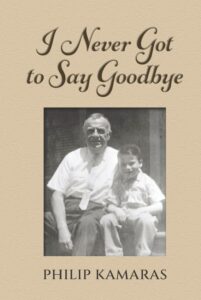
I Never Got to Say Goodbye: A Memoir by Philip Kamaras stayed with me in a way I didn’t expect.
If you’re looking for a book that feels like someone quietly telling the truth about something deeply lived, something painful, unfinished, and still very present, this is it. Get ready for a personal, shared experience.
What I kept coming back to was how real the emotions feel on the pages. There’s no attempt to wrap grief up neatly or make it feel resolved. It just is what it is, the missing conversations, the moments that replay in your mind, the weight of not having had the chance to say what mattered most. Anyone who has experienced loss will recognize this immediately.
What does the title, I Never Got to Say Goodbye: A Memoir, mean?
Kamaras writes that he lost his father when he was 8 years old. According to his account, his father died from a heart attack. This event becomes one of the defining experiences of his childhood and serves as the emotional foundation for much of this memoir.
The memoir’s title reflects this central theme: The book explores how he gradually came to understand that loss and work toward healing, decades later.
Kamaras describes not only the death itself, but also the profound and lasting consequences of losing his father so young: the unanswered questions, the silence that often surrounds suicide, the impact on his family, and the way grief shaped his identity throughout his life.
In that sense, I also found myself reading it through a Jewish lens of grief and memory. It echoes themes that are deeply familiar in Jewish life: that mourning is not something completed and set aside, but something carried forward with dignity. The book doesn’t replace tradition or ritual, but it sits alongside those ideas in a way that feels almost like conversation.
There is something close here to nichum aveilim, literally “comforting mourners,” and one of Judaism’s most cherished mitzvot, in its emotional posture. Philip Kamaras simply stays present with sorrow. That kind of presence is often what Jewish mourning practice teaches as well: that being with someone in grief matters more than having answers.
I also found myself thinking about how memory functions as a form of continuing a relationship. In Jewish practice, yahrzeit, Yizkor, and Kaddish all hold space for the idea that those we lose remain a part of our ongoing lives. Kamaras’ reflections, though secular in tone, touch that same human truth. that love doesn’t end cleanly, and absence still carries presence.
There were parts where I had to pause, not because the writing is loud or dramatic, but because it is quiet in a way that lands deeply. It reminded me that we don’t “move past” grief but something we slowly learn to live alongside. That idea is very much at home both in lived experience and in the wisdom embedded in Jewish thought, where human limitation and unfinished understanding are part of being alive.
What makes this book work for me is its honesty. Without teaching lessons or forcing comfort, it simply tells the truth of what it feels like to lose someone without closure and somehow, in doing that, it offers its own kind of comfort anyway.
I finished it feeling like I had been let into something very personal, and I didn’t take that lightly. It’s a simple book in structure, but emotionally it carries more weight than you expect going in. And it lingers in the way certain memories linger, and in the way some losses quietly become part of how you see the world.
*
Michael R. Mantell, Ph.D., is a freelance writer best known for his analyses of the weekly Torah portions.
Michael R. Mantell, Ph.D., is a freelance writer best known for his analyses of the weekly Torah portions.