By Betzy Lynch in La Jolla, California
One of the questions I’ve been reflecting on this week is the difference between being invited and being welcomed. At first glance they seem almost interchangeable. But Jewish wisdom suggests they are not the same.
An invitation begins with a guest list. Someone decides who is included and who is not. A welcome begins with an open door.
When Abraham sat at the entrance of his tent in the heat of the day, he didn’t wait for expected guests or carefully chosen companions. His tent, our tradition teaches, was open on all four sides. When strangers appeared, he ran toward them before he knew anything about who they were. He simply recognized their humanity.
Perhaps that is why the Torah returns to the same lesson again and again. No fewer than 36 times, we are reminded to love the stranger, protect the stranger, or remember that we ourselves were strangers in the land of Egypt (see Exodus 22:20, Leviticus 19:34, and Deuteronomy 10:19). More than any other commandment, the Torah calls us to see ourselves in those standing at the edge of community. Jewish life has never been built on perfect guest lists. It has been built on open tents.
That openness, however, is not the same as having no expectations.
The rabbis teach us to keep our homes open wide, “Let your house be open wide” (Pirkei Avot 1:5), while also teaching that communities flourish only when they are grounded in justice, mutual respect, and shared responsibility. Healthy communities hold these two truths together. They welcome generously, and they establish wise boundaries that allow everyone to thrive.
This balance feels especially important today.
At the Lawrence Family JCC, we are not trying to build a community of people who all think alike, look alike, vote alike, pray alike, or experience Jewish life in the same way. In fact, Judaism suggests something quite different.
The Mishnah teaches that every human being descends from the same first person so that no one can ever claim greater worth than another (Sanhedrin 4:5). It then offers a remarkable observation: while human beings can stamp identical coins from the same mold, G-d creates every person from the same source, yet no two people are alike.
Difference is not a flaw in creation.
Difference is one of creation’s greatest gifts.
Every person carries a unique reflection of the Divine because each of us is created b’tzelem Elohim, in the image of G-d (Genesis 1:27). Every life offers a perspective that no one else can contribute. Diversity, then, is not something we merely tolerate. It is something we are meant to learn from.
That is the kind of community I hope we continue to build together. Our community includes people deeply rooted in Jewish tradition and those just beginning to explore. It includes lifelong members and first-time visitors, interfaith families, and many people who are not Jewish at all but who choose to learn, work, volunteer, celebrate, and build relationships alongside us. They are not standing outside our community looking in; they are part of the tapestry that enriches it. Each person brings experiences and perspectives that help us better understand one another and, in doing so, better understand the image of G-d reflected in every human being.
A place where people are welcomed before they are fully known. A place where belonging is not reserved for the hand-selected but extended generously to those seeking connection. A place where our differences deepen our understanding rather than diminish our relationships. And a place where kindness, respect, curiosity, responsibility, favorable judgement and compassion, provide the framework that allows a wonderfully diverse community to flourish.
Building that kind of community is not always easy. It requires humility, patience, and the willingness to encounter people whose stories, experiences, and perspectives differ from our own. But perhaps that has always been the Jewish project: not creating communities where everyone is the same, but creating communities where people who are different choose to care for one another.
May this new week remind us that every act of genuine welcome expands the circle of belonging, and that together we can continue building a community with an open tent, a foundation built from favorable judgement of others, and room for every person to help cultivate a more compassionate world.
*
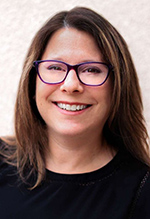
Betzy Lynch is the CEO of the Lawrence Family JCC.