By Alex Gordon in Haifa, Israel
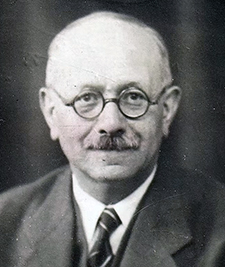
Marc Leopold Benjamin Bloch was a French historian, one of the founders of the Annales School of French social history. Bloch specialized in the history of medieval France. He worked at the University of Strasbourg (1920–1936) and (1940–1941), at the University of Paris (1936–1939), and at the University of Montpellier (1941–1944).
Marc was born on July 6, 1886, in Lyon. He was one of two children of Gustave and Sarah Bloch, née Ebstein. The Bloch family were Alsatian Jews: secular, liberal, and committed to the French Republic. A year after Marc’s birth, his father was appointed professor of Roman history at the Sorbonne, and the family moved to Paris. Gustave began teaching Marc history when he was still a boy. But life taught the future historian a dramatic lesson about French history.
When Marc was nine years old, the Dreyfus Affair erupted in France. As the first major manifestation of political antisemitism in Europe, it became a formative event of Marc’s youth. Gustave Bloch was closely involved with the Dreyfus movement, and his son also became a Dreyfusard. Bloch studied at the prestigious Lycée Louis-le-Grand for three years, where he was consistently the top of his class and received awards in French, history, Latin, and natural sciences.
In July 1903, Marc earned his Baccalauréat in Literature and Philosophy with the grade “très bien” (very good). The Dreyfus Affair fostered in him a critical attitude towards the French army: he considered it infused with “snobbery, antisemitism, and anti-republicanism.” In 1905, universal conscription was introduced in France, with a service period of two years. Bloch served in the 46th Infantry Regiment (1905–1906).
He graduated from École Normale Supérieure (ENS) in 1908, specializing in geography and history. He researched medieval Île-de-France in preparation for his dissertation. This research drew Bloch’s interest in rural history. During this period, French Jewish sociologist Émile Durkheim, who anticipated Bloch’s interest in interdisciplinary research, influenced him significantly. His doctoral dissertation was an investigation of French feudal law in the 10th century—titled “Rois et Serfs, un Chapitre d’Histoire Capétienne” (Kings and Serfs, a Chapter of Capetian History). After completing his studies, he taught at high schools in Montpellier and Amiens. In 1913, his first monograph appeared: L’Île-de-France: Les pays autour de Paris (Île-de-France: The Lands Around Paris). World War I prevented him from finishing his doctoral dissertation.
Like most people of his generation, Bloch expected a short but glorious conflict, but he found himself in the bloody maelstrom of World War I. He fought in the battles of the Marne, the Somme, the Ardennes, and during the German last offensive on Paris. He survived the war, which he later described as “an honor” to serve in. He was wounded twice and awarded for bravery, receiving the Croix de Guerre and the Legion of Honor. He entered the army as a non-commissioned officer, was commissioned after the Battle of the Marne, and promoted to captain. Later, he wrote: “I only know one way to convince troops to face danger bravely: to face it myself bravely.”
Bloch was proud of his family history of defending France: he later wrote, “My great-grandfather was a soldier in 1793; my father was one of the defenders of Strasbourg in 1870. […] I was raised in a spirit of patriotism, and among its most ardent defenders were Jews from the Alsatian diaspora.” Bloch was a dedicated supporter of the Third Republic and held leftist political views. He was not a Marxist, though he was impressed by Marx, whom he regarded as a great historian and “an unbearable man.” Later, Bloch described the war in a detached style as a “gigantic social experiment of incredible richness.”
Bloch was demobilized on March 13, 1919. The war led him to rethink his approach to history. He rejected political and biographical history, which had been the norm until then. After the war, he obtained his doctorate (1918) and became a lecturer at the University of Strasbourg. There, he formed an intellectual partnership with historian Lucien Febvre. Together, they founded the Annales School and began publishing the journal Annales d’histoire économique et sociale (Annals of Economic History) in 1929. Durkheim died in 1917, but Bloch transferred Durkheim’s anti-dogmatism to historical science, abandoning the description of “great men” in favor of the analysis of collective thinking. Bloch was deeply influenced by Durkheim, who also believed that links between historians and sociologists were more significant than their differences. He repeatedly emphasized the importance of a multidisciplinary approach to history, combining his research with geography, sociology, and economics.
In July 1919, he married Simonne Vidal in a Jewish ceremony— “an educated, modest, shy, and energetic” woman. Her father was a general inspector of bridges and roads—a prosperous and influential man. His wife’s family wealth allowed Bloch to focus on research without relying on his own income. Later, Bloch stated that he was very happy with her, and he believed she was happy with him as well. They had six children: four sons and two daughters. Like his father, Bloch took a keen interest in raising his children and regularly helped them with homework.
By 1920, Bloch’s main views on nature and purpose of studying history were well formed. He began publishing articles in the journal Revue de Synthèse Historique (Historical Review). His first major work, Les Rois thaumaturges (The Miracle-Working Kings), was published there. In 1928, Bloch publicly articulated his theory of total, comparative history: “It was a compelling call to overcome national barriers that limited historical research, to go beyond geographical boundaries, to escape the world of artifices, to conduct both horizontal and vertical comparisons of societies, and to involve other disciplines.”
The turn of Bloch to the use of comparative history dates to the Enlightenment, when Voltaire and Montesquieu criticized the idea that history is a linear narrative about individual personalities and advocated for a more active use of philosophy in studying the past. Bloch did not consider social history as a separate field within historical research. He saw all aspects of history as an inseparable part of social history. All history is social history—a perspective that he and Febvre referred to as “histoire totale,” (“total history”) rather than focusing on factual details such as battle dates, reigns, and changes of leaders and ministries, and generally limiting the historian to what he can define and verify. Bloch viewed historians as detectives gathering evidence and testimonies, as judicial investigators responsible for an extensive investigation of the past. He was also one of the first theorists in the field of collective memory preservation.
In his book Strange Defeat, Bloch wrote about his attitude towards Judaism: “Je suis juif… je ne m’en glorifie ni n’en rougis, et je ne revendique ma qualité de juif que devant un antisémite” (“I am Jewish, but I see no reason for pride or shame in it, and I only claim my Jewish identity in front of an antisemite”).
Politically, Bloch supported the Popular Front. Although he opposed the growth of European fascism, he also objected to attempts to counter the ideology through “demagogic appeals to the masses,” as the Communist Party did.
By early 1939, it became clear that war was inevitable. Bloch, a retired captain despite his age, was mobilized into the army on August 24, 1939, at the age of 53. In the fall of 1939, shortly before the outbreak of war, Bloch published the first volume of Feudal Society.
In May 1940, the German army forced the French to retreat. Bloch participated in the Battle of Dunkirk in May–June 1940. Two-thirds of France were occupied by Germany. Bloch was demobilized shortly after the French government, led by Philippe Pétain, signed the armistice on June 22, 1940, establishing Vichy France. He was granted permission to work despite being Jewish. This was likely related to his outstanding work in the field of history. He resumed work at the University of Strasbourg, which had been relocated to Clermont-Ferrand, for one academic year before moving to Montpellier. The dean of the faculty in Montpellier was an antisemite who also disliked Bloch because he once gave him a poor review. Bloch rejected Vichy’s propagandistic idea of returning to traditional French values, asserting that “the idealized, submissive life of the French countryside never existed.” In Montpellier, he had to be guarded against aggressive right-wing students to continue teaching. It was during these bitter years of defeat, mutual reproach, and uncertainty that he wrote both the uncompromising condemnatory pages of Strange Defeat and the beautifully calm excerpts of The Craft of the Historian.
On March 18, 1941, Bloch made a will in Clermont-Ferrand. He foresaw his death, having decided to resist the Nazis. His will contained the words: “In the face of death, I declare that I was born a Jew, and I have never thought to deny it or even consider it. In a world struck by the most hideous barbarism, is not the noble tradition of Jewish prophets—adopted and spread by Christianity in its purest form—one of the best grounds for living, believing, and fighting? Entirely disinterested in any confessional formalities and so-called racial solidarity, I have felt myself primarily French all my life. Bound to my homeland by a long family tradition, educated in its spiritual heritage and history, only here do I breathe easily; I loved her and served her with all my strength. I never felt that my Jewishness in any way diminished these feelings.”
Bloch worked in Montpellier until November 1942, when Germany invaded Vichy France. This event became the catalyst for his decision to join the moderately republican movement Le Franc-Tireur within the French Resistance. Bloch was arrested by the Gestapo in Lyon on the morning of March 8, 1944. His arrest was widely covered in Nazi and collaborationist press as a major victory in dismantling the “communist terrorist” group financed from London and Moscow, led by “the Jew who adopted the pseudonym of a southern French town.” (To publish his works in the French scientific journal *Annales* under Nazi censorship, Bloch took the pseudonym Marc Fougères. The name is derived from the town of Fougères, located in northwestern France, Brittany, not in the south.) Minister of Information and Propaganda Philippe Henriot later boasted about destroying the “resistance capital” in Lyon, while the German envoy Otto Abetz telegraphed about Bloch’s detention in Berlin.
Bloch was held in the Prison de Montluc (Lyon). As an important Resistance figure, he was subjected to interrogations and torture daily at the Gestapo headquarters in Lyon. He revealed nothing to his interrogators and, while in prison, taught French history to other inmates. On June 6, 1944, the Allies landed in Normandy. The Nazis aimed to evacuate Vichy and “liquidate their assets,” meaning to destroy as many prisoners as possible. Between May and June 1944, they killed about 700 prisoners. Bloch was among the 28 men executed in the night of June 16, 1944. His last words were: “Vive la France!” According to his will, his epitaph on his grave was to be dilexi veritatem (“I loved the truth”).
Several works, including influential studies, The Art of the Historian and Strange Defeat, were published posthumously. His research in history and his death as a member of the Resistance made Bloch highly regarded by generations of postwar French historians; he was increasingly called “the greatest historian of all time.”
Peter Burke, a British cultural historian and medievalist, called Bloch the leader of the “French Historical Revolution.” Bloch became an icon for a new generation of historians and for his heroism in the Resistance movement. In 1977, his remains were reburied at the state’s expense; streets, schools, and universities were named after him, and his centenary was commemorated with a conference in Paris in June 1986. In November 2024, in memory of the 80th anniversary of the Liberation of Strasbourg, President Macron announced his inclusion in the Pantheon.
*
Alex Gordon is professor emeritus of physics at the University of Haifa and at Oranim, the Academic College of Education. He is the author of 12 books.