By Alex Gordon in Haifa, Israel
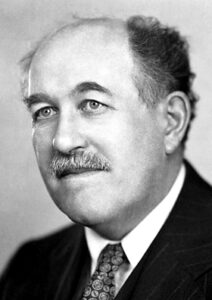
Otto Stern, an outstanding experimental physicist and Nobel Prize laureate in physics, was born on February 17, 1888, as the eldest child of a wealthy Jewish miller and grain supplier, Oscar Stern, and Eugenie, née Rosenthal, in Sohrau, Upper Silesia. Otto was one of five children. The family moved to Breslau in 1892, where Otto attended the Johannes Humanistic Gymnasium, from 1897 to 1906. There he received his high school diploma
After the final exam in 1906, Stern completed 12 semesters of physical chemistry at the University of Breslau. Being financially independent due to his parents’ wealth, he spent several years studying natural sciences under the guidance of professors from the universities of Freiburg and Munich. Stern defended his doctoral dissertation in physical chemistry at the University of Breslau in 1912.
At the German University in Prague, Stern had extensive interactions with Albert Einstein. Subsequently, Stern recounted this interaction to his junior colleague, the Austrian physicist of Jewish descent Otto Robert Frisch: “We discussed the latest theories… In the capital’s taverns, there was an indescribable noise: the clatter of music, the stomping of feet, songs, shouts, and sometimes even fights… The quietest places in Prague turned out to be the cafes in the houses of tolerance. We would sit at a table in the corner and talk, argue, write on napkins and tablecloths… No one bothered us. Outsiders might say: Einstein and Stern never leave the brothels!”
In 1913, Einstein became a professor at the Zurich Institute of Technology. Stern joined him there as a privat-docent.
In 1914, World War I began. Stern donned the gray uniform of the Kaiser’s army. He served as a meteorologist. Later during the war, Stern and several other scientists were transferred to the laboratory of Nobel Prize-winning chemist Walther Nernst at the University of Berlin, where they conducted various research projects on behalf of the Ministry of War. In Berlin, Stern worked with future Nobel Prize winners in Physics, the Jews Max Born and James Franck. Under the influence of conversations with the skilled experimentalist Franck, Stern shifted from the realm of theory to the field of experimentation.
After the war, Born became the director of the Institute of Theoretical Physics at Frankfurt University and invited Stern to take the position of his assistant. He wrote: “I was fortunate to find in Otto Stern a privatdozent of the highest quality, a good-natured, cheerful man who soon became a good friend of ours.” Stern was fascinated by the problem of the experimental verification of Maxwell’s molecular motion theory, developed in the mid-19th century.
Maxwell, based on theoretical considerations, showed that gas molecules are in continuous chaotic motion and derived a formula for the distribution of their speeds. Maxwell’s results were not experimentally confirmed. Stern constructed an apparatus that confirmed molecular motion, the movement of invisible particles (1920).
From 1921 to 1923, Stern worked as a professor at the University of Rostock.
In 1922, together with physicist Walther Gerlach, Stern used the same molecular beam method to study the behavior of atoms in a magnetic field. The Stern-Gerlach experiment discovered that angular momentum is quantized, proving the validity of quantum theory. This experiment is associated with the following story.
Stern and Gerlach heated silver in a furnace, creating a beam of neutral atoms. The beam passed through a special magnet with a non-uniform field. According to classical physics, the trace on the screens should have resulted in a solid band (different angles of rotation of the magnetic moments). But something unexpected happened: the beam split into exactly two separate spots. This happened under the following circumstances.
Stern was an avid smoker, but due to a modest budget, he could only afford cheap, low-quality cigars that contained a lot of sulfur in the tobacco. When the beam of silver atoms settled on the glass detector plate in the experiment, the silver trace was so thin and weak that the scientists couldn’t immediately discern it. Stern blew the smoke from his cheap cigar onto the plate; sulfur from the smoke reacted with the silver, forming visible dark silver sulfide, and the previously invisible result appeared on the glass. Before the eyes of the experimenters, the hair-thin layer of tarnish blackened and split into two—revealing a narrow gap! And this is precisely the trace that silver atoms were supposed to leave when the magnetic field was turned off and then turned back on, according to quantum mechanics! Spatial quantization has been proven: the projection of the magnetic moment can only take on discrete (specific) values.
From 1923 to 1933, Stern was a professor of physical chemistry and the director of a laboratory at the University of Hamburg. In 1933, he was the first to measure the magnetic moment of the proton in a hydrogen molecule. From 1930 to 1933, Otto Frisch worked as his assistant in Hamburg, helping him conduct this experiment. Frisch recalled how Stern recounted that in 1913, he and Max von Laue, one of the best experimental physicists of the 20th century, a Nobel Prize laureate in physics, vowed that “if this absurdity of Bohr (the first quantum model, showing a radical departure from classical physics. – A. G.) ultimately turns out to be correct, we will leave physics.” However, subsequent discoveries by Stern himself convinced him of the correctness of quantum mechanics.
When the Nazis came to power in Germany and the expulsion of Jews from “Aryan” science began, Stern resigned in protest. He was a veteran of World War I and did not fall under the sanctions of the Nazis’ antisemitic laws regarding the dismissal of Jews from universities and other state institutions. The pretext for his resignation in August 1933 was the dismissal of his colleague and former student Immanuel Estermann and the order to remove Einstein’s portrait from his office. He emigrated, and all that remained of the institute, stripped of its soul, soon faded away.
Stern was invited to the position of professor at the Carnegie Institute in Pittsburgh, Pennsylvania. His colleague, a fellow Berliner and tribesman, James Franck, was the first of the German scholars to resign on April 17, 1933. In a letter to the Minister of Science and Education, Rust, he stated that the reason for his resignation was the “government’s attitude toward German Jewry.” Franck, as a distinguished veteran of the First World War, was not subject to the bans imposed by the Nazis, and his resignation was principled; he no longer had to go against his conscience and dismiss his Jewish colleagues and students from the institute. In a letter to the university rector, he detailed the reasons for his resignation: “We, Germans of Jewish descent, are treated as foreigners and enemies of the homeland.” It is to be expected that our children will grow up knowing that they will never be allowed to prove that they are worthy Germans.”
Stern never returned to Germany and did not receive the German pension due to him, thus expressing his aversion to Nazism.
Stern received American citizenship on March 8, 1939, and during World War II, he worked as a consultant in the War Department.
In 1943, Otto Stern was awarded the Nobel Prize in Physics “for his contribution to the development of the molecular beam method and the discovery of the magnetic moment of the proton.”
In 1945, Stern was elected to the National Academy of Sciences of the USA.
Stern suffered a heart attack while watching a movie and passed away in Berkeley on August 17, 1969, at the age of eighty-one.
In 1973, the Italian-American physicist of Jewish descent, Emilio Segrè, a Nobel Prize laureate in physics, left profound memories of Otto Stern. The two scientists were connected by decades of personal and professional interaction.
In 1930, Segre won a Rockefeller Foundation fellowship and, on the advice of his teacher, Nobel Prize-winning physicist Enrico Fermi, went to Hamburg to study and work under Stern’s guidance. There, he mastered the method of molecular beams.
Both physicists were Jewish and fled European fascism to the USA. In 1946, Stern retired and moved to Berkeley, where Segre was a professor. They regularly met and discussed discoveries in astrophysics and particle physics until Stern’s death. Segre gave Stern the following assessment: “Stern was one of the greatest physicists of the 20th century.” He wrote relatively few papers, but what power those he wrote had!” Segre described Stern’s incredible scientific resilience and his ability to focus on fundamental tasks, as well as recalling his personal habits in the last years of his life in Berkeley (a love for fine cuisine, good cigars, and regular trips to the cinema).
*
Alex Gordon is professor emeritus of physics at the University of Haifa and at Oranim, the Academic College of Education. He is the author of 12 books.