By Alex Gordon in Haifa, Israel
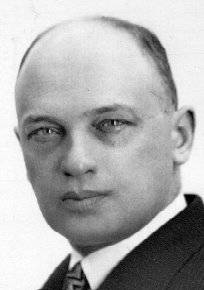
On February 21, 1887, Savielly Tartakower was born in the southern Russian city of Rostov-on-Don. He was not a subject of the Russian Empire, as his parents were subjects of Austria-Hungary. They were Jews fleeing from the antisemitism of one empire to another. Savielly himself was baptized at birth, but throughout his life, he was deeply aware of his roots. He was fluent in Yiddish.
Savielly’s parents had two daughters and two sons. Savielly was the eldest child. In Rostov-on-Don, they owned a haberdashery store called “Competition,” located at 59 Bolshaya Sadovaya Street, and were brutally murdered on the night of February 18, 1911, during a robbery in their own apartment at 80 Temernitskaya Street. By this time, their sons were living abroad, and their daughters were in both Russian capitals. In Rostov-on-Don, residents were shocked by the terrible murder of Tartakower’s parents. Savielly came to the funeral and shaken by the tragedy, wrote a poem in memory of his parents, which became the final poem in the collection Dissonances:
ANOTHER, FINAL DISSONANCE…
(In memory of my parents)
A whole century of deprivation and tears and toil!
For whom? For the children, who lived carelessly in foreign lands.
And I sometimes ask: Is it easy for you, old folks?
They answer: Of course.
Returned home by morning.
Took it, opened the telegram: Your parents have been killed.
Arrived. Buried.
Two bloody graves
Weigh heavily on my conscience
With iron slabs.
The loss of his parents was a terrible dissonance in Tartakower’s life: “The iron slabs of two bloody graves weighed heavily on his conscience.” The brutal murder of his parents accelerated the formation of his existential worldview, combining fatalism and readiness for unexpected blows of fate.
After the death of his brother Arthur on the front lines of World War I in 1914, he became a solitary man, a “lone wolf,” and a very brave man.
From 1899 to 1904, Savielly studied at a gymnasium, first in Rostov-on-Don, then in Geneva (College de Geneve). In his autobiographical notes, he recalled: “I left my native Russia only in 1903 at the age of 16… In the spring of 1904, at the age of 17, I graduated from high school in Geneva.”
In 1906, Savielly received the title of chess master. In 1908, the chess player took second place in Vienna. In 1909, he received a Doctor of Law degree from the University of Vienna. Hans Kmoch, an Austro-American chess player, chess journalist, and international master, wrote: ” Savielly, despite all his Christianity, was always considered a Jew. At the doctoral exam, the professor, apparently with good intentions, asked him several questions related to specifically Jewish aspects of law.” His last major success before the outbreak of World War I was participating in the 1913 Vienna tournament, where he took third place.
Tartakower was a Doctor of Law from the University of Vienna, but he belonged to a people who had no rights during and between the First and Second World Wars. Savielly participated in the First World War as a lieutenant in the Austrian army. He served in Galicia and earned four orders for bravery: the Third-Class Military Merit Cross with Swords, the Gold Medal for Bravery, the Silver Medal for Bravery, and the Imperial Charles Military Cross.
After World War I, he managed to become one of the leading chess players in the world. His main successes during that time included: second place in Hague (1921) and Vienna (1922), first place in the Vienna tournament in memory of Schlechter (1923), a tie for first-second prizes with Aron Nimzowitsch in Nindorf — London (1927), and first place in Liège (1930).
In 1918, Poland emerged from the Russian Empire, and Savielly, not knowing a word of Polish, accepted the citizenship of this country, of which his mother was a native. This gave him the right to participate in championships on behalf of the country and defend its honor. He won the Polish championship twice and became the leader of the Polish chess team. The Polish team won five medals in international competitions thanks to his play and advice in the 1920s and 1930s.
In the 1920s, he successfully played in numerous chess tournaments. These successes allowed him to enter the top twenty strongest chess players in the world. On June 13, 1933, at the Fifth “Tournament of Nations” in Folkestone, Tartakower defeated world champion Alexander Alekhine.
World War II began while Tartakower was at the 8th Chess Olympiad in Buenos Aires. He took the pseudonym “Lieutenant Cartier” and participated in the French Resistance. Despite his advanced age, Savielly parachuted into the German rear.
After World War II, when a communist regime was established in Poland, Tartakower took French citizenship. For this country, he participated in the 1950 Chess Olympiad. In the same year that FIDE approved the title of “grandmaster.” In the same year that FIDE approved the title of “grandmaster,” Savielly was among the first chess players to receive this title.
Tartakower wrote classic works on theory, including the two-volume “Ultra-Modern Chess” and “Chess Games, Endings, and Studies,” distinguished by their elegant style. Tartakower was a writer and poet. He wrote poems and translated them from one language to another. Contemporaries called him the “Homer of chess,” He was known as “the first journalist in chess and the first chess player in journalism.”
After the war, Tartakower returned to Paris, where he lived until his death. He died from a rapid-onset pneumonia in 1956 and was buried in the Pantin cemetery.
Savielly had every right to claim the title of “eternal Jew”: he had no homeland, no home, no wife, no children, he spoke so many languages that he had no native language, and he held citizenship in three countries.
He spent his entire adult life on the move. He constantly stayed in hotels and boarding houses. He was doomed to wander. He was a nomad who made significant contributions to the history of foreign countries. He was a cosmopolitan in a world where nationalism was raging. But Jews do not always manage to be cosmopolitans. Antisemitism has a great penetrating ability.
Despite his parents’ foresight in having him baptized, antisemitism pursued him in Russia, Austria, Poland, France, in all the countries where he lived. Antisemitism knows no national borders. It is international. In Germany, it was National Socialist.
In 1934, Tartakower learned that the German master and journalist Leonhard “expressed his joy that this convoluted debut, originating from Eastern Jews (“Ost-Juden”) Nimzowitsch and Tartakower, would lose some of its value.” He lashed out at Leonhard for his antisemitism, accusing him of compromising his country, but did not understand that the German master was expressing a viewpoint shared by the new Nazi rulers of Germany.
Chess served not only as an intellectual craft for Savielly Tartakower but also as a refuge where justice prevails, talent triumphs, and origin does not matter. Chess became not only a profession for him but also a psychological refuge. The main occupation of this wanderer and vagabond was the Game. He was an international grandmaster, a great chess theorist, an avid player, a man of the world, both the real world and the virtual world of the Game.
Toward the end of his life, Tartakower was a reserved and lonely man. He anticipated his lonely departure from life in the short poem “Orphan”:
In a foreign house, in a distant land,
I will end my weary life,
And the grave will become my home,
As the house was a grave…
*
Alex Gordon is professor emeritus of physics at the University of Haifa and at Oranim, the Academic College of Education. He is the author of 12 books.
Remarkable, illustrative story.
As with Hans Herzl, Theodore Herzl’s son , who had written in his death letter before committing suicide, “ In the end, a Jew is a Jew is a Jew.”
The Ancient Greeks also recognized the dictum of successful life.
“ Know who you are and from where you came”. Embrace it, love it, live it and prosper.