By Joe Gandelman in San Diego
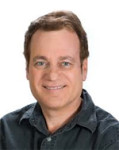
And there I was on Yom Kippur 2026 at Chabad of Rancho Penasquitos , as Rabbi Yechiel Cagen led the service. I was fasting.
It was the manifestation of a series of events that had transformed a non-observant Reform Jew into an observant Jew who loves prayer. Suddenly, in my old age, I’d become religious.
How religious am I now? I’m so religious I want to be circumcised again.
It’s quite a journey from the days when my religious grandfather, Abraham Ravinsky, once asked me: “Do you have tefillin?”
“Yeah,” I replied. “I have a couple of rolls of Kodak film upstairs.”
My grandfather, who immigrated to the United States after the Russian revolution, looked a bit startled but politely didn’t pursue it.
Our family belonged to Mishkan Israel in Hamden, Connecticut, the 14th oldest continuously operating synagogue in the United States. Its legendary Rabbi, Robert E. Goldberg, challenged McCarthyism, supported the civil rights and anti-war movements, invited Martin Luther King, Jr. to speak at the temple, and was even arrested at a civil rights gathering in Georgia. He officiated at my bar mitzvah.
I attended Hebrew school, but the main thing I retained was my teacher repeatedly saying “sheket, bevakasha” to me. I thought it was my Jewish name. I later learned it meant “quiet please.”
As a student at Colgate University I attended one High Holy Days service. But in another way, Colgate became a major launching pad in my religious journey. I took a course in Hinduism that sparked a longtime fascination with theology. I began visiting Chapel House, a secluded interfaith retreat and meditation center nestled in the woods on campus. For years after graduation. I periodically returned to spend several nights there praying, reading about theology and meditating.
After receiving my master’s in journalism from Northwestern University’s Medill School of Journalism, I spent five and a half years freelancing in India and Spain for newspapers, Newsweek, and later National Public Radio. I lived with a Hindu family in New Delhi and participated in their holidays, and spent a wonderful week living with a Muslim family in Bangladesh.
In Madrid I was a special correspondent for The Christian Science Monitor. I immersed myself in key Christian Science books because I wanted to understand the theology behind the church and the newspaper. Meanwhile, I rented an apartment with a huge crucifix hanging over my bed.
In 1982, after working as a reporter in Wichita, Kansas, the San Diego Union brought me to California. Among other assignments, I covered the border and Baja California. While doing a feature on the Jews of Tijuana, I met Jose Galicot, one of Tijuana’s prominent business and Jewish leaders, who invited me to celebrate Passover with his family.
I joined a Conservative synagogue in San Diego but left after several years because I never feel fully accepted or part of the community.
Then tragedy began changing the direction of my religious journey.
After I left the San Diego Union in 1990 to become a full-time ventriloquist, my foster son, Thomas Powell, learned shortly before his planned wedding that his wife-to-be had AIDS. He went ahead with the wedding.
I was devastated. I made an appointment with Tifereth Israel’s late Rabbi Leonard Rosenthal. At one point I asked him: “Why are we here? What does it mean?”
His answer stayed with me. We are here to do prayers, he told me, but also to enjoy life and make the world a better place. He gifted me a Conservative prayer book.
Meanwhile, my ventriloquism career increasingly brought me into Jewish life. I performed for Jewish groups and was amazed at how different Judaism seemed from what I remembered as a child. Services then had seemed staid, sometimes boring and almost perfunctory. Now I encountered Judaism presented with energy, warmth and joy.
I was particularly drawn to Chabads. I performed at Chabads, met wonderful rabbis and their families, read Chabad-related books and occasionally attended services, although I couldn’t read or understand Hebrew.
Then came the seismic shift.
In 2020, Tom – the boy I had been matched with in the Big Brother program—was diagnosed with congestive heart failure. By late 2024 his condition had become incredibly grave and he only had a few months left before dying at age 52. He lived with me; I was his principal caregiver. I felt a stronger-than-ever need to pray.
By then a new Chabad had opened in Rancho Penasquitos. I had been hired to perform there and eventually began attending services.
Rabbi Cagen urged me to read the English translations during the service because I couldn’t follow the Hebrew.
I had never thought of doing that.
It changed everything.
During the long services, I began reading every word in English. The prayers that had once seemed remote became personal. I began to see prayer not simply as words Jews had been instructed to receive, but as a conversation with God and a connection to generations of Jews who had said those same prayers before me. The spiritual search that had taken me through Hinduism, Islam, Christianity and years of reading about theology had, in an unexpected way, brought me home.
Rabbi Cagen asked me whether I owned tefillin.
This time I knew he wasn’t talking about Kodak.
I didn’t. He gave me a set and invited me to come early in the morning to put them on and pray.
I began becoming part of the Chabad minyan, attending its events and expanding my Jewish reading. The Shema became part of my daily life.
And today?
I still can’t read Hebrew, Long-term COVID memory fog has made learning it not an option. But I read and ponder the English words of the prayers. I attend services and special events at the Chabad of Rancho Penasquitos and have accepted invitations to spend some Shabbat weekends at Chabad of Beverlywood. Six days a week I put on tefilllin and pray.
The grandson who once thought tefillin was Kodak film now wraps it around his arm most mornings.
Abraham Ravinsky must be smiling.
*
Joe Gandelman is the publisher of The Moderate Voice website.