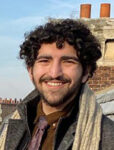
Five-and-a-half-year-old Yonatan kept asking his dad when he’d build them a house. His father, Itamar Hayun, could picture the trees he’d plant and watch them grow alongside his boy. Back in his small rented apartment in Avihayil after 70 straight days in Gaza, he couldn’t picture how he’d afford the land.
Called up after Hamas attacked Israel on October 7, 2023, Hayun went to the Nova music festival grounds. Back at base, he wrote down what he’d seen. As his unit waited three weeks to enter Gaza, he wondered what gave men who’d left their families the strength to go in. In The Elite Warrior Mindset, he writes about the trust soldiers build under fire and how he applied it to civilian life.
Hayun lost friends during roughly 300 days of reserve duty. A sniper nearly killed him. Back in his apartment, he wondered how he could fight for his home and have so little chance of owning one. His pay had to cover rent and Yonatan’s schooling and get them through to the next paycheck, leaving peanuts to save. He was embarrassed about this until he heard the same story from others in his unit.

He started Homes for Warriors to help reservists buy homes in Israeli border communities. His adviser and business partner, Avi Roee, had worked at Israel’s Defense Ministry and knew which officials to approach for down-payment grants. I met both men at Jewish National Fund-USA’s Global Conference for Israel in Chula Vista, where more than 2,500 gathered this month. JNF-USA helps prepare housing sites and expand medical care in Israel’s north and south. It says its employment centers there have served 15,000 job seekers.

Roee Azizi had moved from Jerusalem to one of those border communities. On October 7, he was with friends in the Carmel Mountains, out of cellphone range until about 11 am. Driving to his reserve base in Beersheba, he wondered whether this war would shape his generation as the 1973 Yom Kippur War had shaped his parents’.
Even before the attack, Azizi told me, living costs and repeated elections had young Israelis questioning their future there and their say in it. Serving in the western Negev, he grew attached to towns where returning families would need teachers and nurses. He moved into a sublet without a job. Through Hinenu, Hebrew for “here we are,” he helped newcomers find the work, housing and community he’d needed himself.
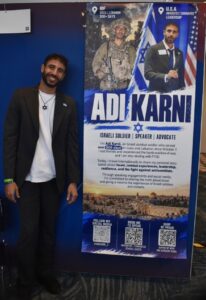
Adi Karni, 23, had barely begun his army service when Hamas attacked. In Gaza, his combat engineering unit cleared explosives ahead of other troops. After his service, he traveled to South America. He hadn’t expected the reaction when people learned where he’d served. He has described fearing arrest in Peru and Brazil. Karni told me he believed he’d come close to arrest in the U.S., too. The Hind Rajab Foundation says it asked U.S. authorities in February to investigate him for alleged war crimes and genocide in Gaza.
Curious how American college students understood the war he’d fought in, Karni invited them to ask an Israeli soldier anything. Some were curious and respectful. Some shouted at him. What surprised Karni was how much warmer the reception got when he introduced himself as a member of Hamas. Staying in character, he showed students footage Hamas members took of the October 7 killings. Some could hardly believe what they saw. From the conversations that followed, Karni thought he’d given them reason to reconsider.
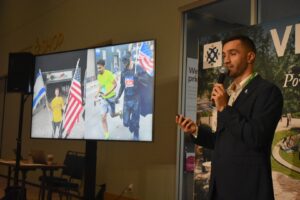
Eli Wininger had also been speaking on American campuses. At last Friday’s “From Likes to Leadership” panel, he said he and his teammates had risked their lives to save Palestinian civilians in Gaza. An older man they rescued had left behind medication he needed to stay alive. Wininger said his team went back for it. When he left Gaza and opened Instagram, he found people calling him a child killer.
At the conference’s World Zionist Village Square, Wininger spoke about coming home with PTSD. He’d left Los Angeles after college to enlist in Israel as a lone soldier. He finished his service in 2019 and was working in private equity in Utah when Hamas attacked. Three days later, he was back in uniform in Israel.
Two weeks into their tour in Gaza, Wininger and his friends escaped a burning building. That night they hugged and kissed one another, grateful they’d all made it back. He sat down with his journal, thinking, “I’m getting paid almost no money. I’m eating terribly. But I’m happier than ever.” His closest friends were beside him, and each morning he knew who was counting on him. He wanted that from his work in Utah, too.
Two weeks later he rode out of Gaza for a few hours’ break. He’d learned to sleep through rockets and figured his body had adjusted. Then the Humvee crossed into Israel, and he felt his whole body relax. “I got used to being at the most tense moment of all time consistently,” he said. “And that’s when I was petrified because I realized what I was about to go into.” He wanted to tell his officer, “That’s it, I’m done. I’ve given everything I can. I’m ready to go home.” Then he realized the hostages didn’t have that choice. And he wondered, “What would my team do without me?” He went back in.
On later trips out of Gaza, that relief never came. Another call-up could come just as reservists got used to life at home. He next felt his body unwind after his service when he let himself cry during ketamine therapy with a licensed practitioner.
An army psychologist advised him to maintain a routine and put off big decisions. Naturally, he quit his job and began traveling to speak about Israel. “So I didn’t really listen to her.” He transitioned into fitness coaching, which gave him clients who counted on him. His own running was another matter. Previously, he ran 100-mile races; now he could barely get out of bed.
The 251 people taken hostage on October 7 gave him a reason to run again. He finished Utah’s Moab 240 and added 11 miles, in totel, one mile for each hostage. Two days before the Los Angeles Marathon, Wininger ordered a Batman suit. Four-year-old Ariel Bibas had loved Batman, and the bodies of Ariel and his little brother Kfir had recently been returned to Israel. He wore it in Los Angeles and at later marathons. When people asked about the costume, he told them about Ariel and Kfir.
In the Humvee, Wininger knew who was counting on him. Back home, he found that he had to run towards them. Azizi helped newcomers settle in the Negev while his life was still in flux. Hayun was still paying rent when he began helping other families buy homes.
One reservist Hayun helped move to the Gaza envelope kept his job in Tel Aviv. He told Hayun the drive was hard, but he was happy every time he got home. Hayun told me helping other families buy homes had eased his own worry about owning land. “I start finding my home inside myself,” he said.
His son, Yonatan, had bigger plans. Last time they talked, he asked when his dad would build them a hotel. Hayun told him they’d start with a house.
Where to find them and support their work
-
Itamar Hayun and Avi Roee welcome help with down payments for reservists and funding for their documentary. Reach them through Homes for Warriors. Follow Hayun on Instagram or Facebook, or find his book, The Elite Warrior Mindset, in English.
-
Roee Azizi invites visitors to Israel to meet Hinenu at its pioneering center in the western Negev. Email Azizi to arrange a visit. Individuals, families, and groups can take part in seminars there. Azizi also hopes to open Hinenu’s entrepreneurship program to people abroad who want to develop a project with mentors and peers. Follow @hinenu_israel or donate to Hinenu.
-
Find Adi Karni at @adikarni_3 on all social media channels to follow his experiences at different campuses.
-
Eli Wininger shares his runs on Instagram at @eliwinning and has encouraged support for veterans’ mental health care through Friends of the IDF.
*
Shor M. Masori is a freelance writer based in San Diego.