By Cailin Acosta in San Diego

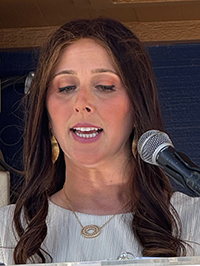
Women gathered for a Jewish Women’s Circle Torah and Tea program at Chabad of East County, where Rebbetzin Chaya Andrusier led a discussion about gratitude in Jewish tradition and the importance of recognizing blessings in everyday life.
The discussion centered on the Hebrew expression Baruch Hashem, meaning “Thank God,” and the practice of incorporating it into daily conversation. Whether responding to someone asking how we are doing or appreciating something as simple as a cup of coffee, the phrase serves as a reminder to recognize God’s presence and appreciate what we have.
The lesson drew on the teachings of the Baal Shem Tov, founder of the Hasidic movement in the 18th century, who emphasized the spiritual importance of every Jew, regardless of scholarly knowledge or social standing. According to a story shared during the program, he would travel from village to village asking people how they were doing, hoping to hear them express gratitude to God.
Participants also explored Modeh Ani, the prayer traditionally recited upon awakening. Beginning the day by thanking God for restoring the soul encourages humility and gratitude, recognizing that each morning brings another opportunity to make a difference in the world. Other morning blessings express appreciation for the body’s basic functions, including the ability to see, stand, walk, and move.
A memorable teaching compared gratitude to a bagel. Beginning with the empty center and working outward symbolizes recognizing what we might otherwise take for granted. With humility, even the simplest blessings become meaningful.
The discussion also examined Birkat Hamazon, the blessing recited after meals, and the biblical commandment of Bikkurim, bringing the first fruits to the Temple in Jerusalem. Both practices remind people to acknowledge not only what they receive but also its source.
Gratitude extends beyond prayer and religious observance. One example involved Moses, who refrained from striking the Nile River during the plagues of Egypt because the water had protected him as an infant. The story illustrates the importance of showing appreciation, even toward objects and elements of nature that have served us.
Another story described an Israeli soldier who lost both legs in a 1976 accident. During a visit to New York, he met the Lubavitcher Rebbe, who offered him encouragement and thanked him. The soldier later wrote that those words helped ease years of bitterness, demonstrating how a simple expression of gratitude can profoundly affect another person.
Participants also reflected on how gratitude can coexist with hardship. One attendee shared her family’s Holocaust history and spoke about survivor’s guilt, recalling her grandmother’s reminder that she was the light that emerged from everything the family had endured. Another participant discussed how personal challenges eventually opened opportunities to help others.
The conversation emphasized that gratitude does not mean ignoring pain or pretending life is always easy. Rather, it allows people to recognize moments of goodness even during difficult times.
The program concluded with a teaching from Pirkei Avot (Ethics of the Fathers): “Who is rich? One who is happy with their lot.” True wealth, the teaching suggests, is not measured by possessions but by the ability to appreciate what one has.
Through prayer, blessings, personal stories and everyday expressions of thanks, Jewish tradition offers a lasting reminder that gratitude is more than something we say. It is a way of approaching life.
*
Cailin Acosta is the assistant editor of San Diego Jewish World.