By Shor M. Masori in Chula Vista, California
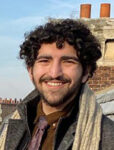
To tell his Maryland readers about a young soldier killed in northern Israel, Aaron Troodler turned to the people from Omer Balva’s own community. Balva enlisted after graduating from Charles E. Smith Jewish Day School in Rockville in 2019. He flew back to Israel after October 7, 2023, and was killed at 22 in an anti-tank missile attack.
Troodler, then editor of the Washington Jewish Week, spoke with Balva’s friends and the head of his old school. “When I heard what happened, I knew that I had to tell the story of Omer to the folks in his hometown,” he said.
Two and a half years later, the school dedicated its upper-school dining hall to Balva. This time his family told the Jewish Week what it meant to see him honored there. In Chula Vista at a JNF-USA conference, Troodler asked us, “If we don’t tell the stories in our local Jewish communities, who will?”
Troodler spoke at the Global Conference for Israel, organized by Jewish National Fund-USA, an American nonprofit that supports projects in Israel. He’d edited Jewish papers in Philadelphia and Baltimore, too. By his count, the three papers had covered their communities for more than 340 years between them.
Troodler wasn’t the first to put Baltimore Orioles owner David Rubenstein’s name in the Baltimore Jewish Times. His birth announcement ran in August 1949. Though back then he wasn’t the most interesting person to talk to. When Troodler profiled him 75 years later, he wrote about the kid who had gone to Hebrew school in Baltimore, celebrated his bar mitzvah there and grew up to buy the home team out of love for the city.
Troodler asked those of us who still have a Jewish newspaper in town to subscribe or, if we had a business or an upcoming event, buy an ad. And if we opened the paper and got good and mad? Write the editor. He didn’t always appreciate how his correspondents expressed themselves, he said, but he was glad they cared enough to write.
Elan Kornblum took the microphone next. “So, I eat for a living.” The Chief Foodie Officer of Great Kosher Restaurants Media Group got his start some 20 years ago. A directory could give you a kosher restaurant’s address and phone number. If you wanted to see what the place looked like before you took somebody there for dinner, good luck. So, Kornblum started photographing restaurants for a coffee-table magazine of his own.
These days diners trade recommendations in his Facebook group, Great Kosher Restaurant Foodies, which he put at about 150,000 members. When Kornblum was growing up, his family went out to eat maybe once a month, for somebody’s birthday or an anniversary. Now a kosher restaurant is where the kids get together during the week. “The kids are going out, you know, three, four times a week on our credit card, but they’re going out.”
Travelers who kept kosher used to pack cans of tuna, Kornblum recalled. A can would keep in your bag if you couldn’t count on finding a kosher meal when you got there. These days Chabad, the Jewish outreach movement, runs restaurants as far afield as Japan. “You go to Tokyo, you want to find maybe some good kosher sushi. How about some schnitzel?” His theory was that an Israeli traveling halfway around the world might quite like a breaded cutlet that tasted like home.
Kornblum recommended Buenos Aires as another place a kosher traveler could eat well. “They have steak for breakfast,” he said. At an asado, the Argentine barbecue, “they have all the meat.” Argentina supplies a good deal of meat for kosher diners far beyond its own barbecues, he added.
At Sunday’s Global Jewish Voices panel, which I previously wrote about for San Diego Jewish World, I heard about the other end of that trade. The Belgian delegation had described police protecting Jewish institutions. In France, educator Philippe Lévy said, security at Jewish schools and synagogues had been part of daily life for years. Asked what signs people might have missed before October 7, Jacky Benzennou, president of the Belgian branch of the Jewish National Fund, had an answer anyone buying dinner could understand. His wife, Penina Soudry-Benzennou, interpreted.
In Flanders and Wallonia, regional law requires stunning before slaughter. Shechita, the Jewish method of slaughter, calls for a swift, uninterrupted cut without first stunning the animal. His community now buys its kosher meat abroad, Benzennou said, often from Argentina.
Buenos Aires was also where Jewish families from smaller communities in Entre Ríos were moving, said Esteban Lasry, who runs the fund’s Argentine branch. Others had left for Israel. Lasry said Jewish life was disappearing in towns where it went back generations. During the Great Depression of the 1930s, young Jews left Argentina’s farming settlements for work in the cities. For those who stayed, each departure meant one fewer household to do business with or call on for company.
In New York, where Kornblum lives, he can pick another kosher restaurant if one closes. He had a request for those of us in San Diego, where the choices are few. Go eat at one. If the check is keeping you away, he suggested sharing an entrée and having dessert at home.
People have asked Kornblum why he’s never opened a kosher restaurant of his own. “Because I like my family. I want to see my family. I want to keep some money.” When you take your family out for dinner, he pointed out, the waiter is at work while his own family eats at home. The owner gives up Friday-night business for Shabbat, and many close again for Passover. What San Diego gets in return is a place where friends who keep kosher can meet on a weeknight without either of them having to host.
At Friday evening’s conversation with author Dara Horn, John Podhoretz spoke about Jewish donors who helped build American hospitals. An Indiana University study of giving in 2022 found that two-thirds of U.S. Jewish households gave to nonreligious organizations. What Lauren Lizerbram wanted from San Diegan Myra Chack Fleischer was her time. At Thursday’s expo, Fleischer traced her family’s involvement in the Zionist movement back to her great-grandfather in 1897. She already had plenty of commitments of her own when Lizerbram asked her to join the local JNF-USA board. “Please, God, no.”
Lauren kept asking for more than a year. “She would not let it go, and she would not let me go,” Fleischer said. Even after she joined, Fleischer spent a year and a half on the sidelines. Then one of the founders of the Women’s Campaign paid a visit and told her she ought to be the local board president. “It made no sense to me because I did nothing.” She took the job in 2011 and served as president twice. Fleischer now serves on JNF-USA’s national board.
At Friday’s Shabbat dinner, I was schmoozing with the people at my table when a man walked past another man’s chair and gave his ear a playful pinch. The sitting man was startled and looked like he was about to blow his top until he turned around and recognized the trickster. They looked at each other and shared a brotherly grin.
At the expo, Fleischer had encouraged newcomers to walk the floor and introduce themselves. For the regulars she had a different request. “If you’ve been involved for years, bring someone new into the conversation. Be their Lauren, like she was for me.”
On Saturday night, JNF threw itself a 125th birthday bash. To me, it looked like a bacchanal. People took each other’s hands and danced in circles across the ballroom. Israeli singer Noam Buskila brought people onstage to sing along as he played guitar. After a weekend spent talking about people we’d lost, it was good to celebrate with the ones who could still be in the room.
Where to find them
For San Diego Jewish World’s free daily email newsletter, enter your address on the home page and confirm by email. The same page has a donation button. To respond to an article, leave a signed comment beneath it. To suggest a story or ask about placing an ad, contact the editor.
Read Aaron Troodler’s profiles of David Rubenstein in the Baltimore Jewish Times and Omer Balva in Washington Jewish Week.
Find Elan Kornblum’s restaurant guides at Great Kosher Restaurants or join his Foodies Facebook group. JNF-USA’s San Diego office lists local events and ways to get involved.
*
Shor M. Masori is a San Diego-based freelance writer.