By Barrett Holman Leak in San Diego

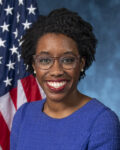
When House Democrats gathered behind closed doors on November 18, 2026, to select their next caucus vice chair, the contest between Illinois Rep. Lauren Underwood and San Diego Rep. Sara Jacobs offered more than a routine internal leadership vote.
Beneath the surface of a race between the two women lay a striking contrast in upbringing, professional formation, and political identity—one rooted in clinical nursing, teaching and suburban public health administration, the other forged through policy training, political campaigns, and one of Southern California’s wealthiest tech dynasties.
Underwood’s 143–118 victory over Jacobs—a matchup many Capitol Hill observers originally thought would be a toss–up or slightly lean toward Jacobs—underscored how biography continues to resonate inside a Democratic Party wrestling with how best to connect with working– and
middle–class voters. For San Diego voters, the loss also delivered a high–profile setback for Jacobs on Capitol Hill, elevating Underwood to become the highest–ranking Black woman ever elected to Congress.
Historically, Rep. Shirley Chisholm (D–NY) was the first Black woman ever elected to House leadership when she became Secretary of the House Democratic Caucus in 1977.
Suburban Roots vs. Tech-Dynasty Privilege
Born in Ohio and raised in Naperville, Illinois, Underwood grew up in a middle-class suburban environment outside Chicago. Her entry into public life was shaped less by personal medical experience: diagnosed in childhood with supraventricular tachycardia, a heart rhythm condition, Underwood has frequently cited her reliance on consistent, affordable health coverage as a defining influence on her worldview through college and into her professional life in healthcare.
Jacobs, by contrast, grew up in Del Mar, an affluent coastal enclave in north San Diego County, as the granddaughter of Qualcomm co-founder Irwin Jacobs. While she attended local public schools before heading to New York for undergraduate and graduate degrees at Columbia University, her family’s telecommunications fortune placed her in an entirely different economic stratosphere—one that later drew scrutiny during her congressional runs, when millions of dollars in personal funds and family-backed super PAC spending helped propel her onto the national stage.
The Clinic and the Policy Shop
Before either woman ever appeared on a congressional ballot, their professional paths diverged sharply in both setting and substance.
Underwood trained first as a clinician. Earning a Bachelor of Science in Nursing from the University of Michigan in 2008, followed by dual master’s degrees in nursing and public health from Johns Hopkins University, she built a career anchored in hands-on health care delivery and domestic public health systems. She worked as a registered nurse and nurse researcher at Johns Hopkins and later taught future nurse practitioners as an adjunct instructor at Georgetown University. Joining the U.S. Department of Health and Human Services during the Obama administration, she worked on disaster preparedness, advised on the federal response to the Flint, Michigan water crisis, and helped implement the Affordable Care Act. Prior to running for Congress, she returned to Illinois to serve as senior director of strategy and regulatory affairs for NextLevel Health, a Chicago-based Medicaid managed care plan.
Jacobs’ pre-congressional resume, meanwhile, followed a classic Washington and international-affairs trajectory divided into two distinct phases: student internships completed during her university years and full-time policy and campaign roles following graduation. Between 2009 and 2012, while completing her undergraduate degree and master’s degree in international affairs at Columbia University, Jacobs completed four internships alongside a university research role. She began as a national security and sustainable security intern at the Center for American Progress in the summer of 2009, followed by a summer internship at the White House Office of Presidential Correspondence in 2010. In 2011, she worked as a research assistant at Columbia’s Arnold A. Saltzman Institute of War and Peace Studies and spent the summer in Fiji as a peace and development intern for the United Nations Development Programme, before serving as a tri-state finance intern for Obama for America from September 2011 to June 2012.
After earning her master’s degree in 2012, Jacobs transitioned into non-intern professional roles centered on international affairs, political campaigns, and nonprofit advocacy rather than corporate or hourly private-sector jobs. She worked at the United Nations as an electoral specialist in the Department of Peacekeeping Operations from 2012 to 2013, then served as the big data lead in UNICEF’s Innovation Unit from May 2013 to January 2014. From February
2014 through 2015, she worked as a contractor and conflict and stabilization policy officer at the U.S. Department of State, before joining Hillary for America as a foreign policy adviser during the 2015–2016 presidential cycle.
Following the 2016 presidential election, Jacobs created the role of Founding CEO of Project Connect in 2017 directly with UNICEF’s Office of Innovation. This was just ahead of launching her first congressional campaign in California’s 49th District against incumbent Mike Levin later that year (2017–2018); after being defeated in the June 2018 primary, she created the role of Founding Chair of San Diego for Every Child within the existing 501(c)(3) fiscal sponsorship of Jewish Family Service of San Diego. Rep. Susan Davis announced her retirement in September 2019 and Jacobs traveled over from her hometown district to the 53rd (now 51st) and launched her 2020 bid for Davis’ former seat, against Democrat Georgette Gomez.
Where Underwood spent her twenties navigating working-class realities of hospital wards, Medicaid compliance, and domestic health emergencies, Jacobs spent hers inside multilateral agencies, federal foreign-policy offices, and political campaign headquarters.
Electoral Battlegrounds and Political Profiles
Their contrasting backgrounds also mirror the districts they represent and the political battles that brought them to Capitol Hill.
Underwood entered Congress in 2019 after unseating a four-term Republican incumbent in Illinois’ 14th District—a sprawling suburban and exurban stretch outside Chicago. Running as a nurse on a modest budget, she framed her campaign around protecting coverage for pre-existing conditions and lowering kitchen-table costs for working families. In Washington, she quickly carved out a legislative niche around maternal mortality—co-founding the Black Maternal Health Caucus and spearheading the “Momnibus” package—while serving on the House Appropriations Committee. The Momnibus Act—originally introduced as the Black Maternal Health Momnibus Act and spearheaded by Underwood Rep. Alma Adams (D-North Carolina), and Sen. Cory Booker (D-New Jersey)—is a comprehensive legislative package designed to end preventable maternal deaths, reduce severe maternal morbidity, and close racial and socioeconomic disparities in U.S. maternal health outcomes.
Reintroduced in March 2026 as a 14-bill package (expanded from its earlier 12-bill version), the Momnibus takes an all-encompassing approach that targets both clinical care and the non-medical drivers of maternal health.
Jacobs’ path to Congress was longer and more contentious. Unable to win in her own north coastal San Diego County hometown district—California’s 49th District, where she ran in 2018 and finished third in the June top-two primary behind Republican Diane Harkey and fellow
Democrat Mike Levin (who went on to win and hold the seat)—her political fortunes shifted when longtime Democratic Rep. Susan Davis abruptly announced her retirement in September 2019. Jacobs quickly jumped south from her lifelong North County home turf into the neighboring, safely Democratic 53rd Congressional District (later renumbered California’s 51st District following redistricting) covering central and eastern San Diego. There, she defeated longtime local labor leader and City Council President Georgette Gómez in a bitterly contested 2020 all-Democratic general election marked by sharp debates over progressive credentials, campaign self-funding, and outsider wealth.
Since capturing that seat, Jacobs has faced virtually no structural threat to her re-election. In CA-51, Republican registration is far too small to mount a competitive general election challenge, while any rival Democrats considering a primary bid face a steep institutional barrier without the backing of the San Diego County Democratic Party and its network of local clubs, which have reliably consolidated behind Jacobs. At the same time, roughly one in four voters in CA-51 is registered as No Party Preference—making unaffiliated voters larger than the district’s Republican bloc and leaving non-Democrats as a combined majority of the electorate—while total votes cast in CA-51 have steadily declined across recent cycles, falling from 327,584 in the 2024 presidential election to 233,072 in the 2022 midterm and 155,620 in the 2026 midterm. That dynamic has left Jacobs with an entrenched, low-turnout safe seat that contrasts sharply with Underwood’s battleground record in Illinois.
In the House, Jacobs has aligned closely with both the Congressional Progressive Caucus and the New Democrat Coalition, focusing heavily on foreign affairs, armed services. In early 2021, courtesy of the country of Qatar, she took a trip to Doha, stating later that it was for the benefit of San Diegans. Jacobs sought and drew national media attention by documenting her own egg-freezing treatments on video and in interviews, first as a freshman member in September 2021 and again during a follow-up round in the summer of 2025, when she filmed herself administering hormone injections in her Capitol Hill office between votes. Though Jacobs has framed her openness around fertility preservation as a push for workplace accommodations and expanded insurance coverage, she acknowledged in a November 2025 New York Magazine profile that she self-funded her procedures ($30,000) — an expense, even before annual storage fees or eventual IVF costs, that places elective egg freezing far beyond the financial reach of working-class women.
Why the Contrast Mattered
In leadership elections, members of Congress rarely vote on ideology alone; they vote on messengers. Heading into the next election cycle, House Democrats face persistent questions about how to speak persuasively to cost-burdened households outside deep-blue coastal cities.
Ultimately, the battle for House Democratic Caucus Vice Chair turned on a fundamental political reality: when a party is fighting to gain voter’s trust and hence power to make change, lawmakers gravitate toward colleagues who have actually fought in the trenches to win over working families on kitchen-table issues. Lauren Underwood didn’t inherit a safe seat or rely on insider titles; she went out into a Republican-held district in Illinois, listened to voters worried about healthcare costs and household budgets, and fought—campaign after campaign—to earn the trust of the everyday people directly impacted by Washington’s decisions.
By contrast, Sara Jacobs’ pitch rested largely on internal caucus mechanics, fundraising prowess, and conflict-resolution credentials forged from the security of an entrenched coastal seat.
In handing Underwood the gavel of leadership, House Democrats signaled that authentic connection to working-class struggles—and the grit required to win the support of those voters at the ballot box—carries far more weight than polished policy resumes when the party’s future is on the line.
In choosing working-class Underwood over multimillionaire Jacobs, the caucus elevated a lawmaker whose biography—a Midwestern nurse who fought hard, flipped a Republican seat and speaks firsthand about the kitchen-table issue of navigating the American health care system—offers a ready-made counterargument to critics who portray Democrats as overly coastal and elite. In this case, the record of a grounded, working professional won.
*
Barrett Holman Leak is a freelance writer based in San Diego.