By Eileen Wingard
LA JOLLA, California — The tenth anniversary of Jewish Poets—Jewish Voices was ushered in with an impressive line-up of featured poets.
The January 23 program in the Astor Judaica Library at the Lawrence Family JCC opened with Chris Baron, Professor of English at San Diego City College. His book of poems, Under the Broom Tree was part of a poetry anothology, Lantern Tree: Four Books of Poems, which won the San Diego Book Award for best poetry anthology. His Middle-Grade novel, Weight, is due for release in Spring, 2019. His works were candid impressions about his family and his childhood.
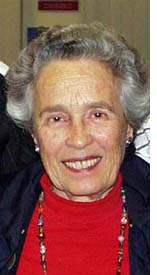
Ruth Benjamin, a retired educator of students with special needs, who began writing poetry and painting after her retirement, shared not only her poetry, but her artwork.
Her poems were inspired by her work and her strong sense of social justice.
Roger Aplon, founder of two poetry magazines, CHOICE and Waymark, has had six poetry books published, the most recent one in 2017, Poetic Impressions From Contemporary Music.
His poems were powerful in their honesty and originality.
The evening concluded with a half hour of open microphone, with six participants, and concluded with a reception for all.
Below are examples of the poetry heard that evening.
SHABBAT by Chris Baron
Shabbat candles flicker even as I load the dishwasher
in direct violation of Talmudic law.
Quiet at last, I cover the challah and drink Elijah’s wine.
The children sleep with songs on their lips,
and the crickets have begun.
On the kitchen wall, there is a picture of my father
standing in the desert, looking west in his cowboy hat,
one of his best days before he died. I whisper, “We keep the Sabbath now,”
A jewel of tradition carried back from Israel.
A year ago, in Jerusalem, on the Sabbath, our friend Ameil
looked across the table, whispered as if the secret must not get out,
“Hebrew is about symbols, the language of the heart.
Bitter herbs, candles, the eye, the bush, the sea, the temple, the Sh’ma,
there is no room for these symbols are in the life the mind
that pours over books, reaches into proofs by paper and scrolls, by dig and chemical.”
Amiel smiled and spread his hands across the cedar table.
“Remember the Sabbath,” he said. “Keep it holy. Find the symbols.”
January in Jerusalem, standing on the roof near the Old City,
The stars are bursting over Bethlehem, and I am talking on the phone
to my father making him promises he does not deserve.
I remember tonight plate by plate,
the irreverent and wonderful chaos,
my daughter’s Hello Kitty dish
swimming in butter and honey.
My son’s plate is clean. He ate it all
even though his bottom never touched
the chair, his legs dancing from uncle
to grandmother through every loving
and biting reprimand, his face gleaming
in the silver salad bowl.
My mother, each Friday, her Jewishness awakened,
Tells stories of Greenwich Village and briskets past, her plate picked at,
Her fork wandering from rice to lettuce to hummus and back;
Lonely olives swim in soaked bread and spilled wine.
She looks for my father, eats in terms of him,
longs for the ferocity of his youth, and even later
when he could no longer get the food to his mouth.
My brother fingers his phone, eats.
He is searching for God in every bite,
quiet in his wondering,
afloat in Sabbath peace.
And my wife finally sits down,
each bite separate, perfected
into magnetic clusters from every side of the platter.
The baby is asleep now in her arms.
The candles burn in the twilight kitchen,
and I linger above the lights until the wax spreads itself
into paraffin heaps, a quiet like walking in the woods.
The mess is the symbol, the still small voice,
these empty plates, sweeping the floor, the loveliness of her hands kneading the bread,
twisting it with the children hand in hand in the late afternoon.
This a real thing, something permanent, a cord tied from this kitchen
from the table leg to cedar, acacia, clay, and brush.
There are times worth remembering.
The story of this night has happened before,
the beginning of impractical rest and impossible forgiveness.
If we can just do this, I think, we can make it.
SING A SONG FOR WOMEN by Ruth Picarsky-Benjamin
Let us sing a song for women
and our equality,
no longer second class human
We’re united by a vision we see.
No longer will we settle
for the intolerance of the past
We deserve equal status
It is due us, at last.
Our supports have been meager
When divorced, or elderly.
We’ve lived a life with little,
And survived in poverty.
We’ve been our own worst enemy
Because of our nurturing side.
Now it’s time Dear Sisters
Its time to turn the tide.
Turn the tide on suffering
And brutality.
It’s time to lift our heads up
To a new reality.
Let’s sing a song for women
Raise our heads up high
No longer second class human
Let’s support our sister’s cry!
GIRONA – “THE CALL” by Roger Aplon
A capacious & commanding Star of David has been crafted at the center of a
courtyard in Girona’s old city, just up the steps from Carrer de la Forca,
in the district known as …”The Call” or…’Jewish Quarter’ &
although I listened for some echo of a cantor’s lilting chant & murmurs of those
great debates which shaped the visions of Kabbalah, today
there was only the clamor of gulls chasing the tide on the Onyar & folks like us
Climbing stairs that join these resurrected rooms
that were the homes for hundreds in its day. &
while the ghosts of the Sephardim refuse to speak, there is no doubt, at that crucial
moment, they would come again & tap the right man to make
a minyan for a bris or funeral or Friday prayers…ever respectful of an
omniscient God/un-seen & un-attendant but…insistent & immaculate & for whom
they must reiterate each day of their lives
the ritual of the cleansing & the binding of the word upon the hands& upon the
eyes & all else which these teachings have fore-told.
*
Wingard is a freelance writer specializing in coverage of the arts. She may be contacted via eileen.wingard@sdjewishworld.com