JCC Association of North America gratified by conviction of Israeli who made multiple bomb threats
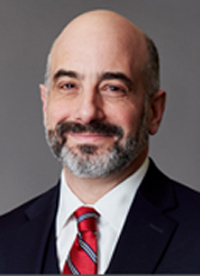
A Tel Aviv District Court convicted 19-year-old Michael Ron David Kadar, a dual American-Israeli citizen, Thursday on multiple counts, including conspiracy to commit a crime, for the hundreds of bomb threats he made against Jewish Community Centers (JCCs) across the United States and Canada between January and March of 2017. In response to the conviction, JCC Association of North America President and CEO Doron Krakow said the following:
“JCC Association of North America and the JCC Movement are deeply gratified by this conviction. This guilty verdict makes clear that threats of terrorism against the Jewish community, no matter where those threats may originate, will not go unpunished.
“Law enforcement, at the local and federal levels in the U.S. and Canada, as well as in Israel, were – and remain – extraordinary partners and allies from the first threat until this conviction was delivered. They worked vigilantly to ensure the safety and security of every JCC across the continent, and we are grateful for their support and diligence.
“More than a year after the first threats were received, our JCCs are safer and our communities more resolved than ever before.” — From Jewish Community Center Association of North America
*
Visitors to Holocaust Center in Oregon grapple with growth of authoritarianism in U.S.
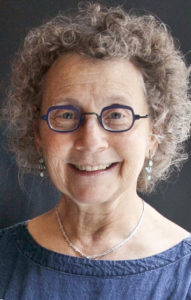
Judy Margles, executive director of the Oregon Jewish Museum and Center for Holocaust Education, reported earlier this week that in the just ending fiscal year, the organization “welcomed 300 new members—bringing us to a record 1,100 members. 12,313 youth and 3,577 adults have participated in our education programs for a total of 15,890 people that heard from one of our educators or docents, at the museum, at the Oregon Holocaust Memorial or in the classrooms. The School that traveled farthest to get here? Jefferson High School in Boulder, Montana came 690 miles. And since I’m on the subject of attendance, we are estimating roughly 17,000 general visitors by June 30 through the museum doors. In short, we have much to be proud of and thankful for our practical accomplishments.
“At the same time, the inescapable light of history shines on us, and we should not avoid its glare. We all feel, for better or worse, the growing immediacy of our mission.
“Each day brings another sobering reminder of the relevance of OJMCHE’s work; that feeling grows more urgent each day. And to be specific about the most obvious point of concern: At the museum we’ve spent the last year resisting easy parallels between our fraught American political climate and that of Nazi Germany. But the erosion of democratic values, degradation of basic human decency, and the unprecedented turn to authoritarianism are making such conversations at the museum simply unavoidable.
“Museum visitors bring it up all the time, sometimes asking of us ‘what can I do?’ And what is our answer? That we do and must keep doing just what you have created this museum to do: to nurture a safe space in which visitors can find the relief provided by scholarly distance and the consolations offered by the intimacy of authentic human experience. This is what we do and my pledge is that no matter which way political winds blow; we shall not disappoint you in fulfilling the mission with which you have entrusted us.” –From Oregon Jewish Museum and Center for Holocaust Education
*
U.S. and Lebanese Defense Departments meet

Assistant Secretary of Defense for International Security Affairs Robert Karem invited Gen. Joseph Aoun, commander of the Lebanese Armed Forces, to Washington, District of Columbia, to co-chair the U.S.-Lebanon Joint Military Commission on June 26-27.
The two nations reaffirmed the partnership between our militaries and our shared objectives of maintaining regional stability and security, countering terrorism, and building the capabilities of the Lebanese Armed Forces (LAF) as the sole defender of Lebanon’s sovereignty.
In his opening remarks, Karem commended the LAF for its recent successes in maintaining security and stability within Lebanon and expanding its control of Lebanon’s borders.
In August 2017, the LAF launched its largest offensive in almost a decade and expelled the last strongholds of ISIS and al-Qa’ida from Lebanese territory. The LAF also increased its presence throughout Lebanon, with a focus on increasing control over Lebanon’s border with Syria. In Southern Lebanon, the LAF has increased joint border patrols with the U.N. Interim Force in Lebanon (UNIFIL) peacekeeping mission.
Since 2006, the United States has provided security assistance to the LAF, with a focus on transforming the LAF into an organization that is capable of executing complex military counter-terrorism operations, defending Lebanon’s borders, fulfilling Lebanon’s international obligations under U.N. Security Council Resolutions 1559 and 1701, and becoming the sole guarantor of Lebanon’s security and sovereignty. To this end, Karem announced a new package of assistance for the LAF to improve its mobility and logistics capabilities, including the procurement of 100 up-armored high mobility multipurpose wheeled vehicles (HMMWV), logistics trucks, and associated communications equipment, ammunition, spare parts and training.
Karem’s delegation included U.S. Ambassador to Lebanon Elizabeth Richard and senior defense officials from U.S. Embassy Beirut, along with representatives from the Joint Staff, U.S. Central Command, the Defense Security Cooperation Agency and the Department of State. —From U.S. Defense Department
*
Preceding culled from news releases sent to editor@sdjewishworld.com