AIPAC rallies citizen support for U.S.-Israel Security Assistance Authorization Act of 2018
 On July 10, the Senate Foreign Relations Committee voted in support of the United States-Israel Security Assistance Authorization Act of 2018 (S. 2497). This legislation is expected to come to the Senate floor for a vote as soon as Wednesday, July 25.
This bipartisan bill seeks to ensure Israel has the means necessary to defend itself, by itself, against a range of growing and emerging threats. Authored by Sens. Marco Rubio (R-FL) and Chris Coons (D-DE), the legislation supports full funding of security assistance to Israel as outlined in the most recent U.S.-Israel Memorandum of Understanding. Annual security assistance to Israel is the most tangible manifestation of American support for the Jewish state.
The American-Israel Public Affairs Committee (AIPAC) urged citizens to contact their senators, and offered these points for the necessity of the legislation being adopted:
- Israel faces significant challenges from Iran in Syria, Hezbollah in Lebanon, and Hamas in the Gaza Strip. Israel also faces other emerging threats—such as cyber warfare, ballistic missiles and drones.
- In response, Israel has been forced to strengthen its armed forces and spend more on defense as a percentage of GDP than any other nation in the industrialized world.
- This bipartisan bill supports $3.3 billion in security assistance to Israel and $500 million in cooperative missile defense funding in fiscal year 2019, as called for in the 2016 U.S.-Israel Memorandum of Understanding on security assistance.-From American Israel Public Affairs Committee
California Legislative Delegation touring Israel
 With the goals of fostering technological innovation and boosting bilateral opportunities, a diverse, bipartisan delegation of California state legislators is visiting Israel for intensive dialogue and briefings with AJC (American Jewish Committee) Project Interchange. The visit this week highlights topics important to the legislators, including medicine and humanitarian work, agriculture and water management, immigrant absorption and integration, and innovation, while also exposing participants to Israel’s politically and ethnically diverse society.
The delegation is sponsored entirely by Project Interchange, an educational institute of AJC, at no cost to California taxpayers.
Featuring California State Senate and Assembly leaders, the program is designed to strengthen Latino-Jewish, Asian-Jewish, and interfaith relations, and interaction of California’s and Israel’s diversity and strong economies. Meeting with their Israeli counterparts, the California delegation will explore opportunities for bilateral collaboration.
“California and Israel share similar challenges with respect to natural resources and an appetite for innovative solutions,” said Robin Levenston-Kudisch, AJC Project Interchange Executive Director. “The meetings and briefings with Israeli experts will provide a fitting setting for great minds to share information, discuss partnerships, and explore opportunities for mutually-beneficial collaboration between California and Israel.”
“I hope to share the connection the Jewish people have with Israel, the innovation and entrepreneurship Israelis bring to the world, including water conservation and technology, and the collaborative partnership Israel and California share,” said Assemblymember Marc Levine, D-Marin County, chair of the Legislative Jewish Caucus.
Previous Project Interchange delegations have contributed to the formation of innovative enterprises, including the University of California and Israel Innovation Authority Partnership.
Chaired by Marc Levine, Assemblymember, 10th Assembly District, North Bay, California, the delegation includes:
Marc Berman, Assemblymember, 24th Assembly District, Los Altos, California
Mike Gipson, Assemblymember and Democratic Caucus Chair, 64th Assembly District, Compton, California
Timothy Grayson, Assemblymember, 14th Assembly District, Concord, California
Kevin Kiley, Assemblymember, 6th Assembly District, Granite Bay, California
Ricardo Lara, Senator, 33rd Senate District, Los Angeles, California
Chad Mayes, Assemblymember, 42nd Assembly District, Rancho Mirage, California
Al Muratsuchi, Assemblymember, 66th Assembly District, Torrance, California
Blanca Rubio, Assemblywoman, 48th Assembly District, Baldwin Park, California
The AJC Project Interchange program will provide these policymakers with a deeper understanding of Israel, its dynamic society and democracy, and often-times complicated reality. The trip includes meetings with influential figures across Israel’s political and social spectrum, including senior Israeli, Palestinian, and Israeli Arab leaders. — From American Jewish Committee
*
AJ Congress leader denounces Turkish President Erdogan’s anti-Semitism
 Jack Rosen, president of the American Jewish Congress, noted in an email that “Yesterday, Recep Tayyip Erdoğan, President of Turkey, made a statement describing Israel as The most fascist country in the world.”
According to Rosen: “Turkish President Erdogan’s charge of Israeli fascism goes beyond hypocrisy—Turkey has been far more repressive and Islamist under his increasingly consolidated rule than any time in its modern history—into full-fledged affront. Invoking Hitler to describe the leadership of Israel—a state formed in shadow of the murder of millions of Jews by Hitler—may be good copy for his anti-Semitic followers, but it does the greatest disservice of all to his own countrymen: Turkey, under more enlightened leadership, was among the first countries to recognize Israel, and, until recently, enjoyed mutually beneficial relations with the Jewish state.” — From American Jewish Congress
*
House Democrats introduce bill for debt-free college education
 All 17 Committee on Education and the Workforce Democrats on Tuesday unveiled the Aim Higher Act ─ a comprehensive reauthorization of the Higher Education Act that reflects Democrats’ vision for an accessible, affordable higher education system. The bill provides every student an opportunity to earn a debt-free degree that leads to a rewarding career.
“The Aim Higher Act is a serious and comprehensive proposal to give every student the opportunity to earn a debt-free degree or credential,” said Congressman Bobby Scott (VA-03), Committee on Education and the Workforce. “It provides immediate and long-term relief to students and parents struggling with the cost of college, it puts a greater focus on helping students graduate on time with a quality degree that leads to a rewarding career, and it cracks down on predatory for-profit colleges that peddle expensive, low-quality degrees at the expense of students and taxpayers.
“In addition, the bill modernizes student financial aid to ensure that students have access to the full range of quality four-year and two-year degrees as well as short-term credentials that give students an accelerated path to the workforce. This bill is in stark contrast to the Republican alternative, the PROSPER Act, which cuts $15 billion from federal student aid. This bill reflects Democrats’ commitment to investing in education and making college more affordable and accessible for all students.”
“As the Ranking Member of the House Subcommittee on Higher Education and Workforce Development, I am proud to support this exciting vision for debt-free higher education in our country,” said Rep. Susan Davis of San Diego (CA-53). “Every student in America, regardless of their race, gender, ability, or income, deserves access to a quality education that will result in a fulfilling career. I am excited to say that this bill, which incorporates other legislation I have introduced, moves to fulfill that promise.
The Aim Higher Act:
–Makes college more affordable today – by investing in federal student aid – and helps states make public college tuition more affordable in the future – by incentivizing states to reinvest in higher education,
–Cracks down on predatory for-profit institutions that target students and veterans with expensive, low-quality programs,
–Protects and expands the Public Service Loan Forgiveness program, which is eliminated in the GOP PROSPER Act, and makes student loans simpler and easier to repay,
–Provides students the tools they need to graduate on time with a quality degree, and
–Invests in teachers and strengthens training for teachers and school leaders to improve the quality of our schools. — From U.S. Rep. Susan Davis
*
Differences in brain’s gray matter affect degree of dyslexia
 Dyslexia, a reading disorder, is characterized by a difficulty in “decoding” — navigating between the visual form and sounds of a written language. But a subset of dyslexic people, dubbed “resilient dyslexics,” exhibit remarkably high levels of reading comprehension despite difficulties decoding. What is the precise mechanism that allows certain individuals with dyslexia to overcome their low decoding abilities and ultimately extract meaning from text?
A new joint Tel Aviv University and University of California San Francisco study identifies the brain mechanism that accounts for the discrepancy between low decoding skills and high reading comprehension.
The research was led jointly by Dr. Smadar Patael of TAU’s Department of Communication Disorders and Prof. Fumiko Hoeft, who is currently at the University of California San Francisco and starts as director of the University of Connecticut’s Brain Imaging Research Center this fall. The research was recently published in PLOS One.
The research points to a larger volume of gray matter in resilient readers in the part of the brain responsible for executive functions and working memory. This specific region, the dorsolateral prefrontal cortex (DLPFC) of the left hemisphere, is known as the “air traffic controller” or “conductor” of the brain. Gray matter is the darker tissue of the brain and spinal cord, consisting mainly of nerve cell bodies and branching dendrites.
Researchers examined 55 English-speaking children aged 10-16 with a wide range of reading abilities. Half of these children had been diagnosed with dyslexia. The researchers created a simple formula to calculate the difference between the reading abilities and decoding skills of the participants. The participants were scanned with an MRI. The researchers then compared the mapped images of the participants’ brains with their reading skill results.
“We wanted to find whether the brain regions related to language or other regions were responsible,” says Dr. Patael. “We found that the region in the left frontal part of the brain known as left DLPFC was directly related to this discrepancy. DLPFC has been shown to be important for executive functions and cognitive controls.”
“We then sought to understand answer a ‘chicken or egg’ question related to dyslexia and the slight enlargement of this brain region,” Dr. Patael continues. “Do resilient dyslexics have distinct brain structures that allow for better resiliency, or is their success in reading a result of compensation strategies that actually altered the density of neurons in a specific region of the brain?”
To answer this question, Dr. Patael, Prof. Hoeft and their colleagues scanned 43 kindergarteners using MRI technology, and then three years later tested the children’s reading abilities. The researchers found that the density of neurons in the DLPFC predated mature reading ability and predicted the discrepancy, regardless of their initial reading abilities.
“This helps us to understand the brain and cognitive mechanisms these children utilize to enable them to do well despite their relative weakness in decoding. It may help us think about incorporating relatively new strategies into reading interventions,” says Prof. Hoeft.
“Much of the curriculum of kindergarten reading readiness is focused on learning sounds of letter and phonological awareness,” concludes Dr. Patael. “Our research findings suggest new approaches that emphasize executive functions and working memory. If your child is entering first grade, practicing the alphabet may not be enough. Consider activities that require working memory, such as baking cakes and playing song and strategy games. These activities stimulate children’s working memory and may in time foster their ability to comprehend texts well.”
The researchers are currently further exploring the neural mechanisms of compensation and resilience. — From Tel Aviv University
*
JFS executive retiring from Columbus, Ohio, post
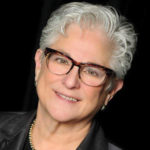
At the June, 2018 Board of Directors’ meeting, Jewish Family Services of Columbus Chief Executive Officer, Dr. June Gutterman, Ed.D., shared with the Board her intent to retire effective May 31, 2019. It is the Board’s intention to use the coming months to assure a smooth transition of leadership for the agency.
*
Preceding culled from news releases. Send yours to editor@sdjewishworld.com