Schiff cites seven California races crucial to Democrats
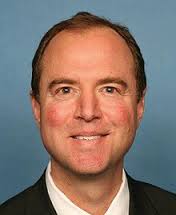
U.S. Congressman Adam Schiff (D-Los Angeles) says the possibility of Democrats winning control of Congress largely depends on California, where seven seats now held by Republican incumbents are being targeted in the upcoming November election. Among these is the 49th Congressional District seat currently held by the retiring Darrell Issa. Democrat Mike Levin faces Republican Dianne Harkey in that contest.
Schiff also identified candidates Katie Porter, Josh Harder, T.J. Cox, Gil Cisneros, Katie Hill, and Harley Rouda as the Democrats his congressional caucus is counting on in the upcoming congressional battles. – From Adam Schiff
*
Republicans say Democrats moving away from Israel support
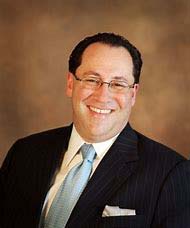
In response to polling numbers showing that Democrats do not see Israel as an important partner for American foreign policy, the Republican Jewish Coalition released the following statement from Executive Director Matt Brooks: “Reports of these polling numbers only serve as confirmation of what we have known for a while – as the far-left takes over the Democrat party, the Democrat party moves further and further away from its historical commitment to a strong US-Israel relationship.
Brooks continued: “A party cannot be the party of Alexandria Ocasio-Cortez, Ilhan Omar, Keith Ellison, Tom Malinowski, Leslie Cockburn, Linda Sarsour, and dozens of other prominent, anti-Israel voices and still maintain the commitment to a strong US-Israel relationship that Harry S. Truman, Scoop Jackson, and Joe Lieberman instilled in the party. The time is now for pro-Israel Democrats to step up and take back their party.”
A recent Pew poll found that 79 percent of Republicans and 27 percent of Democrats said they sympathize more with Israel than with Palestinians. A more recent Gallup Poll found 87 percent Republican support for Israel, compared to 49 percent Democratic support. –From Republican Jewish Coalition
*
Trick a hungry person with a smaller plate size? Forget about it!
 Tricking the brain into eating less by serving food on a smaller plate doesn’t necessarily work, according a new study by Ben-Gurion University of the Negev (BGU) researchers, who found that when people are food-deprived, they’re more likely to identify a portion size accurately, no matter how it is served.
The new study, published in Appetite, debunks the popular diet trick based on the Delbouef illusion that predicts people will identify sizes differently when they are placed within a larger or smaller object. The classic experiment shows that people perceive a similar black circle is smaller when it embedded in a larger circle than when it is embedded in a smaller one.
“Plate size doesn’t matter as much as we think it does,” says Dr. Tzvi Ganel, head of the Laboratory for Visual Perception and Action in BGU’s Department of Psychology. “Even if you’re hungry and haven’t eaten, or are trying to cut back on portions, a serving looks similar whether it fills a smaller plate or is surrounded by empty space on a larger one.”
In the first study to examine the way food deprivation affects perception of food in different contexts, Dr. Ganel and BGU Ph.D. student Noa Zitron-Emanuel found that people who hadn’t eaten for at least three hours were more likely to identify the proportions of pizza placed on larger and smaller trays correctly than people who had eaten recently.
This only worked when it applied to food. Both groups were similarly inaccurate when asked to compare the size of black circles and hubcaps placed within different sized circles. According to the researchers, this indicates that hunger stimulates stronger analytic processing that is not as easily fooled by the illusion. – From Ben Gurion University
*
Preceding culled from news releases. Send yours to editor@sdjewishworld.com