By Beth Kieffer Leonard
Jewish Democratic Council of America
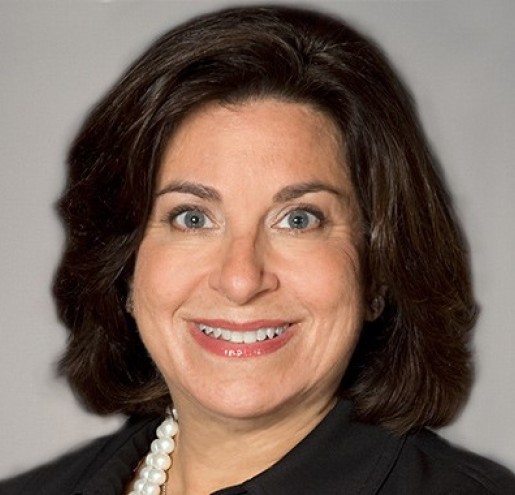
MINNEAPOLIS — Minnesotans are no strangers to political trailblazing; however, we are also known for honesty and kindness. Representative Ilhan Omar is certainly a trailblazer, yet her recent anti-Semitic tweets and statements are deeply offensive. They have caused consternation among Minnesota voters, including myself, not just for their insensitivity, but because they further call into question whether she is listening to her constituents.
When Minnesota State Representative Ilhan Omar began her bid for Congress, many in the Jewish community were concerned. As far back as 2012, she had characterized Israel as an “apartheid state” and tweeted that “Israel has hypnotized the world.” The Jewish Democratic Council of America (JDCA), an organization with which I am affiliated, condemned Omar’s statements in August 2018, stating “JDCA will not support her candidacy — and certainly will not endorse her — because her views are not aligned with our positions and values.”
As Omar’s campaign progressed, and as the public criticism of her views on Israel intensified, Omar tweeted “I support a two-state solution. The Jewish people have a right to safety and Palestinians have a right to their homes.” She did not retract or explain any of her previous statements, but this seemed to be a step in the right direction.
Later in the election, during a forum held at a local synagogue, Omar was asked about Israel and about whether she supports the Boycott, Divestment, and Sanctions (BDS) movement. Omar responded that BDS “stops the dialogue” and is “counteractive” to achieving a two-state solution, implying that she opposed BDS. It was only after she won her election in November that Omar’s campaign publicly stated, “Ilhan believes in and supports the BDS movement.” Many Minnesotans rightfully felt deceived by a candidate making judgment calls based on political expedience and not principle. Some believe she lied about her position on BDS in order to get elected.
In January, Omar finally apologized for her 2012 tweet, only to follow it with another set of anti-Semitic tweets in February resurrecting the centuries-old anti-Semitic canard that Jewish money controls American foreign policy.
The apology she then issued, after pressure from Democratic House leadership and dozens of individual House Democrats, seemed insincere. The first half was an apology and the second half equated pro-Israel lobbying with the NRA and fossil fuel industry. The first tweet she posted after her apology was a retweet of someone defending her original allegation regarding the so-called influence of Jewish money in politics.
Just last week, at a public speaking event, Omar accused the pro-Israel community of allegiance to a foreign country, evoking yet another classic anti-Semitic trope — that of dual loyalty to both the United States and Israel. She also claimed that Jewish lawmakers were targeting her because she was Muslim and critical of Israel when in fact, as JDCA pointed out, her anti-Semitic comments would have been condemned if made by any member of Congress, regardless of party or background.
To be clear, criticism of Israeli government policy is not inherently anti-Semitic. JDCA itself, for example, has criticized Israel’s nation-state law and Prime Minister Netanyahu’s alliance with an extremist Israeli political party because both were out of step with our Democratic values. When criticism of Israel invokes anti-Semitic references or generalizes negative stereotypes about the Jewish people as a whole however, it crosses the line.
Those who know the history of Minnesota know that it was rife with anti-Semitism not so long ago. We were once strangers ourselves, which is why the Jewish community has welcomed and provided support for so many refugee groups, including our large Somali population. Yet somehow, that seems to make Omar’s words hurt more. She does not seem to understand the pain her words have caused in the Jewish community and among her Jewish constituents.
Omar has only just begun her career, and she has already lost credibility with Minnesotans, her colleagues in Congress, and other political leaders. Her apologies ring hollow because she continues to use anti-Semitic rhetoric. If this conduct continues, allowing her to continue to “learn on the job” will become untenable. For this reason, we support efforts by Democratic leaders to pass a resolution responding to Rep. Omar’s remarks and condemning anti-Semitism, ensuring she receives the message that her words have consequences.
We must exhaust every possibility in pursuit of understanding, now however, it is incumbent on Rep. Omar to immediately stop with the hurtful language targeting the Jewish community. We would not allow such stereotypes to be used against any religious minority, and must continue to stand up against hatred and bigotry in all forms, including anti-Semitism.
*
Beth Kieffer Leonard is the Treasurer and a founding member of the Board of Directors of the Jewish Democratic Council of America (JDCA)
The American Jewish Committee (AJC) is strongly urging members of the U.S. House of Representatives to adopt a resolution that clearly defines and unequivocally condemns anti-Semitism in all its forms.
“What is anti-Semitism should be crystal clear to all Americans, as should every expression of bigotry,” said Jason Isaacson, AJC Associate Executive Director for Policy. “Conspiracy theories, age-old slanders, accusations of disloyalty – none is acceptable. We call on members of Congress across the political spectrum to join in rejecting hate.”
The AJC letter was sent today to members of the House ahead of a vote on the resolution. “Congress plays a critical role in combating anti-Semitism at home and abroad,” states the AJC letter from Julie Rayman, AJC Director of Political Outreach. “Congress has repeatedly promoted the adoption of the Working Definition of anti-Semitism, most recently by passing the Combating European Anti-Semitism Act, which the President signed into law on January 14, 2019.”
The new House resolution acknowledges the “dangerous consequences of perpetuating anti-Semitic stereotypes” and “rejects anti-Semitism as hateful expressions of intolerance that are contradictory to the values that define the people of the United States.”
The House resolution draws heavily from the Working Definition of Anti-Semitism, first developed nearly two decades ago by AJC, academic experts and the European Monitoring Centre on Racism and Xenophobia. The Working Definition offers eleven examples, including references to common anti-Semitic stereotypes and tropes such as those alleging Jewish control of the government and of media, Holocaust denial, charges of dual loyalty, and the attribution of collective responsibility for actions of the state of Israel.
The working definition has been adopted by the International Holocaust Remembrance Alliance, numerous countries, and the U.S. State and Education Departments. Since the beginning of this year, French President Emmanuel Macron has endorsed it, the Czech Parliament has adopted it, and Moldova has endorsed it.
“Defining anti-Semitism is key to developing effective strategies to countering this evil,” said Isaacson. “With anti-Semitic incidents continuing to rise across the U.S., this House resolution is both important and timely.”