Skip to content
  • About
  • Archives
  • Jewish Community Directory
  • San Diego County Jewish Calendar
  • Writers & Photographers
  • Contact Us
  • Donate
San Diego Jewish World

There is a Jewish story everywhere!

  • About
  • Archives
  • Jewish Community Directory
  • San Diego County Jewish Calendar
  • Writers & Photographers
  • Contact Us
  • Donate
    • About
    • Archives
    • Jewish Community Directory
    • San Diego County Jewish Calendar
    • Writers & Photographers
    • Contact Us
    • Donate

What was biblical Abraham like as a youngster?

May 29, 2019
By Rabbi Dr. Israel Drazin
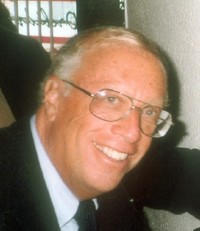
Rabbi Israel Drazin

BOCA RATON, Florida — Young Abraham differed from what we think. Everything written about Abraham as a young man is midrashic. They are imaginative events, not based on anything in the Torah. A close reading of the Torah reveals a totally different young Abraham than the fictional midrashic accounts.

What does the Bible say about Abraham’s early life?
The story of Abraham’s early life in the Torah is brief. We are told is that Abram, as Abraham was called in his youth, married Sarai, Sarah’s early name, and Sarai was barren. Abram’s father

took him, his wife, and the rest of his family, from their home in Ur of the Chaldees, without the Bible giving a reason for the trip, to Haran where the family settled, and Abram’s father

died there. Then, when Abram was seventy-five years old, God spoke to him, with no indication of any prior conversation or relationship. God told him to leave Haran. He obeyed and went to Canaan.

This is all that the Bible tells us about Abraham’s early life. Yet there are many post-biblical imaginative midrashic tales about early pre-age-75 Abraham’s exploits which are proven false by
other events mentioned in the Bible.
Did God actually speak to Abraham and tell him to travel? In his Guide of the Perplexed 2:48, Maimonides states that whenever the Bible or a prophet says that God said something, caused something, or made something, (1) it should be understood that the event occurred by natural
means, without the direct involvement of God. Why, Maimonides asked, do the Bible and
prophets attribute the act to God? He answered, because God made the world and the laws of
nature; so, in a sense, God is the ultimate cause of the event. Thus, the biblical statement that
God told Abraham to leave his home and go elsewhere can be understood to mean that after
some reflection and, perhaps, after some now unknown occurrence or goal, Abraham decided
that he and his family needed to change his residence.
The many post-biblical claims made about Abraham were most likely invented to enhance his
stature and distinction. Perhaps also because it was felt that Abraham must have had some kind
of relationship with God before he was 75 years old.  Abraham in these sources is said to have been the first Jew and the first to recognize the existence of God.
​

Midrashic stories about Abraham include the following:

*His father sold idols and Abraham as a child destroyed them, got into trouble with King Nimrod

who had him tossed into a fiery furnace from which God miraculously saved him.
*When Abraham went to war against four kings who kidnapped his nephew Lot, he tossed sticks
and sand at them which turned into swords and arrows which killed the foe.
*He and his servant Eliezer were so physically strong that when the Torah states that Abraham
went to war against the four kings with three hundred and eighteen, it means that just Abraham
and Eliezer fought the four kings, for the numerical value of the Hebrew letters of the name
Eliezer total three hundred and eighteen.
*Abraham brought back men and women from the war, but not children, because the children
freed themselves when they saw Abraham and became proselytes.
While there were rabbis who extolled Abraham, other rabbis offered contrary ideas, also not
mentioned in the Bible, showing that the king and priest Melchizedek who came to Abraham in
Genesis 14 were superior to the patriarch.
For example, these rabbis wrote in Midrashim that Melchizedek was called King of Shalem,
Shalem means whole, and the title King of Shalem is suggesting that Melchizedek was so holy
that he was born circumcised. (2)
They say that the reference to Melchizedek bringing bread and wine to Abraham when he
returned after beating four kings means Melchizedek revealed Torah to Abraham.
One rabbi even added that Melchizedek blessed Abraham and was responsible for the wealth that
he enjoyed.
Besides the fact that none of these fascinating fables are even hinted in the Bible, the Torah text
show that they are untrue. One example is the tale that Abraham’s father made and sold idols,
Abraham destroyed them, his father complained to King Nimrod, and the king tossed Abraham
into a fiery furnace. There is no indication that Abraham had any conflict with his dad Terah. The

opposite is true.

As stated earlier, the Torah states that before Abraham was age 75, his father took his family and

left Ur, came to Haran where the family settled, and Abram’s father died there. What is being
described is a dutiful son who had a good relationship with his dad and who took his wife and
went with him when his father decided to resettle in a different country and culture. It was only
when Abraham was 75 that he left his dad.
The rabbis noted that Genesis 11 states that Terah died and Genesis 12 tells about Abraham
leaving Haran for Canaan. The order of these verses seems to indicate that Abraham did not
leave his father until he died. However, the rabbis point out that Terah was still alive when
Abraham at age 75 finally decided to leave home. The Bible states that Terah was seventy years
old when he begot Abram and he lived until age 205. Simple math reveals that Terah was 145
years old (70 when Abraham was born plus 75 when Abraham left home) and lived another sixty
years after Abraham left (205 minus 145). Why, ask the rabbis does the Bible report that Terah
died before Abraham left? They reply, so as not to disparage Abraham by depicting him
abandoning his aged father. This is another indication that the Torah was depicting a good

relationship between Abraham and his dad.

The other midrashic assertions about Abraham are also false.
Abraham was not the first Jew. Judaism did not exist during the days of the patriarchs. The Torah
does not say he was the first Jew. It says is that he will be the ancestor of many nations and the
forerunner of a great people.
Also, the Bible states that many people knew of God’s existence long before Abraham. Adam,
Eve, and Cain spoke with God. Noah the ancestor of all humanity spoke with God and he and his
son Shem were alive during a large part of Abraham’s lifetime.
Reading the Bible literally, the following are the dates of the events. Genesis 9:28 states that

Noah lived 350 years after the flood. The Flood occurred 1656 years after Creation. Noah died in 2006 after the Creation. By the Hebrew calendar, Abraham was born in 1948 after the Creation and was 58 years old when Noah died.

Genesis 11:10-11 state that Shem was 100 years old when he bore his first son, and this occurred
two years after the Flood, and Shem lived another 500 years after he bore his son. Shem died in
2258 after the Creation. So, Shem was alive for 310 years after Abraham’s birth.
If we accept the rabbinical view that Melchizedek was Noah’s son Shem and he served not only
as a king but also as a priest, and that Abraham accepted his role as a priest of God, then this is
another indication that Abraham was not the first to recognize God.
As previously stated, it is possible that many of the Abraham legends were developed to explain
what he did during the first 75 years of his life. This is a long time, and a man like Abraham must
have done many great things before he reached age 75.
However, we should recall what I have stated in previous columns that the early humans did not have exceptionally long lives. The Bible calculates the years differently. When the Torah states that
Adam lived for 930 years, it may refer to years that lasted from one lunar cycle to the next, about
29 ½ days. If the 930 “years” are divided by twelve (months), the result is around 77 currently-
​calculated years, which is about the length of lives today. It is also possible that after the flood,
the biblical calculation of years changed and people considered the difference from a warm to a
cold season as a year, the winter and summer equinox, so that two biblical years during this
period equal to one year today. While the Bible states that Abrahamlived 175 years, he died at
age 87.
Understanding this, we recognize that Abraham was 37 years old when he left Haran with his
wife and nephew and moved to Canaan. This is a typical age when men seek a new path of life,
restarting his and his family’s life in a new land. It is therefore possible that for the 37 years until
he sought this change, Abraham did not do anything extraordinary.
Looking at Abraham’s life in this way, he serves as a model for men and women today. As we
mature and begin to better understand the world and our responsibilities, we, like Abraham can –
indeed should – change and improve.
​

Notes

(1) Other examples of passages to which Maimonides referred are when Joseph told his brothers in Genesis 45:7, “God sent me before you.” Or in Genesis 24:51 when Laban told Abraham’s servant regarding Rebecca, “Let her be a wife to the son of your master, as the Lord spoke.” Or in Jonah 2:11, “The Lord spoke to the fish and it vomited out Jonah.”

(2) The same claim is made about Moses and some other famous people.

PLEASE CLICK ON ANY AD BELOW TO VISIT THE ADVERTISER'S WEBSITE

JNF -
USA

Get our top stories delivered to your inbox

Get the latest stories from San Diego Jewish World delivered daily to your inbox for FREE!

Check your inbox or spam folder to confirm your subscription.

Recent Comments

  • More Jewish commentary about the Iran war – San Diego Jewish World on Reactions to joint Israel-U.S. bombing of Iran, killing of the ayatollah
  • Jerry Klinger in Boynton Beach, Florida on Reactions to joint Israel-U.S. bombing of Iran, killing of the ayatollah
  • Nicola Ranson in Encinitas, California on ‘Hostage’ is a first-hand account of a hijacking
  • Mimi Nichter in Tucson, Arizona on ‘Hostage’ is a first-hand account of a hijacking
  • Robin Dishman in San Diego on Suit filed against California and its agencies for not protecting K-12 students from antisemitism

Make a Donation

Like what you’ve read? Please help us continue publishing quality content with your non-tax-deductible donation. Any amount helps!

Donald H. Harrison, Publisher and Editor
619-265-0808, sdheritage@cox.net
Copyright © 2026 San Diego Jewish World