By Lawrence Krause
ENCINITAS, California — As regrettable as it may be, the plan for two states to co-exist in peace on the land between the River Jordan and the Mediterranean Sea is truly dead. Events on the ground have proclaimed its death. Failure to recognize its demise only strengthens the forces that killed it. Postponing the recognition of this reality makes more difficult the task of managing the situation that does exist. There is only one country on this land, and it is Israel. The laws passed by the Knesset apply to everyone.
This does raise the fundamental question of what kind of political entity can define and defend the legitimate rights of the people within the borders of Israel who identify themselves as Palestinians.
This task is very challenging and requires an imaginative solution. A solution might be the creation of five municipal districts on the West Bank; Nablus, Ramallah, Jericho, Bethlehem, and Hebron. Boundaries of each district would have to be established and need not be contiguous. Municipalities are common political entities and their powers are well defined in other countries. Leaders could be elected by a series of local elections.
It is local government that touches peoples lives most frequently and, except for national emergencies, most intensively. The existence and quality of schools for their children; the collection of garbage; the availability of public transportation; the fixing of potholes in the streets and the like. These are the issues that frame ordinary existence, and can be overseen by municipalities.
Each of these municipalities should also be designated as an Economic Processing Zone. EPZs are fairly common and their nature has been established by experimentation in many developing countries. That usually includes unhindered import and export of goods and services, restrictions on residency, and beneficial taxation. Actual conditions would have to be determined locally and need not be identical in all of the EPZs.
There are a number of advantages in this arrangement. It would permit people to be employed locally rather than having to commute to the other side of the Green line. It would encourage the development of local identification and loyalties. It is believed that there are recognizable Arab tribal communities in these cities and this would be a way for them to express themselves.
For peace and prosperity to exist in an enlarged Israel, the desires of the entire population must have a way to express themselves. This applies particularly to self-identified Palestinians. The leader of Fatah, Mahmoud Abbas, who represented the Palestinian side for the two-state negotiations, cannot be a considered a spokesman. He was elected way back in 2005. No other elections have been held.
Alternative ideas should be open for Palestinians to discuss. Municipal EPZs would be a way for Palestinians to have governmental authorities who directly impact their lives and who look like themselves, and still be consistent with one Israel.
There is probably no reasonable plan that would satisfy Israel’s critics abroad, and the people now speaking for Palestinians as well. In reality, the West Bank is already an integral part of Israel. It is high time for Israel to take responsibility for all of its residents so that at least it can be true to itself.
*
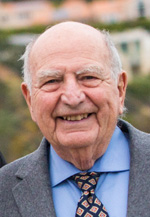
Krause is a professor emeritus of international economics at UC San Diego. He received his doctorate from Harvard, taught at Johns Hopkins and Yale, researched and published under the aegis of the Brookings Institution in Washington, DC, and also served on President Lyndon B. Johnson’s Council of Economic Advisers.