By Rabbi Dow Marmur
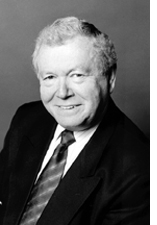
JERUSALEM –Most of the twenty-or-so political parties in Israel wouldn’t pass the post in elections. To have a chance of at least their leaders to get elected, they come together in joint lists. The reason why they’re separate to start with seems to have more to do with ego than with ideology. The reason why they come together may be due a desire to sit in the Knesset.
As the rules demand that all constellations must be in place before the end of this month, most arrangements seem now to have already been announced.
The four Arab parties will feature on one list having internally decided the pecking order. Though some Arab citizens of Israel vote for other lists, most vote for Arab parties. Had the Arab voter turnout been higher, their parties would have several more Knesset members.
The mostly religious/orthodox Zionist Right has come together with Ayelet Shaked (a secular woman!) as leader, but it has refused to include two ultra-Right groups. Mercifully, as a result, these aren’t likely to pass the post. We hear that Prime Minister Netanyahu isn’t happy about the arrangement because he – and allegedly even more his wife – fear that Shaked may attract potential Likud voters. This may not make Likud the largest party and, therefore, the president may not call on Netanyahu to form the next government. Shaked has stated, however, that she wants to sit in a Netanyahu government.
The Left with Meretz at the center, Ehud Barak’s new party and some defectors from Labor have also come together to form a bloc. Surprisingly, the Labor Party hasn’t joined them. Instead, it’s going with the centrist Gesher Party. A heretic speculation: the leaders of Meretz & Co. are Ashkenazim; the leaders of these two are Sephardim. A sense an echo of the perennial animosity between the two Jewries.
The separation between Ashkenazim and Sephardim is the reason why one ultra-orthodox party (Shas) is Sephardi and keeps away from the other ultra-orthodox parties. There’re two of these – one Hasidic, the other anti-Hasidic; the two don’t mix.
The two major parties, Likud and Blue and White, aren’t making any alliances at this stage. As suggested above, if Blue and White gets more mandates than Likud, the leader of Blue and White, Benny Gantz, is likely to be asked to form the next government. That would be something of a – to my mind, wholesome – sensation in Israel. And a nightmare for Netanyahu.
That’s where Lieberman’s Yisrael Beiteinu comes in. The party is running alone and, as I’ve suggested before, Lieberman hopes to be the kingmaker. He wants a government consisting of Likud, Blue and White and, of course, himself.
Readers abroad often tell me that the political set up in Israel is confusing. In response, I’m trying hard to simplify matters – alas, without being sure of much success.
*
Rabbi Marmur is spiritual leader emeritus of Holy Blossom Temple in Toronto, Canada. Now a resident of Israel, he may be contacted via dow.marmur@sdjewishworld.com