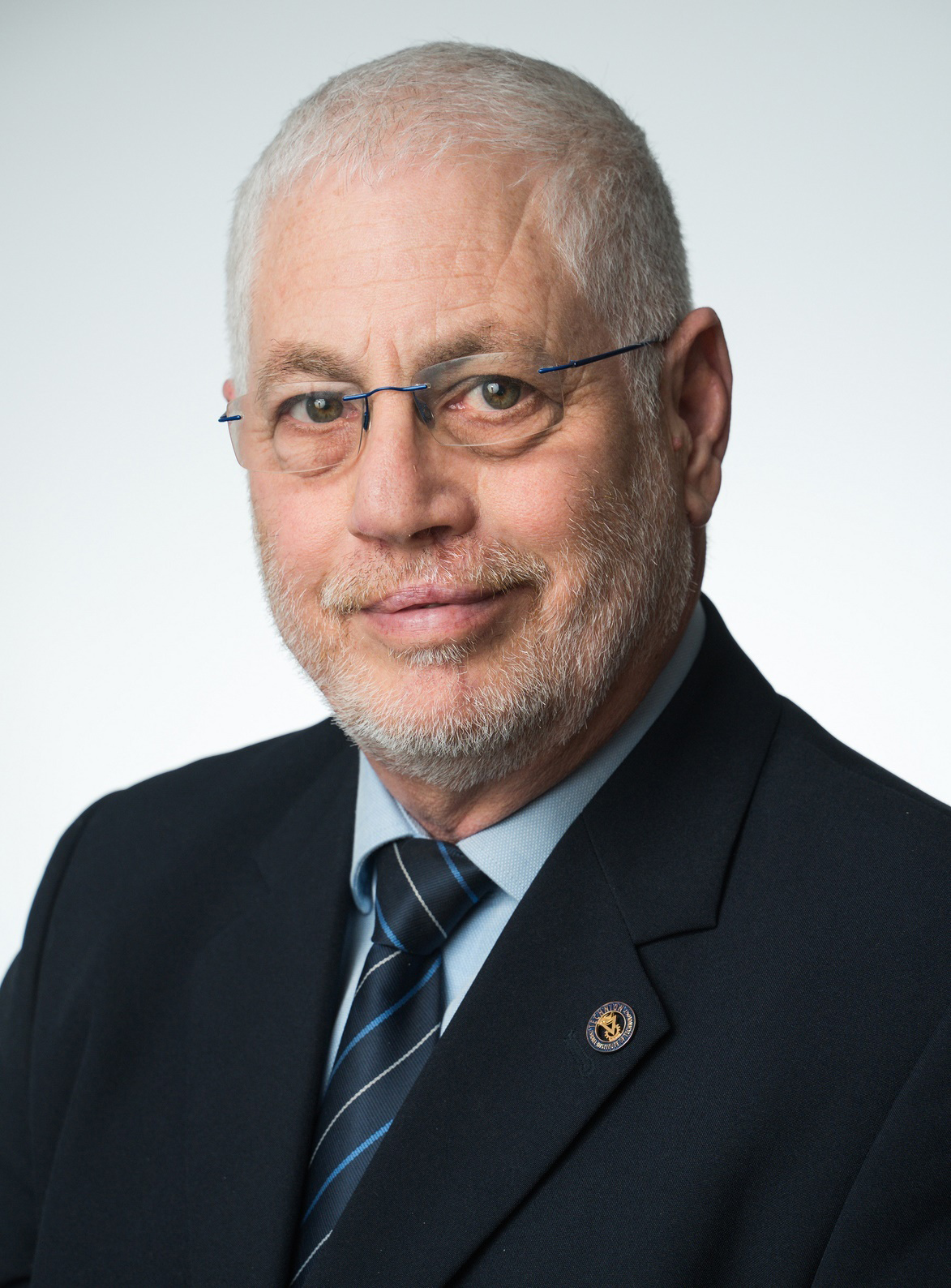
SAN DIEGO – Uri Sivan, the physicist who gained popular recognition in the field of nanotechnology after he and colleagues demonstrated how the entire Bible could be engraved onto a single silicon chip, toured San Diego over the weekend in his new capacity as president of the Technion, the Israeli scientific and technological university based in Haifa.
His visit to San Diego County was primarily to meet with such local supporters of the Technion as Qualcomm co-founders Irwin Jacobs and Andrew Viterbi, and “Dr. Bob” Shillman, Nina Sabban, and Gerald Yaketan prior a meeting in Philadelphia next weekend of that university’s national board of directors.
In a telephone interview, Sivan described what on the surface might be viewed as two conflicting goals, but which in fact are complementary.
On the one hand, he said, Technion strives to isolate itself from politics. On the other hand, Technion intends to become more involved in solving some of the world’s overarching problems such as environmental issues, energy, human health, and ethics.
He said that whatever day-to-day political and religious controversies might be swirling elsewhere in Israel, Technion fosters the concept that its campus “is really an island where people from different traditions, people of different origins, I believe, feel very comfortable. I would say we are taking great efforts to isolate Technion from politics.”
This is accomplished by “promoting a policy of tolerance and pluralism,” he added. “That atmosphere on campus is such that whenever people are trying to promote a political activity or demonstrations, we ask them to do it just outside the campus, so political demonstrations within campus are very rare. We really cherish this atmosphere; it is very important to us. We invest a lot in creating it, and it works, it really works.”
While Technion would prefer its students and faculty disengage, on campus, from the day-to-day tumult of politics, it also wants them to become more deeply involved in solving 21st century challenges with deep political implications suh as the environment, energy, and human health – the latter a favorite subject of Sivan’s whose own specialties as a researcher at Technion included studies in “the interface between physics and life sciences, and physics and medicine.”
To make progress in such comprehensive fields will require some restructuring of how the university is organized, Sivan said. Traditionally, the different faculties at universities – engineering, physics, chemistry, for example – have operated more or less independently of each other, prompting some to compare them to silos.
“The challenges of the 21st century are not going to be resolved within one discipline,” Sivan said. “All will require multiple disciplines. This is a challenge for us, and a challenge for all the universities. We will start adapting our structure that will facilitate multidisciplinary activities.”
The Technion president, who studied at Tel Aviv University through his doctorate, went on to a research position with IBM in New York, and became part of Technion’s physics faculty, said he envisions adding to the curriculum more courses from the social sciences, including innovation, entrepreneurship and ethics.
“When you deal with large data bases, say medical records, there is an important ethical obligation as to what you do with that,” he said. “Also, consciousness about the environment – you cannot detach engineering from the effects on the environment and a community. There are many concepts now coming from the social sciences that need to be integrated into our curriculum.”
An additional impetus for rethinking how universities are structured is the fact that in two areas, universities no longer have monopolies, Sivan said.
“One monopoly was over knowledge,” he explained. “University professors used to be almost the sole source of information. That is no longer true. Information is available on line to everybody — at least data is available.”
The second area is in the field of research into such subjects as artificial intelligence, deep learning, and data, according to Sivan. “This is shifting to global companies, simply because they can afford more powerful computing power, access to larger data bases. So these are really challenging times for universities, especially technological universities. We have to adapt.”
Haifa is widely considered to be the city in Israel where Jews and Arabs have the most amicable relationships, and this both carries over to Technion, and is reinforced by Technion, where the idea is no matter what your background may be, diligent study and work can provide keys to problem solving.
Of Technion’s 9,500 undergraduates, and some 4,000 students engaged in master’s, doctoral, and post-doctoral studies, about 21 percent come from the Arab community – approximately the same percentage as Arabs in Israel’s general population, Sivan said.
Interestingly, most of these Arab students—61 percent—are women, a survey of the campus population indicated. Sivan said efforts are being made to increase the number of women of all ethnic and religious backgrounds to advance beyond their PhD’s and to eventually become members of Technion’s faculty. Of 18 deans at Technion, he said, 5 are women.
“You may know that in engineering, it is not an easy feat because overall the number of female students that continue their studies beyond their PHDs is small, but we do have some success. It improves all the time,” he said.
“There are faculties where women are actually the majority – biology and chemical engineering, for example. In electrical engineering and computer science, there are somewhat fewer female graduate students. The real challenge is increasing the number of women among our faculty. … There are some special grants in the country aiming for women PhD’s to go that way.”
Sivan said Technion has developed a specialized outreach program to Israel’s Haredi, or ultra-Orthodox, population, which he said has grown at such a rate that as many as 30 percent of all students entering elementary school are from Haredi families.
“Their percentage in the population is constantly growing and unless they are recruited to the work circle, their standard of living and their gross income will not grow,” Sivan said. “ It is an important mission, a national mission, a real need.”
For Haredi students whose knowledge of the sciences is elementary, Technion has instituted an 18-month intensive “pre-Technion” program to enable them to “reach a higher level in physics and mathematics,” he said.
Various other populations in Israel also may attend the pre-Technion course of study, including people who live in peripheral cities and towns, where educational institutions may be less specialized.
*
Donald H. Harrison is editor of San Diego Jewish World He may be contacted via donald.harrison@sdjewishworld.com